
Why your ads appear on sites outside your industry
If you run a casino, a sportsbook, a crypto exchange, or a finance app, your placement data will show sites that have nothing to do with your industry. That is audience targeting at work: Blockchain-Ads buys the person who matches your campaign, on whatever page they have open.
How audience targeting works
Every ad is bought in a real-time auction that takes milliseconds. When someone opens a page or app:
- The site sends a bid request. Its ad slot sends a request through its supply partner.
- The request describes the person and the slot. It carries signals such as country, device, operating system, browser, time of day, and anonymous audience and interest data, along with the site URL.
- The platform checks the person against your campaign. If they match your targeting, for example someone in Brazil with sports-betting interest, or someone who visited your offer before, it bids.
- If the bid wins, your ad shows on whatever page that person is reading: a sportsbook review, a manga chapter, or a football highlights clip.
- The platform learns from the result. Clicks, registrations, first-time deposits, and other conversion events feed back into bidding, so spend moves toward the audiences and placements that convert. See Event-Based Optimization and Algorithm.
For the auction itself, see How Real-Time Bidding Works.
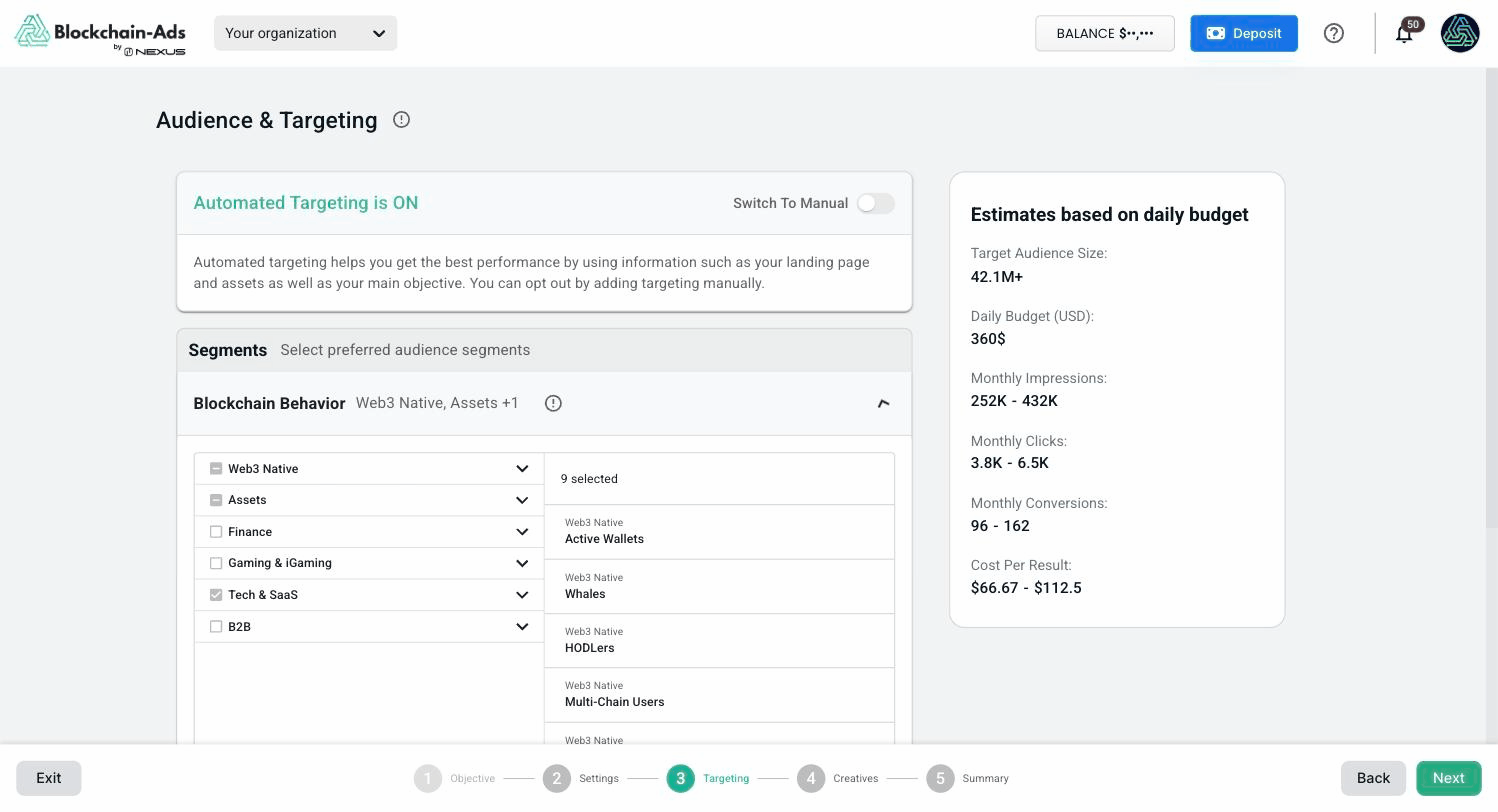
Audience targeting is the default. Automated Targeting is ON when you open Step 3 of the campaign builder (Audience & Targeting), and Manual Targeting uses the segments you pick. Both target people. See Automated and manual targeting.
Buying by page is also available, on request. An allow list limits delivery to sites you choose, and contextual layering adds a content filter on top of your audience.
Why this usually performs better
Limiting your ads to iGaming sites sounds safer, but it tends to cost more and reach fewer people.
| Industry-only placements | Audience targeting | |
|---|---|---|
| Reach | A small pool of niche sites, so your audience caps out fast | Your audience across hundreds of thousands of websites, apps, and platforms |
| Competition | Every iGaming brand bids on the same slots, which pushes CPMs up | Less competition on general inventory, so CPMs are usually lower |
| Frequency | The same people see your ad again and again | Impressions spread across more people and sessions, so less ad fatigue |
| New players | Mostly people already deep in betting content, often loyal to a competitor | High-intent people in their downtime, including first-time depositors |
| Optimization | Fewer data points to learn from | More data, so the algorithm learns faster toward your FTD and CPA goals |
The person matters more than the page. Someone in your audience reading a manga chapter is worth far more than someone outside it on a betting news site.
Example: an iGaming ad on a manga site
You run a sportsbook campaign in Brazil, targeting people with sports-betting interest (On-site Interest › Gaming › Gambling Watchers).
- Monday, 9 pm: someone checks football odds on a tipster site. The platform records the betting interest.
- Tuesday, 11 pm: the same person reads the latest chapter of a manga series. The bid request matches your audience, so the platform bids and your ad is shown.
- Result: they see your welcome offer in their downtime, away from the wall of competitor ads on betting sites, click through, and make a first deposit.
In your placement data this reads as "an iGaming ad on a manga site". For the player, it is the right offer reaching them at the right moment.
Brand safety and responsible gambling
Audience targeting still runs inside brand-safety controls. Every impression passes pre-bid and post-bid checks, with Integral Ad Science and DoubleVerify confirming inventory quality. See How Blockchain-Ads protects your brand.
- Sensitive content: adult, hate speech, violence, illegal content, and similar categories are excluded by default.
- Under-18 protection: iGaming campaigns are never directed at minors. Child-directed sites and apps, and inventory with a mostly under-18 audience, are excluded. Under section 22.6 of the Advertiser Agreement, you must not target under-18s or sites and services directed at them. Many regulators require the same. For example, UK CAP Code rule 16.3.13 bars gambling ads from being directed at under-18s through the choice of media or context.
- Invalid traffic: bot, data-centre, and suspicious traffic is filtered before the platform bids.
- Geo: campaigns run only in the markets you select under Geo, and you must hold every license those markets require. See Gambling licenses and where your ads can run.
- Platform-wide block lists: domains and apps flagged for low quality or policy issues are blocked across all campaigns.
General entertainment sites are screened for audience age as well as topic. A manga or anime site with a mostly adult readership can be eligible. A children's title or a kids' app is not.
What you can control
You decide where your ads can appear. You can switch a placement off for a campaign yourself through the Blockchain-Ads API, where placements are called zones, or ask your account manager. Allow lists, category exclusions, and contextual layering are set up on request.
| Control | What it does | When to use it |
|---|---|---|
| Block list | Blocks specific domains or apps from your campaign | A placement doesn't fit your brand, or isn't converting |
| Allow list | Serves only on domains and apps you approve | Strict brand guidelines. Expect lower reach and higher CPMs |
| Category exclusions | Blocks whole content categories, such as anime, news, or politics | You want to avoid a type of content without listing every site |
| Contextual layering | Adds a content filter on top of your audience, such as sports and entertainment only | You want relevant people on relevant pages |
| Placement data | Shows impressions, clicks, and conversions by domain or app | Review it weekly to find top performers and prune weak sites |
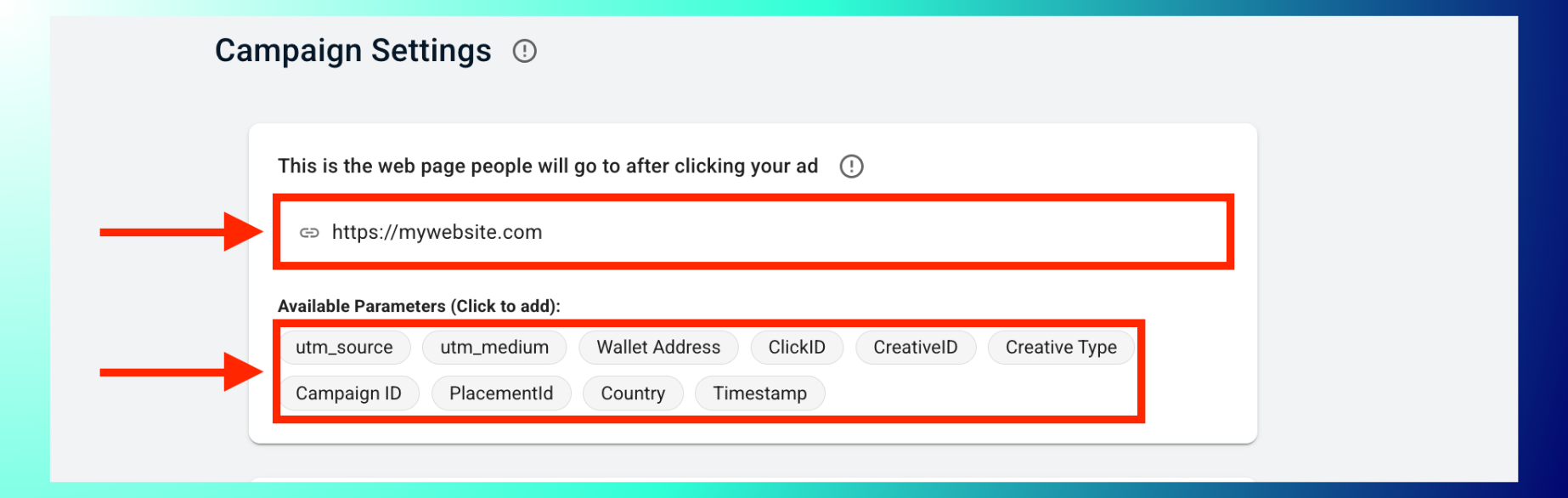
To see placement data, add PlacementId to your landing-page URL in Step 2 of the campaign builder so your tracker shows results by site or app, or pull the API's daily breakdown by zone.
Before you block a placement because it looks off-topic, check its conversion data. Off-topic sites are often among the best placements for first-time deposits and CPA. No filter can guarantee the context of every impression, so report anything that looks wrong.
FAQ
Is my ad being shown to the wrong people?
No. The page may look unrelated, but the person viewing it matched your targeting. That is why the platform bid.
Can I run only on iGaming or sports sites?
Yes, with an allow list or contextual layering, on request. Expect a smaller reach, higher CPMs, and more competition from other operators.
Why do I see my own ads on random sites when I browse?
You have probably visited your own landing pages or betting sites, so you now match your own audience, often a retargeting segment. Your own browsing is a poor guide to where your campaign runs. Use placement data.
Does an off-topic placement hurt performance?
Judge placements on CTR, conversion rate, first-time deposits, and CPA, whatever their topic. Bidding already moves spend away from placements that don't convert.
I found a placement I don't like. What now?
Send the domain or app ID to your account manager, or add it to your campaign's block list. It will stop serving within seconds.