How to Test iGaming Offers on Popunder and Push Traffic
Key takeaways
- Check before you spend. Confirm the offer accepts your traffic, the operator is licensed in every GEO and your creatives follow local rules.
- Test on popunder, scale on push. Popunder plus classic push is Mondiad’s recommended starting combination for iGaming.
- Judge on deposits, not sign-ups. Track the full funnel with postbacks. Cut weak zones in the first 48 to 72 hours and scale only what hits your cost per FTD.
- Test on Mondiad, scale on Blockchain-Ads. Prove the offer on a small Mondiad budget, then move the winning GEOs and angles to Blockchain-Ads audience targeting.
Scaling rarely kills an iGaming campaign on its own. What kills it is scaling something nobody understood yet. The budget doubles and the cost per first-time deposit (FTD) jumps. Suddenly the team is arguing about whether the GEO, the format, the creative, or a handful of bad zones is to blame. A proper test settles that while the money at risk is still small.
The long funnel is what makes iGaming, the online side of gambling (casino, sports betting, poker), tricky to test. A click turns into a registration, and some registrations turn into a first deposit. Only part of those players come back to deposit again. Sign-ups look good on a dashboard, but deposits are what pay.
What Should You Check Before Buying iGaming Traffic?
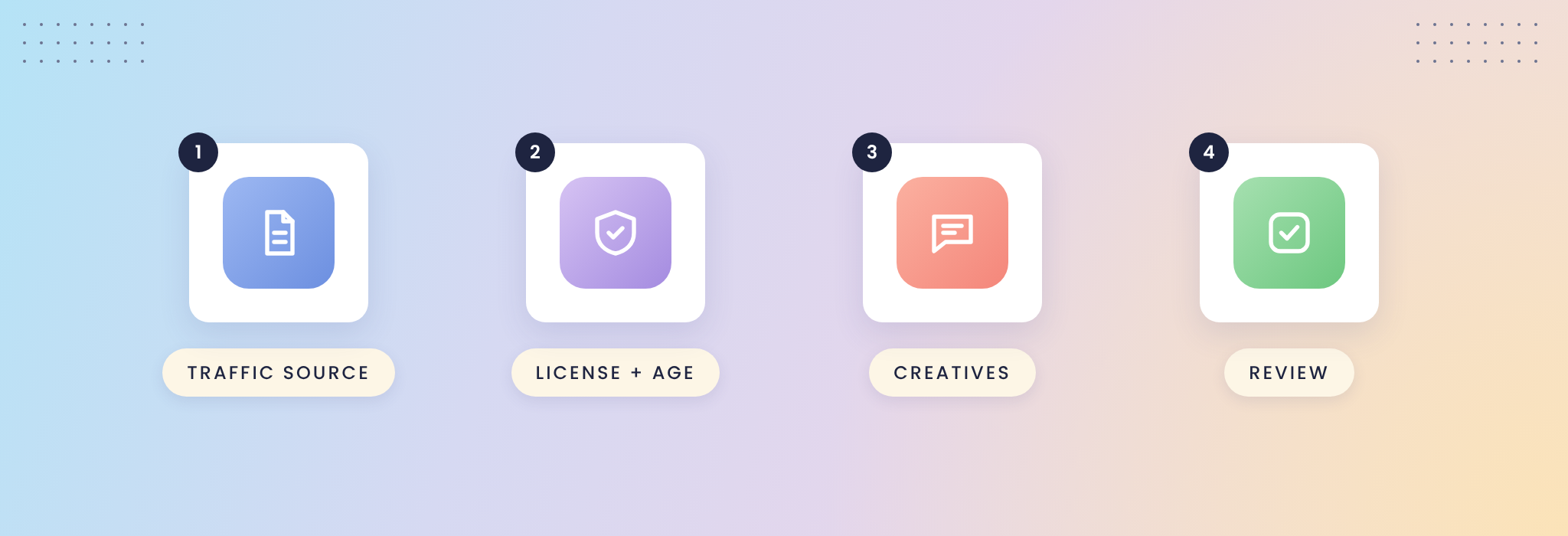
Four checks keep a test from failing for reasons that have nothing to do with performance. Run them for every offer and every GEO before the first impression.
- The offer accepts your traffic source. Affiliate programs decide which traffic types they accept, and some allow a source only for specific brands or GEOs. Ask your affiliate manager and get the answer in writing.
- The operator is licensed in every GEO you target. Gambling laws and minimum ages vary by country, sometimes by region. In Great Britain, operators serving British consumers need a Gambling Commission license. Blockchain-Ads also keeps a useful overview of iGaming regulations around the world. When a market looks uncertain, drop it.
- Your creatives follow local ad rules. Games, free spins, jackpots and clear bonus terms are safe ground. Guaranteed wins are not, and neither is any message that presents gambling as a way out of money or personal problems.
- The ad network reviews your setup. On Mondiad, the compliance team reviews iGaming creatives and landing pages before a campaign goes live. Every campaign goes to moderation first, and a checkbox lets it start automatically once approved.
While you’re checking the offer, look at the payout model too. Mondiad’s guide to gambling offers in affiliate marketing lists CPA or hybrid as the usual fit for casino, CPA, turnover or hybrid for sports betting and RevShare or CPA for poker. If you’re still choosing a program, the roundup of the best casino affiliate programs covers what matters beyond the commission rate.
None of this replaces legal advice. The advertiser’s compliance team has the final word on what’s allowed in each GEO.
Which GEOs Should You Test iGaming Offers In?
Start where iGaming offers already perform and traffic is cheap enough to learn on. Mondiad’s network data points to three regions where gambling offers perform best:
- Africa: Nigeria, South Africa, Senegal
- Asia: the Philippines, Thailand, Bangladesh, Vietnam
- Latin America: Chile, Argentina, Brazil, Venezuela
Licensing still has the final say. Every country on that list needs to match the operator’s licenses before it goes into a test.
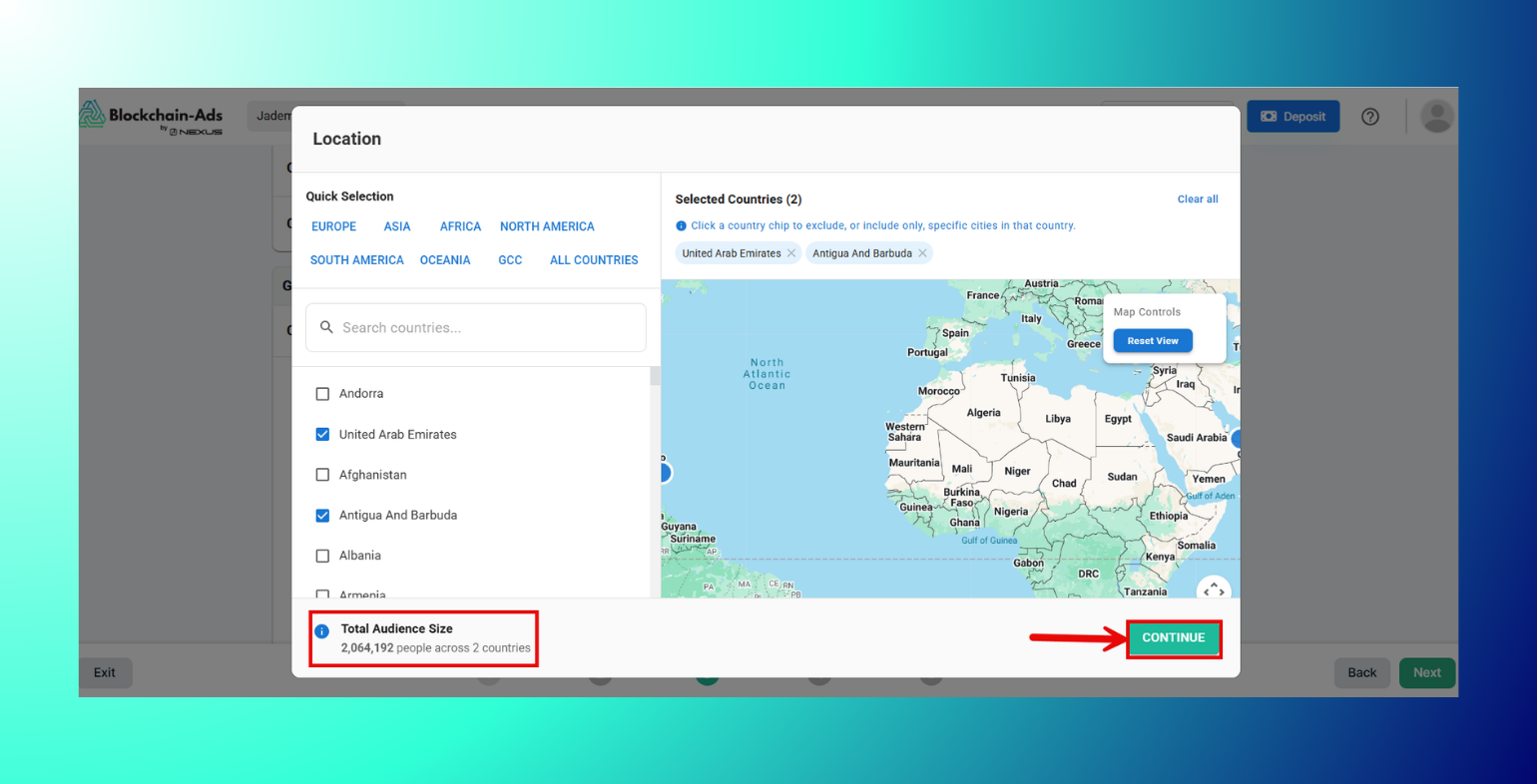
On Blockchain-Ads, GEO targeting lets you add countries one by one and shows the total audience size before launch, so you can see whether a GEO has enough volume to test.
Cost and volume change a lot from one tier to the next. Mondiad’s popunder guide for iGaming gives these average CPMs:
Tier 3 is the cheapest place to prove a funnel works. A starting budget of $100 to $200 is enough there to check the setup and test one or two variables. Tier 1 costs more per impression, but deposit values are higher, so it makes sense once you know which angle converts.
How Do You Set Up an iGaming Test?
A good test isolates one variable and tracks every step down to the deposit. The setup below is what makes the results readable.
Keep the test narrow.
Use one or two licensed GEOs per campaign. Bundling ten countries together only blurs the results. Mobile and desktop belong in separate campaigns, and it’s worth splitting by operating system as well, since each one tends to convert differently. Change one thing at a time, too. If the creative, the pre-lander, and the bid all move on Tuesday, Wednesday’s numbers can’t tell you which change worked.
Mondiad’s targeting goes well beyond the country. You can include or exclude countries one by one, then narrow by carrier, IP, device type, browser, browser language, operating system and traffic type. Each campaign also asks you to declare whether the landing page content is mainstream or adult.
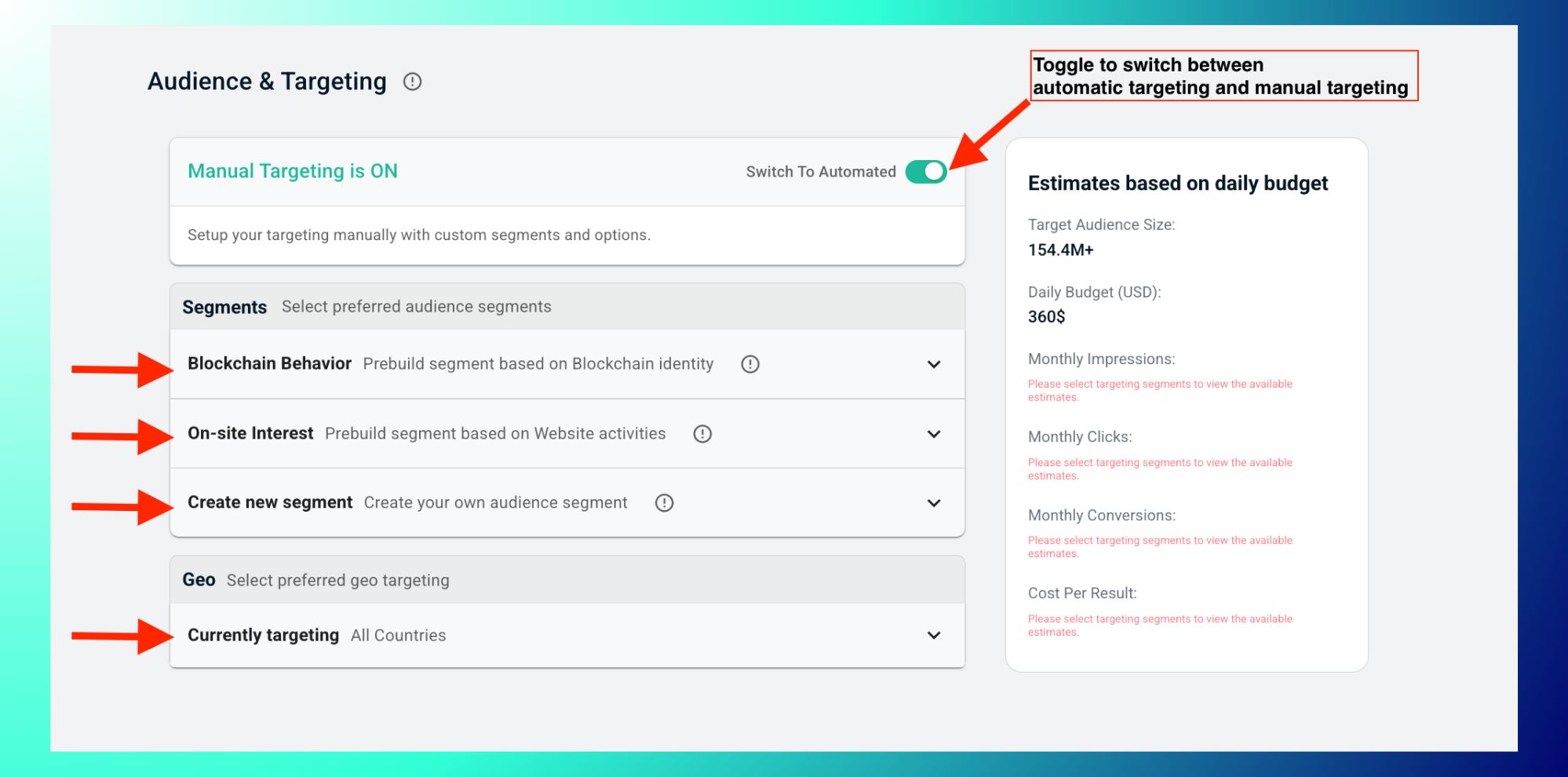
Blockchain-Ads covers the same GEO, device and operating system targeting, then adds who the player is. Campaigns can target on-chain activity, behavior and interest, or switch on automated targeting and let the platform find converting audiences.
Build a compliant pre-lander.
A pre-lander does a lot of the compliance work in iGaming. It should include:
- an age gate and a licensing disclaimer
- the real bonus terms, with the bonus shown in local currency
- responsible gambling information
- one clear call to action on a page that loads fast on mobile
Bonus spin wheels, short quizzes, and game previews all work as pre-lander formats.
Set up tracking before launch.
Tracking decides whether the test tells you anything. Connect your tracker to the ad network through postbacks and fire a test conversion before launch. That confirms registrations and deposits are actually recorded.
On Mondiad, the target URL accepts dynamic tokens such as {clickid}, {zoneid}, {subid}, {country}, {os}, and {carrier}. The {clickid} token matters most: it’s how conversions get passed back, and optimization rules won’t work without it.
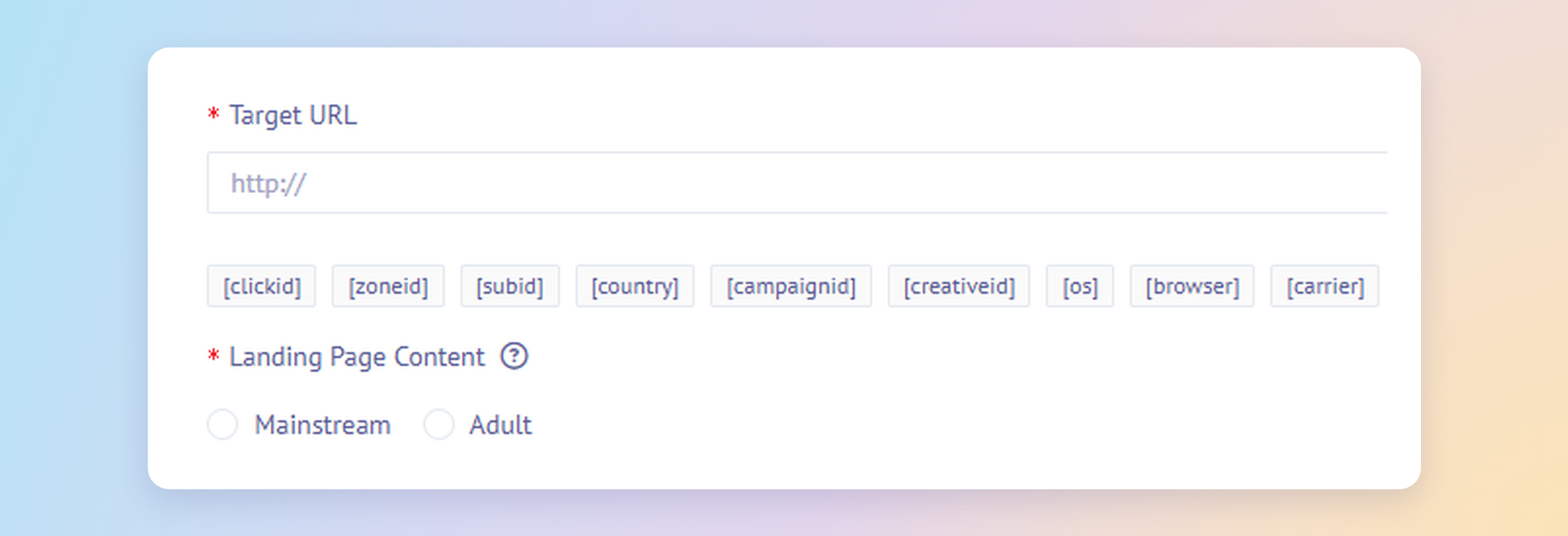
Mondiad supports a postback URL, an event tracker, and a pixel tracker, along with conversion goals and a conversion test and log to confirm the setup. The event tracker goes a step further than the postback: it records full page loads and clicks on specific elements of your landing page. The full setup is explained in this guide to conversion tracking in Mondiad.
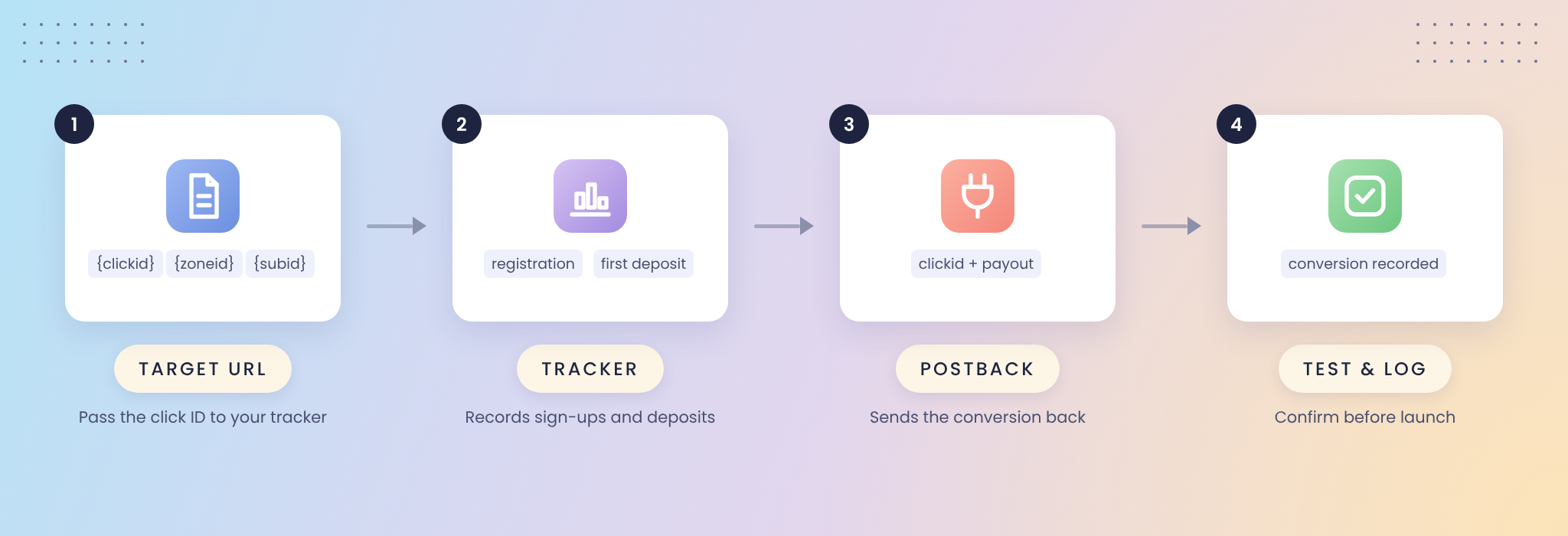
On Blockchain-Ads, a conversion can be tracked with a pixel, Google Tag Manager or a server-to-server postback. Voluum, Keitaro and AppsFlyer connect directly, and the guide to creating a conversion covers each method.
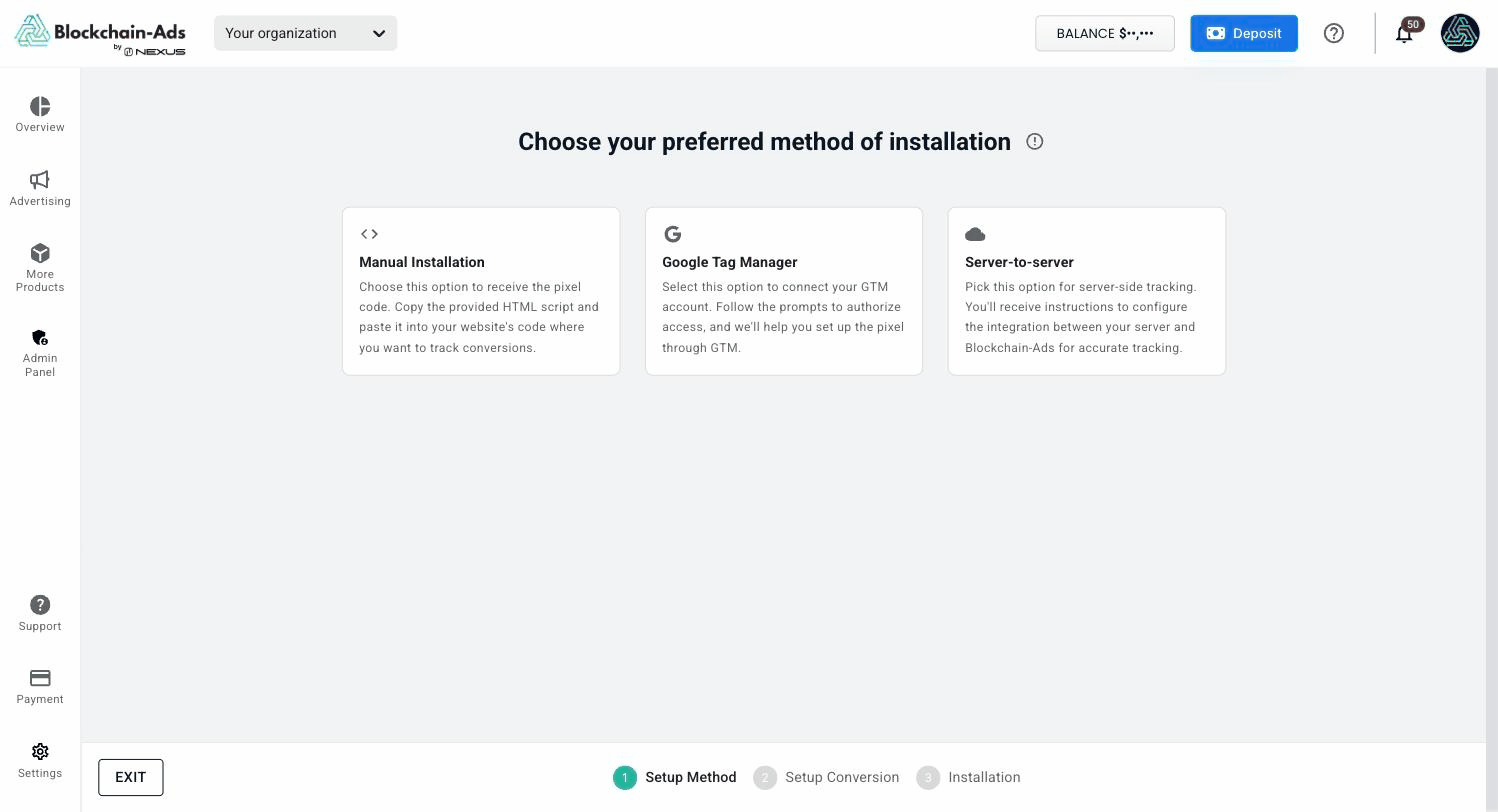
If the offer allows it, optimize toward deposits instead of sign-ups. Tracking each step of the funnel separately also shows you where players drop off.
Control spend from day one.
Popunder campaigns on Mondiad are bought on CPM. The budget section lets you set a daily budget, a total budget, and a separate daily budget per ZoneID. The per-zone cap stops a single placement from draining the test.
Frequency capping sets how many impressions one visitor sees per campaign within a time window. For iGaming pop-under traffic, one to two impressions per user every 24 hours is a common starting point that keeps ad fatigue in check. Day parting and a fixed running period are there too, once you know which hours convert.
For the rest of the campaign setup, Blockchain-Ads has a detailed guide on how to advertise gambling online.
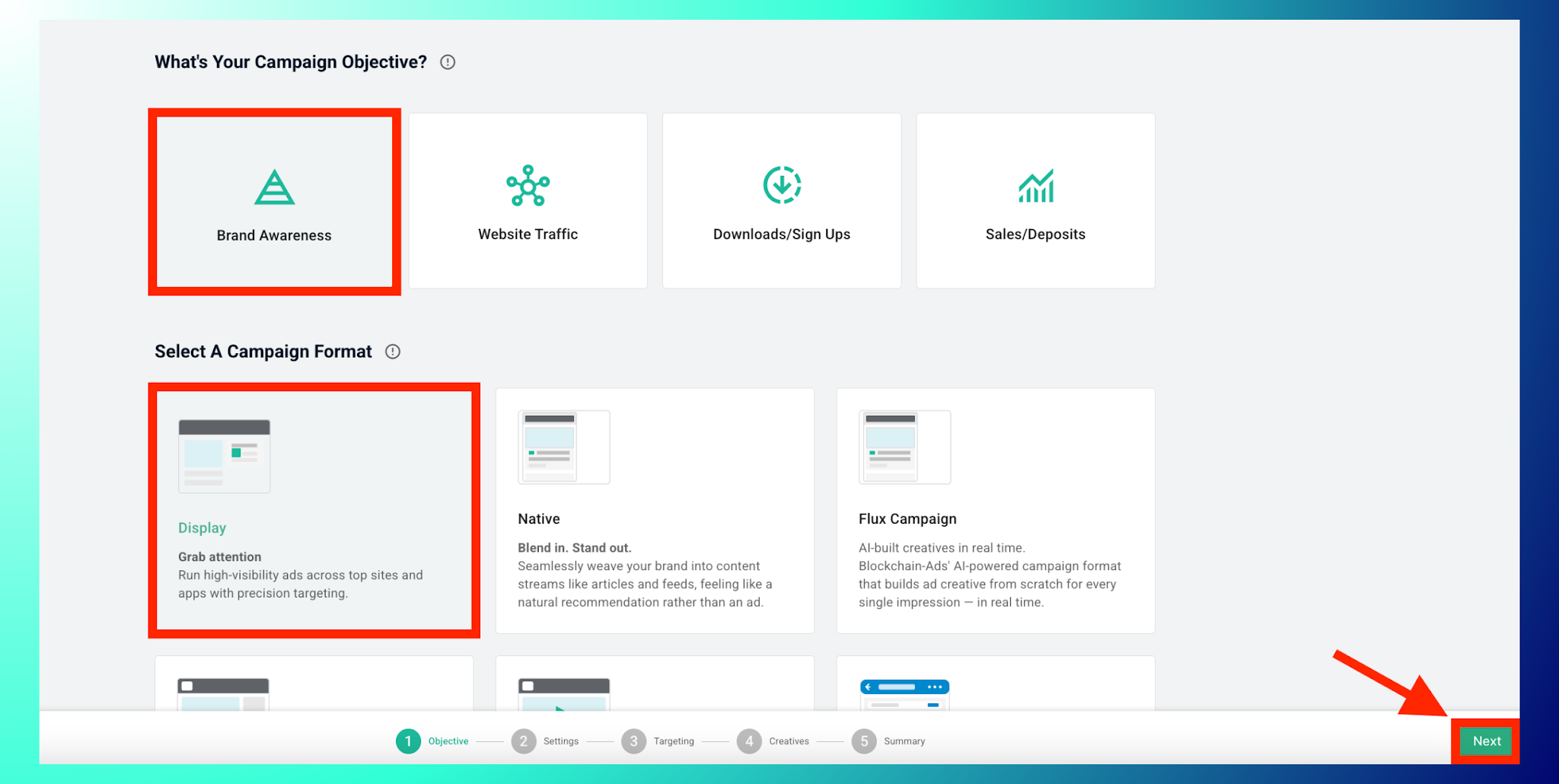
Inside the platform, How to Launch a New Campaign walks through the campaign builder, from objective and ad format to targeting.
Where Do Mondiad and Blockchain-Ads Fit?
Both networks sell popunder, classic push and in-page push to iGaming advertisers. What separates them is the stage each one suits best.
A common path is to prove the offer, pre-lander and GEO on Mondiad first. Once the cost per FTD holds, move the winning combination to Blockchain-Ads. There, the same formats can target players by on-chain activity and behavior, along with placement.
Should You Test iGaming Offers on Popunder or Push First?
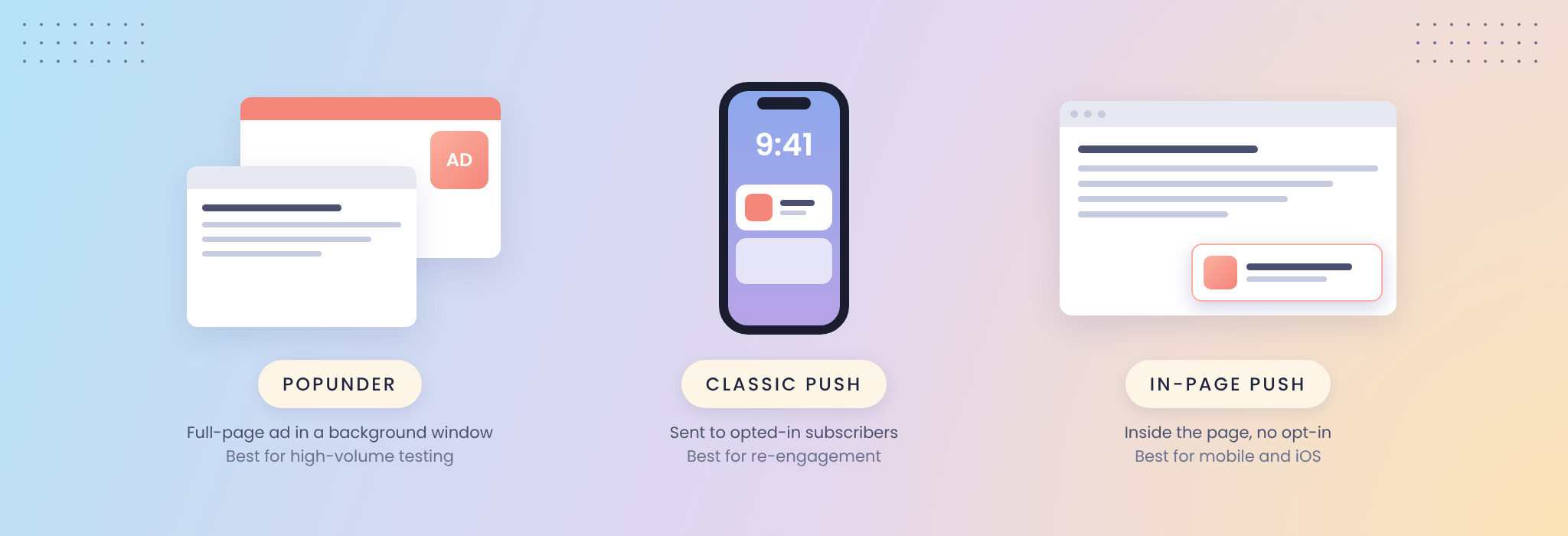
Both, in most cases. Mondiad recommends popunder plus classic push as the starting combination for iGaming. Popunder finds the GEO and offer combinations that work. Push is where you scale them.
If you’re still choosing where to buy, the roundup of the best iGaming ad networks for affiliates compares the main options, including Blockchain-Ads.
Popunder traffic: the testing format
A popunder opens the advertiser’s page in a background window. The user sees it after closing or minimizing the tab they were on. You get a full page for the logo, the bonus, and the deposit button. That makes popunder traffic the best fit for high-volume tests of offers and landing pages.
Just don’t confuse it with a pop-up, which opens on top of the page and gets closed almost instantly. The comparison of popunder vs pop-up ads explains the difference.
Classic push: the re-engagement format
Classic push reaches people who subscribed to a site’s browser notifications. The ad shows up as a system notification, even when the user isn’t on that site.
Subscribers opted in, which makes classic push a good match for offers with recurring value, betting included. It is the logical next step for combinations that already worked on popunder. Push also creates urgency, and that suits gambling messages built around bonuses, jackpots, free spins and live betting.
In-page push: the mobile and iOS format
In-page push looks like a notification but lives inside the web page. No opt-in is needed, and it works on iOS and macOS, where classic push support is limited. Bring it in after the popunder and classic push setup is profitable, along with native and banner ads. Pre-roll video is also available on Mondiad on request. It’s still in beta, so check with your account manager before planning a video test.
When Should You Kill, Optimize or Scale an iGaming Campaign?
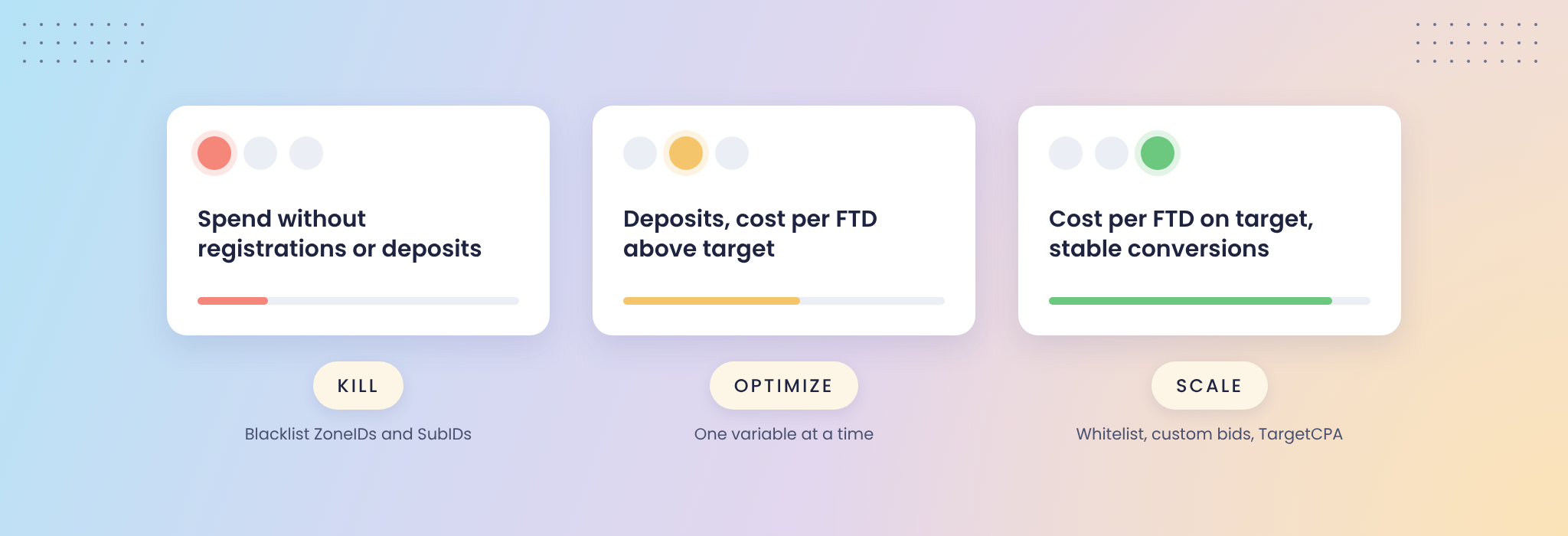
The first 48 to 72 hours tell you a lot. That’s the window for cutting underperforming sources. After that, every zone falls into one of three groups:
- Kill zones that spend without registrations or deposits. Blacklist them at ZoneID and SubID level.
- Optimize when deposits come in but the cost per FTD sits above target. Change one variable and measure again before touching anything else.
- Scale when the cost per FTD hits target and conversions are stable. Move the best zones into a separate whitelist campaign and raise their budget with custom bidding.
You don’t have to manage every zone by hand. Mondiad’s smart optimization rules can pause or adjust weak sources and campaigns automatically. They start collecting data from the day you create the rule and are checked and applied every five minutes.
There’s one catch worth knowing: with very wide targeting or a very high bid, a rule may not block a segment in time. That can lead to overspending. Narrow targeting protects you here as well.
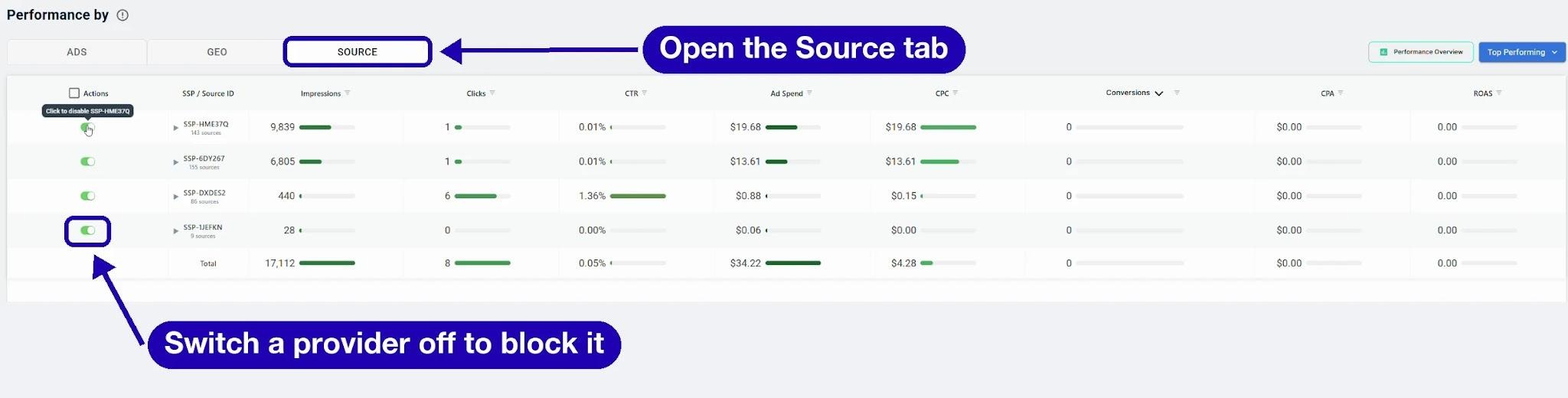
Blockchain-Ads handles the same cleanup in Reports. Each traffic provider gets its own row and on/off toggle, and you can open a provider to switch off single websites or apps.
Scaling is where Advanced Bidding comes in. Custom bids can be set by SubID, by ZoneID and by country. That lets you pay more for the placements that convert without raising the bid for the whole campaign. Once conversions settle, TargetCPA takes over and adjusts bids toward your target cost per action.
Growth should come in small steps. A new format or a new licensed GEO makes sense only after the first setup is profitable, and each one deserves its own test. Dafabet followed the same path to cut its blended CPA by 32%, testing in South Korea first before expanding across six Asian markets. For a full walkthrough on a single traffic type, see how to launch iGaming campaigns with adult traffic.
How Do You Scale a Proven iGaming Offer on Blockchain-Ads?
Once a combination holds its cost per FTD, the next question is where more of the same players come from. Blockchain-Ads answers that with audience targeting on top of the formats you already tested.
- Same formats, more volume. Popunder inventory carries 500M+ daily impressions, and push reaches 200M+ opted-in subscribers across 195+ GEOs.
- In-page push for iOS reach. In-page push renders inside the page, so it reaches iOS users and visitors who never subscribed to notifications.
- Targeting by player. Campaigns can target on-chain activity across 82 blockchains, behavior and interest from 420M+ user profiles, and about 1,000 pre-built audiences.
- Optimization toward deposits. Set FTDs as the conversion goal, and NEXUS AI starts shifting budget toward the sources delivering them within 24 hours.
- Display and native for extra reach. Once pop and push are profitable, display and native bring in new players beyond the same placements.
iGaming operators have used this setup to scale first-time deposits on display campaigns. Stake.com acquired 1,128 first-time depositors at $250 CPA, and Vbet acquired 1,009 depositors at $164 CPA in 30 days. Roobet drove 990 first-time deposits at $23 CPA.
Access is limited to qualified advertisers, and self-service accounts open with a $10,000 deposit. Request access once your test has a cost per FTD worth scaling.
Let AI Handle the Work for You
An AI assistant connected to your ad account takes over the routine checks. The Model Context Protocol (MCP) lets AI assistants connect to outside tools. Mondiad’s MCP server links your advertiser account to any MCP-compatible AI tool, such as Claude, ChatGPT or Cursor.
From there, you can ask in plain language. Check the balance, pull a performance report, or find, clone, create, update and pause campaigns. Mid-test, a question like “Which of my Brazil push campaigns spent today without a conversion?” replaces a manual report export.
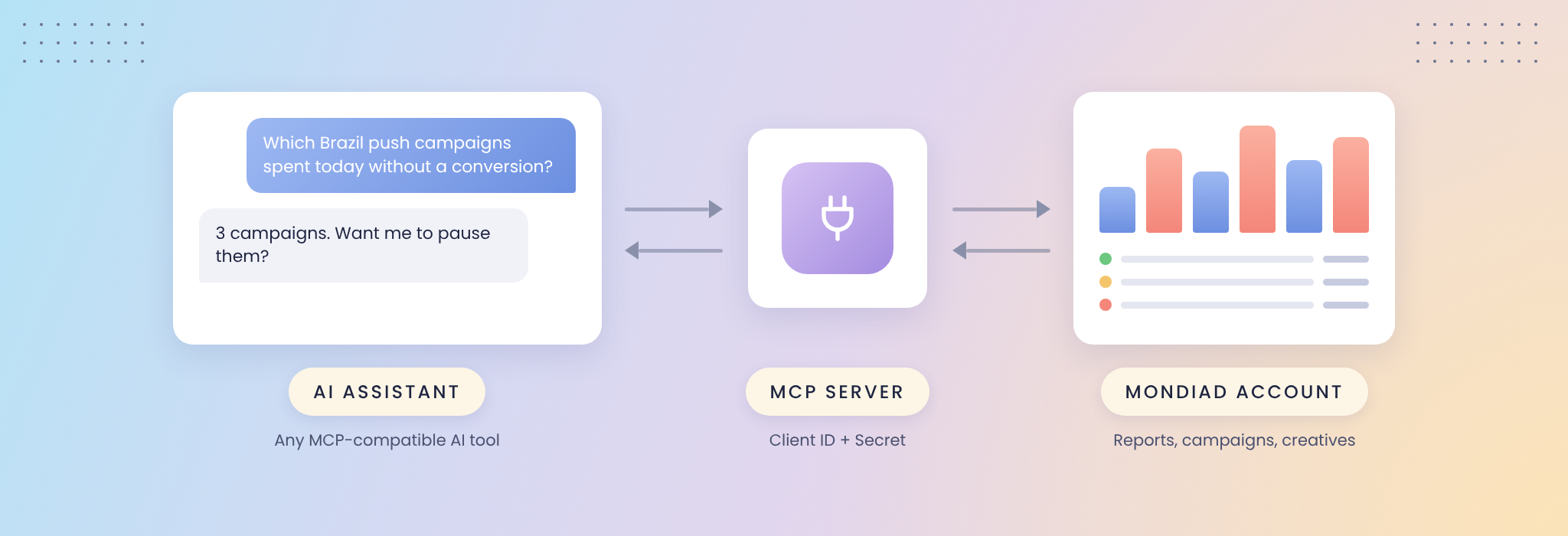
Setup takes a Client ID and Client Secret, generated under Account Settings in your Mondiad account and added to your AI tool. Mondiad doesn’t charge for MCP access, although some AI tools need a paid plan for custom connectors.
One thing to keep in mind: the connection can write as well as read, so review each change before you confirm it. The assistant can’t add funds or permanently delete campaigns, and decisions about what to kill or scale should stay with you.
Ready to Test and Scale Your Next iGaming Offer?
Popunder, classic push and in-page push all run from one Mondiad account. You also get postback tracking, custom bidding by ZoneID and SubID, smart rules, TargetCPA and MCP access. Every account also comes with a dedicated account manager. The minimum deposit is $50, so a first test doesn’t need a big upfront budget. Create your Mondiad advertiser account and launch your first iGaming test.
Once the test proves out, request access to Blockchain-Ads to scale it with audience targeting and NEXUS AI optimization toward deposits.
FAQ
What is the best traffic to test iGaming offers?
Mondiad recommends starting with popunder plus classic push. Popunder shows which GEO and offer combinations convert, and push is where you scale them.
Should I start on Mondiad or Blockchain-Ads?
Start on Mondiad if you are proving a new offer, GEO or pre-lander on a small budget. Move to Blockchain-Ads once the cost per FTD holds and you have the budget to scale with audience targeting.
Can I use the same creatives in every GEO?
Usually not. Gambling rules, minimum ages and bonus messaging change from market to market. Localize the language and currency, and check each creative against local rules before launch.
Can an AI assistant manage my iGaming campaigns?
It can take over a lot of the routine work. Through Mondiad’s MCP server, an assistant can pull reports and create, clone, update or pause campaigns on request. It can’t add funds or permanently delete campaigns, and decisions about what to kill or scale should stay with you.
How much budget do I need for a first iGaming test?
Not much. In a Tier 3 GEO, $100 to $200 is enough to check the setup and test one or two variables. The minimum deposit on Mondiad is $50.
How long should an iGaming test run before I decide?
Give it 48 to 72 hours. That’s usually enough to spot the zones that spend without registrations or deposits, and to decide whether to kill, optimize or scale.
BCA Labs is the Blockchain-Ads editorial team. It writes and updates Growth Hub guides on crypto, iGaming and finance advertising.
View full profile →