How to Launch a Successful ICO in 8 Easy Steps

An ICO (Initial Coin Offering) is still one of the fastest ways to raise capital for a crypto project, but only if it’s executed with real demand behind it. Most fail for the same reason: no buyers, no liquidity planning, and no structured go-to-market.
This guide breaks down how to actually launch an ICO in 2026, from deciding if you need one to structuring it to getting real users to commit before (and during) launch.
Why most ICO launches fail
The pattern repeats across most token launches. The team builds in isolation for months, excitement grows internally, a white paper and site go live, and suddenly it's launch time. Then nothing meaningful happens.
The core issue is almost always timing and distribution mismatch. Most projects treat marketing as a final step; it should be the first system you build. What typically goes wrong:
- No pre-existing buyer intent: People follow the project but haven't made a financial decision yet. That gap between attention and commitment is where most ICOs collapse.
- Vague or delayed token utility: If a buyer can't see why holding the token matters beyond speculation, they behave like short-term traders, creating instant sell pressure.
- Distribution overconfidence: Founders assume launchpads, influencers, or exchanges will bring demand. Those channels amplify existing demand; they rarely create it from scratch.
A healthy ICO funnel doesn't look like hype; it looks like pre-decided behaviour:
- Wallets already connected,
- Users approved for participation,
- Caps and pricing understood,
- Spend mentally pre-committed.
Without that layer, launch day is a guessing game.

Do I need an ICO in 2026?
This is the first real strategic decision, and it’s where a lot of teams make the wrong call.
Put simply, in 2026, you do an ICO if it fits your distribution capabilities.
There are three key models:
- An ICO gives you full control over pricing, timing, structure, and access, but you own all the responsibility for bringing buyers in.
- An IEO (Initial Exchange Offering) shifts some credibility and distribution to a centralised exchange, at the cost of strict requirements, fees, and a slower approval process.
- An IDO (Initial DEX Offering) prioritises liquidity and speed, trading almost immediately, at the cost of early control over price discovery.
So the real question isn’t which one is best between ICO, IEO, and IDO; it’s where does my demand come from?
If you already have a community that trusts you, or you can consistently reach wallets through ads or partnerships, an ICO can outperform everything else because you keep the entire funnel.
If you don’t have distribution figured out, an ICO won’t fix that; our fundraising guide covers structuring the raise itself in more depth.
What is an ICO?
At its simplest level, an ICO is a structured sale of a token before it becomes publicly tradable.
But that definition isn’t what’s actually happening.
An ICO is the first moment your token gets priced by real buyers under controlled supply conditions. It’s controlled price discovery with artificial scarcity.
How does an ICO work?
- You first define your tokenomics, including total supply, allocation, vesting schedules, and utility design, as these choices directly influence buyer behavior.
- You deploy smart contracts for minting and contributions, outlining who can buy, the purchase limits, pricing, and conditions.
- Once live, users commit capital into the contract. That capital is locked until distribution conditions are met.
- After that, tokens enter circulation, and liquidity is introduced through exchanges and decentralised pools.
But the important thing to understand here is that ICOs are systems; they stretch across weeks and months, combining marketing, engineering, and liquidity planning.
What types of ICOs exist?
Private ICOs
Private rounds happen before anything is public, filled with funds, angels, or strategic participants who understand the early-stage risk. Their real function is setting the tone: capital entering early signals confidence to the market. Rounds typically involve discounted entry pricing, longer vesting, negotiated allocation sizes, and strategic partnership expectations.
Public ICOs
This is the visible phase people usually mean by "ICO": open, often time-limited, and heavily influenced by momentum. Public sales are extremely sensitive to early signals, snowballing on a strong first wave or losing confidence almost immediately on a weak one. That's why timing and sequencing matter more than messaging at this stage.
What is the difference between an ICO and a token sale?
A token sale is the broader category; an ICO is a specific structure within it. Most modern ICOs are hybrid systems combining private allocation, public sale windows, and post-sale liquidity events, since pure public sales are too unstable and private sales alone don't generate enough distribution.
Where do I launch an ICO?
There isn’t a single correct answer here. It’s far more about the tradeoffs involved.
- Self-hosted ICOs provide complete control over pricing, UX, wallet flow, and allocation logic but also require you to manage security, scaling, and user experience under load.
- Launchpads provide distribution and credibility but limit control over sale structure, and competition for slots is high.
- IEOs offer exchange-backed trust, but they are expensive and selective. They tend to favour more established projects.
Hybrid approaches are becoming the default because they allow teams to separate phases: raise funds privately first, run controlled public distribution second, and handle liquidity independently afterward.
That separation reduces pressure on a single launch moment to do everything at once.
What does it cost to launch an ICO in 2026?
The cost question is usually misunderstood because people focus on development instead of everything around it. Smart contracts might cost between ten and fifty thousand dollars, depending on complexity. Audits add another layer of cost, often similar in magnitude. Legal structuring is highly variable but becomes unavoidable once real capital is involved. White papers, branding, and positioning incur costs, but they aren't the main budget drivers.
Some straightforward figures:
However, the real cost centre is acquisition.
Marketing and distribution can range from tens of thousands to hundreds of thousands, depending on how competitive your niche is. That’s where most teams underestimate reality.
There are also hidden costs such as:
- Failed creative testing cycles
- Community moderation during volatility
- Liquidity provisioning after launch
- Infrastructure scaling during spikes
It’s important to keep all of these in mind.
How to create a successful ICO
Below are the steps required to create a successful ICO. Remember that execution is both layered and iterative.
1. Get the team and advisor board together
Before anything goes public, you need credibility signals in place.
That includes founders with visible track records, technical capability for smart contract execution, and advisors who bring real distribution leverage and not just names.
The strongest advisors are usually connected to liquidity, exchanges, or large on-chain communities. Their value lies in the access they can unlock.
2. Prepare the product roadmap
A roadmap is a story of how demand will form over time, not just a feature list.
It should clearly explain why the token becomes more valuable over time and what real usage drives that.
In reality, if the roadmap doesn’t connect to token demand, it doesn’t matter how well it’s designed because it won’t convert.
3. Get out a white paper
A white paper is your persuasion tool more than anything else. It should clearly explain:
- How your supply is structured
- How tokens unlock over time
- What utility actually exists
- How value flows through the system
- What risks exist
The best white papers reduce uncertainty enough that investors understand the opportunity and mechanics without further explanation.
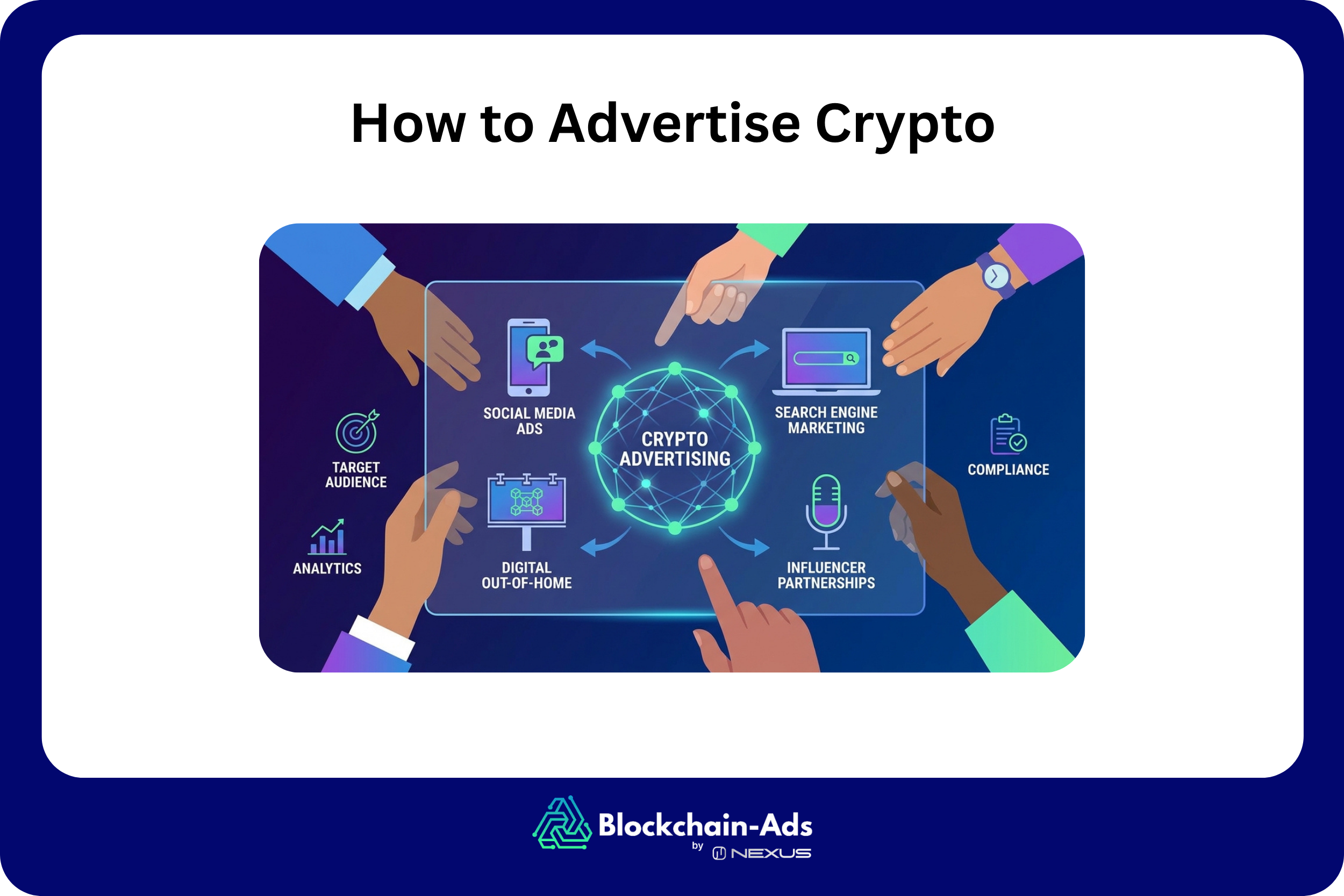
4. Run paid campaigns to grow your audience
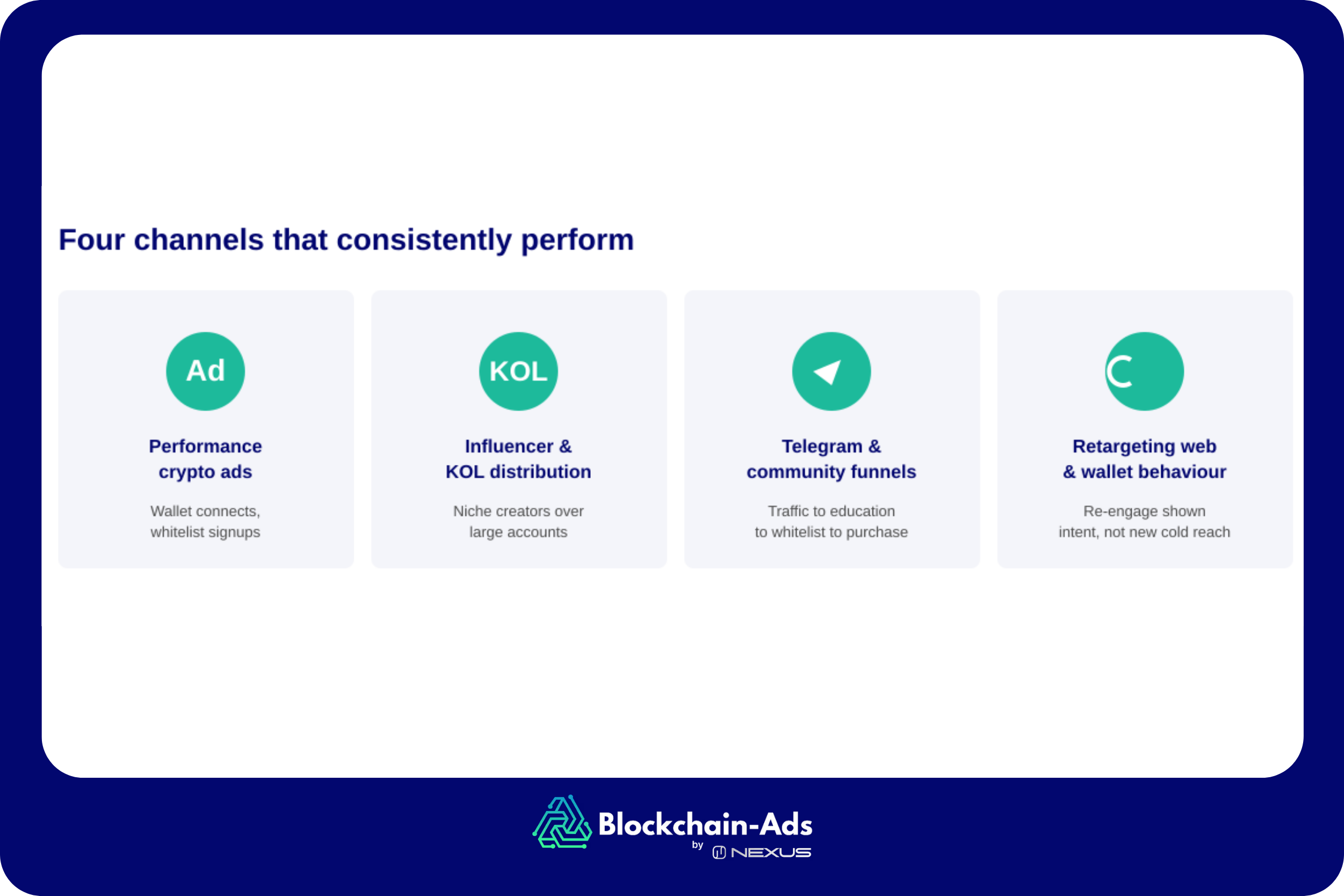
This is where most ICOs fail. Remember that even strong projects need structured acquisition systems. Channels that work include performance-based crypto ads, influencer-driven distribution loops, Telegram funnel campaigns, and retargeting across web and wallet behaviour.
But the shift that matters most is wallet-based targeting.
Instead of targeting “crypto users,” you target people based on what they’ve actually done on-chain: so DeFi usage, swaps, NFT activity.
Mainstream ad platforms often restrict ICO-related campaigns or deliver weak conversion performance, which is why most serious teams move toward native acquisition systems.
ICO acquisition usually breaks into a few working channels that consistently perform across launches:
Performance-based crypto ads
Run through crypto-native ad networks or specialised Web3 media inventory, optimising not for clicks but downstream actions like wallet connections, whitelist signups, or token purchases. Typical early-stage budgets range $5,000 to $20,000 for testing, scaling to $25,000 to $100,000+ for presale acquisition depending on competitiveness and geography.
Influencer and KOL distribution
Still one of the fastest ways to generate early attention, but the real performance comes from structured campaigns rather than one-off posts. Smaller, niche creators in DeFi, gaming, or ecosystem-specific communities often outperform large accounts when measured by wallet conversions. Serious ICO campaigns allocate $10,000 to $250,000+ here, depending on reach and exclusivity.
Telegram and community funnel systems
Telegram is the mid-funnel environment more than anything else.
High-performing funnels usually follow a strict sequence that looks like this:
- Traffic
- Telegram
- Education
- Wallet connection
- Whitelist
- Purchase
Without this structure, communities tend to inflate numbers without creating buyers.
Retargeting across web and wallet behaviour
Retargeting enhances acquisition efficiency by focusing on re-engaging users who have already shown intent, rather than constantly seeking new ones.
This encompasses website visitors and users who abandon key actions on landing pages. It also includes Telegram joiners who do not progress in the funnel and wallet-connected users who fail to finalize their purchase intent.
This reduces acquisition cost while increasing conversion probability.
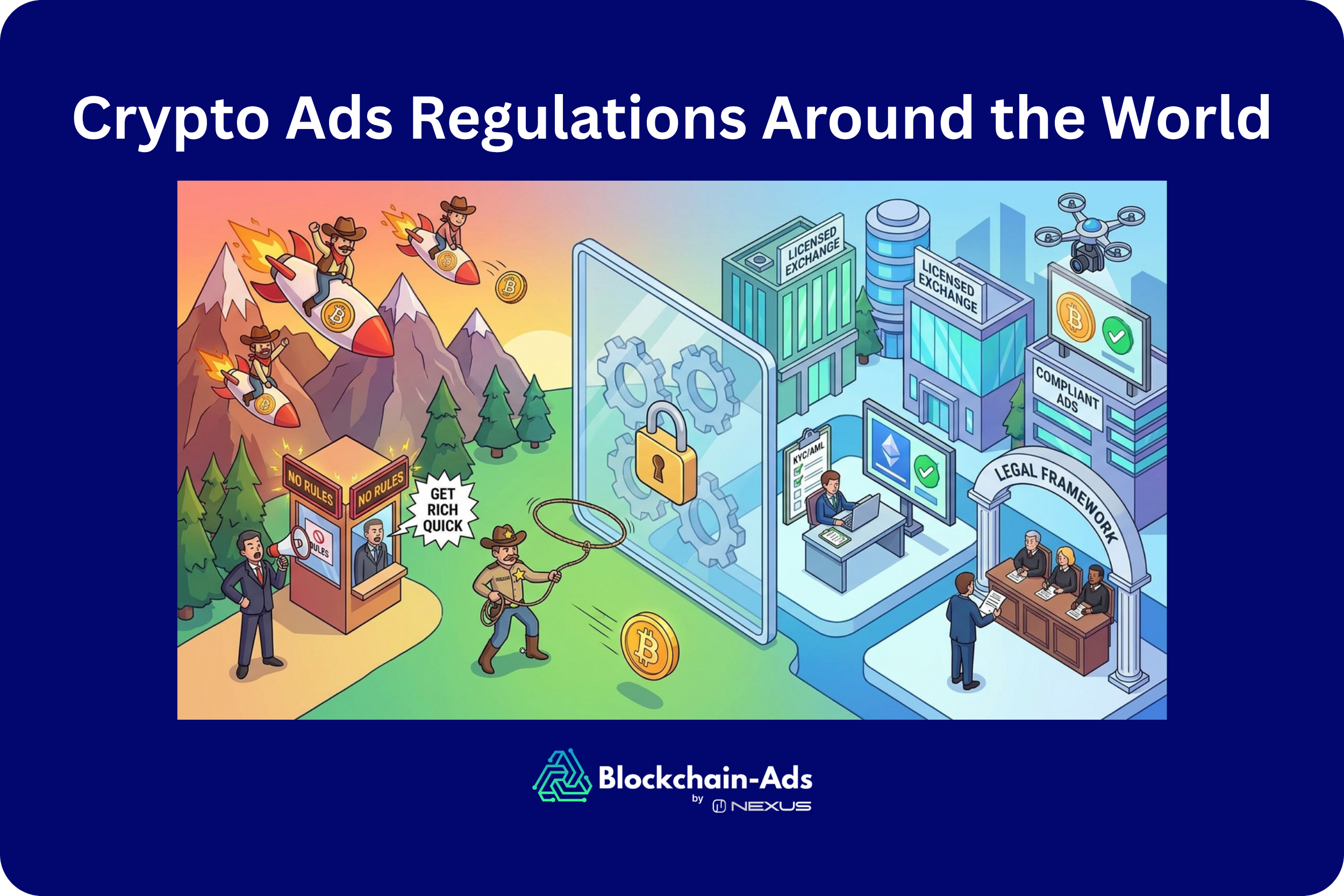
Working around crypto advertising restrictions
One of the biggest constraints in ICO marketing is that mainstream platforms often restrict or limit direct token sale promotion.
Google, Meta, and similar advertising platforms often prohibit direct ICO messaging. They either restrict targeting of financial products or impose strict compliance conditions that limit reach and performance.
Because of this, most successful teams do not rely on direct “buy token” messaging at all stages.
Instead, they work around restrictions by doing the following:
- Promoting education-first funnels (not sales pages)
- Driving users to community entry points instead of checkout flows
- Focusing on ecosystem participation rather than token purchase language
- Shifting conversion events to wallet connection and whitelist registration
Example: how this plays out in real launches
For example, Blockchain-Ads has worked with Web3 projects to build acquisition systems focused on turning attention into measurable token growth.
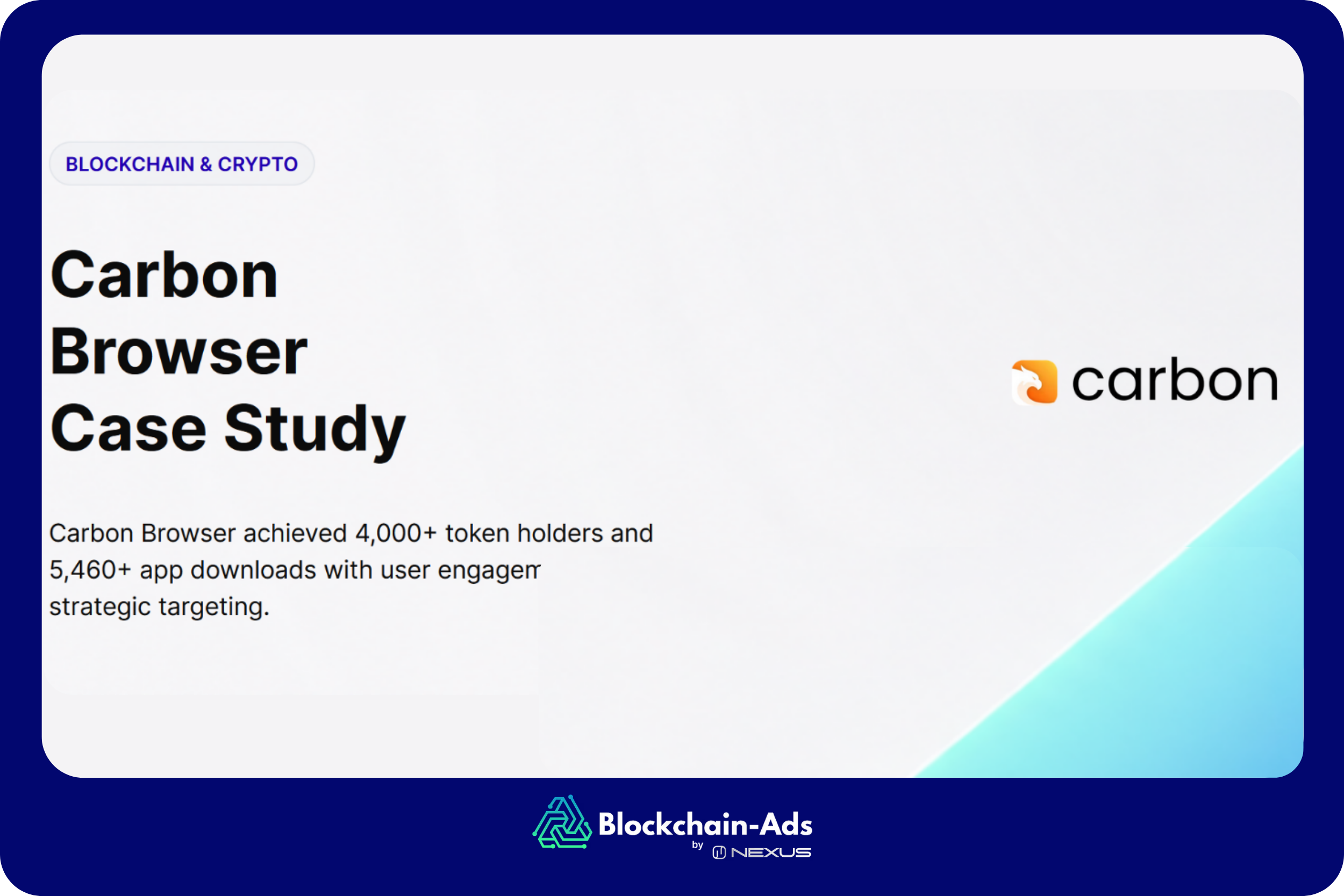
Carbon Browser used targeted Web3 campaigns to grow its token holder base, focusing on reaching users who were more likely to engage with the product ecosystem rather than simply generating passive awareness.
With a $100,000 ad budget, the campaign drove over 5,460+ app downloads, resulting in approximately 2,171 users converted to $CSIX token holders, a 40% download-to-token conversion rate.
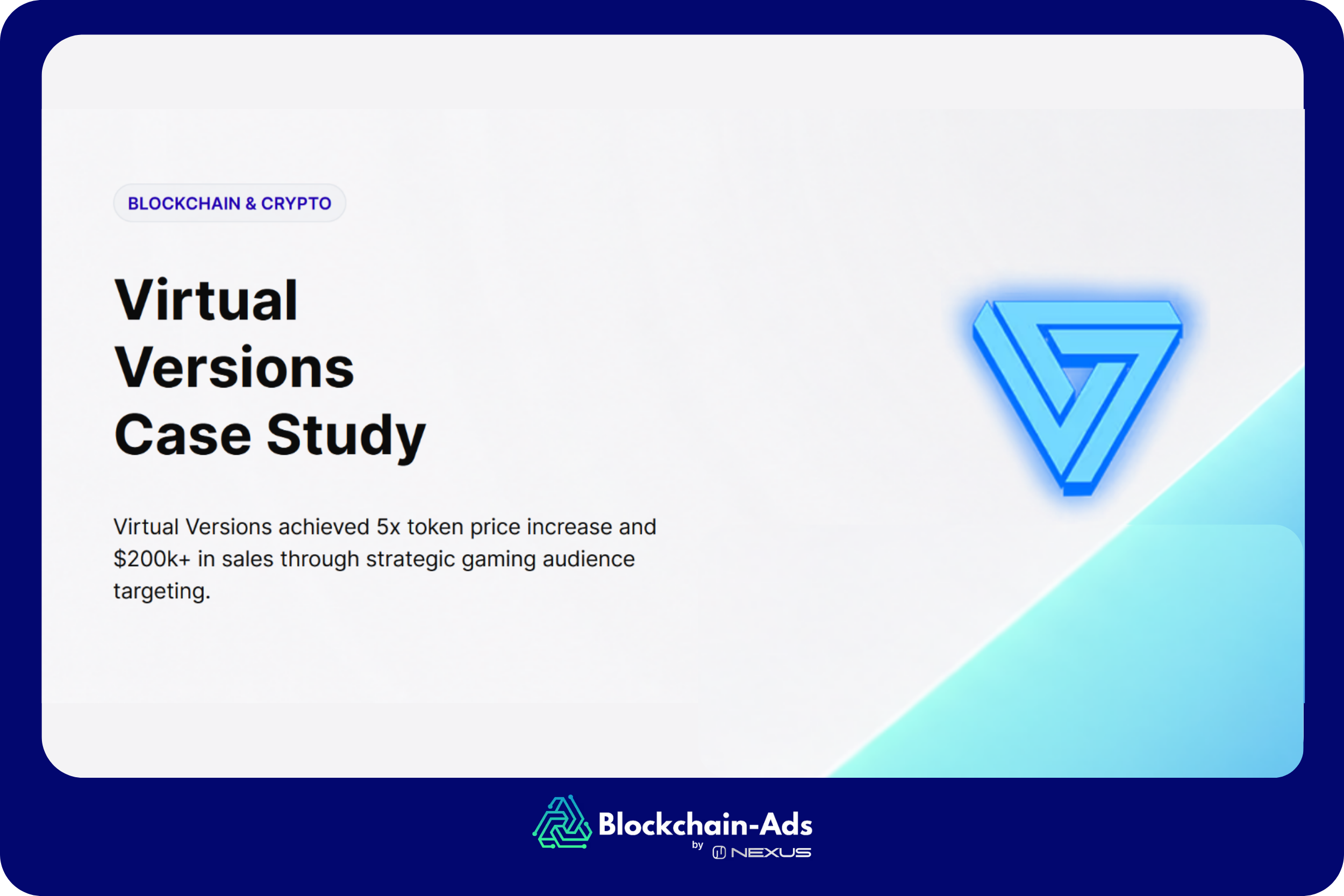
A Web3 gaming project, Virtual Versions, used similar acquisition strategies around its IDO, helping increase token performance by connecting the launch with relevant crypto-native audiences and improving demand around the token.
The campaign acquired 3,000+ new token holders at a $19.05 CPA, generated $200,000+ in total token sales, and drove $40,000+ in purchases within minutes of IDO opening. The token price rose 5x from launch to campaign completion.
These highlight an important point: you win token launches well before the launch date.
Can you run Google Ads for an ICO?
In most cases, direct ICO promotion on Google Ads is restricted or heavily limited under financial products and speculative crypto policies.
Even when campaigns are approved, they often face low reach, strict compliance requirements, and poor conversion quality compared to crypto-native acquisition channels.
5. Pick a token sale model
Your sale structure shapes everything after launch.
A fixed price is simple but rigid, while tiered pricing creates urgency. Dutch auctions allow demand to set price, while caps define boundaries for risk management.
In short, supply design is just as important as pricing.
A common structure looks like this:
- 10–30% circulating at launch
- Majority locked under vesting
- Separate liquidity reserves
If you get this wrong, you either face inflation pressure or a lack of market depth.
How do I choose the total supply for my ICO token?
Most ICO tokens are designed around market psychology and comparability rather than absolute value.
The key is consistency with your pricing model and distribution plan. Your total supply must align with how you structure allocation, vesting, and initial circulating supply; otherwise, you create confusion in early price discovery.
Supply is usually set after defining your target fully diluted valuation (FDV), public sale allocation, liquidity requirements, and vesting and unlock schedules.
There is no optimal supply number. You need a structure that supports stable launch conditions and avoids distorted perception during early trading.
6. Develop the smart contract and mint tokens
This step is really focused on making key decisions and hiring specialists to execute them.
Choose your chain: Ethereum (ERC-20) for liquidity and exchange access, or Solana (SPL) for lower fees and faster transactions. This is a distribution decision, not a technical one.
Define your token mechanics: total supply, allocation, vesting schedules, and sale rules (caps, whitelist logic). These determine post-launch market behaviour.
Audits are required for credibility and security, too. Most projects complete at least one third-party audit, typically costing $8,000–$40,000+.
Core costs here:
- Development: $10,000–$50,000
- Audits: $8,000–$40,000
In short, this stage is about structuring your risk more than anything else.
7. Run your pre-launch paid campaign
This is the highest-leverage phase of the entire ICO. The objective: converting intent into committed participation before the token goes live.
Effective pre-launch campaigns are built around controlled conversion systems such as:
- Whitelist and KYC funnels
- Retargeting high-intent users
- Referral and allocation priority loops
- Staged information release to build urgency
This is where demand is actively shaped before capital is collected.
For example, EstateX used structured pre-launch acquisition and retargeting to drive large-scale verified participation before its token sale.

The campaign generated 6,842 whitelist sign-ups at a $95 CPA, converting 24% through to 1,625 KYC-verified investors at a $400 KYC CPA. The $ESX presale raised $3,000,000 at a 4.6x ROAS, selling out in under three minutes once investors were activated, showing how pre-launch demand generation translates directly into capital formation.
This kind of performance is achieved through crypto-native acquisition systems such as Blockchain-Ads, which enable behaviour-based segmentation across Web3 audiences.
8. Launch the ICO
Launch day is more about execution under pressure than it is marketing.
You are executing allocation, monitoring demand flow, and keeping the sale infrastructure stable in real time.
For instance, 5ire.org used structured acquisition and distribution systems to significantly expand its token holder base during its launch phase.
5ire acquired 170 new $5IRE token holders at a $119.52 CPA over a 30-day campaign, generating $57,782 in token purchase volume against $20,318 in total ad spend, a 2.84x ROAS.
Demand systems were already built to convert attention into immediate capital flow when the sale opened, achieved through crypto-native acquisition infrastructure.
What comes next after launching your ICO?
Once the ICO ends, the focus shifts from fundraising to liquidity engineering. Liquidity is not automatic and has to be built.
Without liquidity depth, price discovery becomes unstable even after a successful raise.
How do you ensure liquidity after your token launches?
Liquidity is created by actively funding DEX pools at launch, usually using a portion of raised capital or a dedicated reserve to ensure initial depth.
Most projects then work with market makers to stabilise spreads and reduce early volatility, while sometimes adding incentives like staking and rewards to attract trading volume.
Proper vesting alignment is also critical so unlocks don’t overwhelm available liquidity and destabilise price action.
How do you increase your token price after an ICO?
Price is not driven by hype. It’s really driven by an imbalance between demand and unlock pressure.
Sustainable drivers include real utility activation, exchange listings, ecosystem expansion, controlled vesting releases, and buyback and burn mechanisms.
The core idea is simple: demand must consistently exceed supply entering the market.
Final takeaway
In summary, three things matter most when launching a successful ICO: credibility builds trust, infrastructure ensures safe execution, and distribution determines whether users actually buy.
A lot of teams spend 80% of their time on credibility and infrastructure, while the winners focus early on distribution systems and scale them using crypto-native acquisition infrastructure such as Blockchain-Ads.