How to Run Crypto Paid Media Campaigns, from Setup to Scale
Key takeaways
- License first: Check the licensing requirements in every target market before launch.
- Track before spending: Define and measure the actions that matter, from sign-ups to first deposits.
- Match your channels: Choose eligible platforms and targeting options that fit your product and goals.
- Test ad sets: In month one, advertisers running five or more ad sets captured a first deposit 87% more often than those running one.
- Scale proven winners: Judge campaigns by conversions, CPA, and revenue, not clicks alone.
Your first crypto ad campaign can attract attention and still fail to bring in the users your business needs.
Knowing how to advertise crypto starts with securing a license for each market you target, setting up conversion tracking, and giving each campaign a clear goal.
To understand how these decisions shape a campaign, we spoke with Vlad Chejkov, CEO of Blockchain-Ads, and Marko Rendevski, Head of Performance Marketing. They share practical insights into running crypto paid media campaigns, from choosing channels and setting up measurement to structuring ad sets, testing creatives, and scaling what works.
This guide follows the order a campaign runs, which includes:
- What to prepare before launch
- How to structure your first month of testing
- How to judge each campaign by the action it was built to drive
What Is Crypto Paid Media?
Crypto paid media means paying for ad placements across search engines, social platforms, crypto ad networks, websites, and apps to reach potential customers. Crypto exchanges, wallet providers, DeFi protocols, and token projects use these placements to attract users, promote products, and drive conversions.
In practice, crypto paid advertising comes down to four components:
- Campaign objective: What you want people to do, from noticing your brand to registering, making a first deposit, or trading.
- Conversion tracking: How you’ll confirm the ads produced that action.
- Paid channels: Where you buy placements across search, social media, crypto ad networks, open web programmatic, and in-app.
- Audience targeting: Who sees the ads, based on location, behavior, wallet activity, or your own customer data.
Each component serves a distinct purpose. Your channel determines where ads appear, targeting defines who sees them, objectives establish success, and tracking measures results.
What You Need Before You Advertise Crypto
Before you advertise crypto, put these four prerequisites in place so you have a clear foundation for launching and measuring your campaign.
A License for Each Market You Target
Before you advertise cryptocurrency in a new market, confirm you can legally promote your product there and meet the relevant licensing requirements. The rules depend on the product, the country, and the channel you plan to use.
Check the regulations in each target market, then review the advertising platform’s requirements. Meeting local law does not automatically qualify you to advertise on every platform.
For a closer look at country-specific rules and platform requirements, read our guide to crypto advertising regulations.
A Clear Offer and Conversion Event
Your campaign needs a specific offer and a measurable action you want users to take. Without both, it’s hard to tell whether your ads are attracting the right people.
Match the conversion event to your campaign objective:
- Awareness: Reach, impressions, or engagement.
- Sign-ups: Completed registrations or app installs.
- Acquisition: First deposits or trades.
- Retention: Repeat visits or transactions.
Choose the event before launch. If your goal is registrations, judging the campaign only by deposits could lead you to overlook an ad set that attracts qualified new users.
Tracking Set Up Before Launch
Set up conversion tracking before your first ad goes live. This helps you connect campaign activity to the actions users take afterward.
The State of Advertising in Crypto, iGaming and Finance 2026, which covers 200+ advertisers across crypto, iGaming, and finance, found that advertisers who set up tracking before launch reached a first deposit or trade 92% more often (46% against 24%).
The finding is observational, but it reinforces the principle that you must establish measurement before spending. Configure the relevant pixel, tag manager, or server-side integration, then test the conversion event to confirm it fires when the intended action occurs.
A Landing Page That Matches the Ad
Your landing page should continue the promise your ad makes. If the ad promotes a wallet, visitors should arrive at a page explaining that wallet and showing them how to get started.
Before launch, check that the page:
- Explains the offer clearly and matches the ad creative.
- Works properly on mobile and loads without errors.
- Makes relevant fees, eligibility requirements, and risks easy to find.
- Includes required disclosures and a clear next step.
Which Paid Channels Accept Crypto Ads
Paid ads for cryptocurrency run across several channels, each with its own requirements and audience. Choose based on your product, target market, and campaign objective.
Search
Search ads reach people actively looking for crypto products on search engines like Google. Eligibility depends on the product, market, and platform requirements. See our guide to running crypto ads on Google.
Social Media
Social platforms offer interest-based targeting and video formats, though some crypto products require prior approval. Read our guide to crypto ads on Facebook.
Crypto Ad Networks
These networks connect advertisers with crypto-focused audiences across relevant websites and placements. Compare your options in our roundup of the best crypto ad networks.
Open Web Programmatic
Programmatic advertising automates ad buying across participating websites and apps. Check crypto eligibility and available inventory before launching.
In-App
In-app ads reach users inside mobile applications and can support acquisition or re-engagement campaigns.
Matching the Channel to Your Product
When deciding how to advertise your cryptocurrency business, start with what you offer, the action you want users to take, and the channels that accept your product.
| Product | Start with | Watch for | Measure |
|---|---|---|---|
| Exchange | Search, programmatic, in-app | Search may require certification and licensing in each target market | Registrations, first deposits, trades |
| Wallet | In-app, programmatic | Swap or staking features may affect social media eligibility | Installs, wallet creation, funded wallets |
| DeFi protocol | Crypto ad networks, programmatic | Some search platforms exclude DeFi trading protocols | Wallet connections, first on-chain transactions |
| Token project | Crypto ad networks, programmatic | Check applicable advertising rules before promoting the token | Reach, community sign-ups |
| NFT project | Social media, programmatic, and crypto ad networks | Eligibility depends on the NFT offering and channel policies | Marketplace visits, mints, purchases |
| Crypto gaming | In-app, programmatic, social media | Token rewards and play-to-earn features may affect eligibility | Installs, active players, in-game transactions |
| Stablecoin issuer | Search, programmatic, crypto ad networks | Check local rules and channel restrictions for stablecoin promotions | Wallet adoption, transactions, integrations |
| Smart contract platform | Search, programmatic, crypto ad networks | Check whether the offer and target market meet channel requirements | Developer sign-ups, contract deployments, API usage |
Who to Target with Crypto Paid Media
Your targeting should reflect the users most likely to take the action your campaign is built to drive. Use the following types of audiences:
Wallet-Based Audiences
Wallet-based targeting helps you reach users based on their on-chain activity. Depending on your product, you can focus on active traders, token holders, DeFi users, or people interacting with crypto applications.
Always choose segments that match the action you want users to take. Keep in mind that wallet data shows behavior, not identity or total wealth, and one person may use several wallets.
Adding Your Own Data
Your existing data can help you reach people who have already shown interest in your product. You can complement platform audience segments with website visitors, CRM contacts, and lookalike audiences built from converting users.
In The State of Advertising report, ad sets combining platform segments with first-party data captured first deposits 17% more often than platform segments alone (62% against 53%).
How to Set Up Your First Crypto Campaign
Running crypto ads starts with a clear objective and a measurable setup. Once your licensing and tracking are ready, follow these five steps to launch your first campaign and collect data you can use to improve it.
Set the Objective and Format
Start by choosing the action you want your campaign to drive. Your objective determines what you measure and which ad format makes sense.
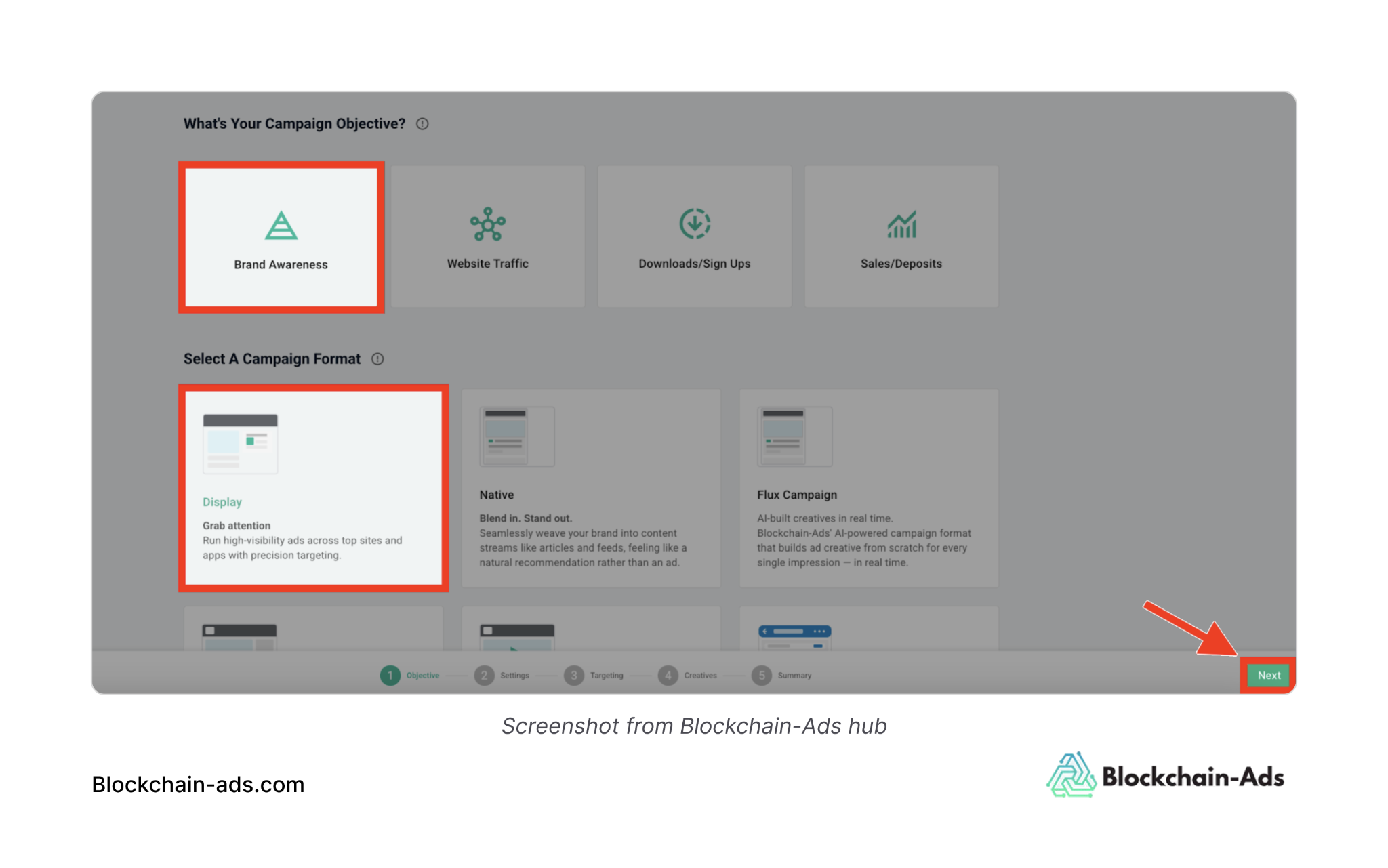
For example, an awareness campaign might focus on reach, while a user acquisition campaign could optimize for registrations, app installs, or first deposits. Choose the conversion event that matches your goal rather than defaulting to clicks.
Next, select a format that suits the message and placement. Display ads can be a practical starting point because you can create and test several variations without building a complex video campaign.
Add Tracking URLs
Add your landing page URL and the tracking parameters you need to attribute results to the campaign. Depending on your setup, these can include UTM parameters and a click identifier.
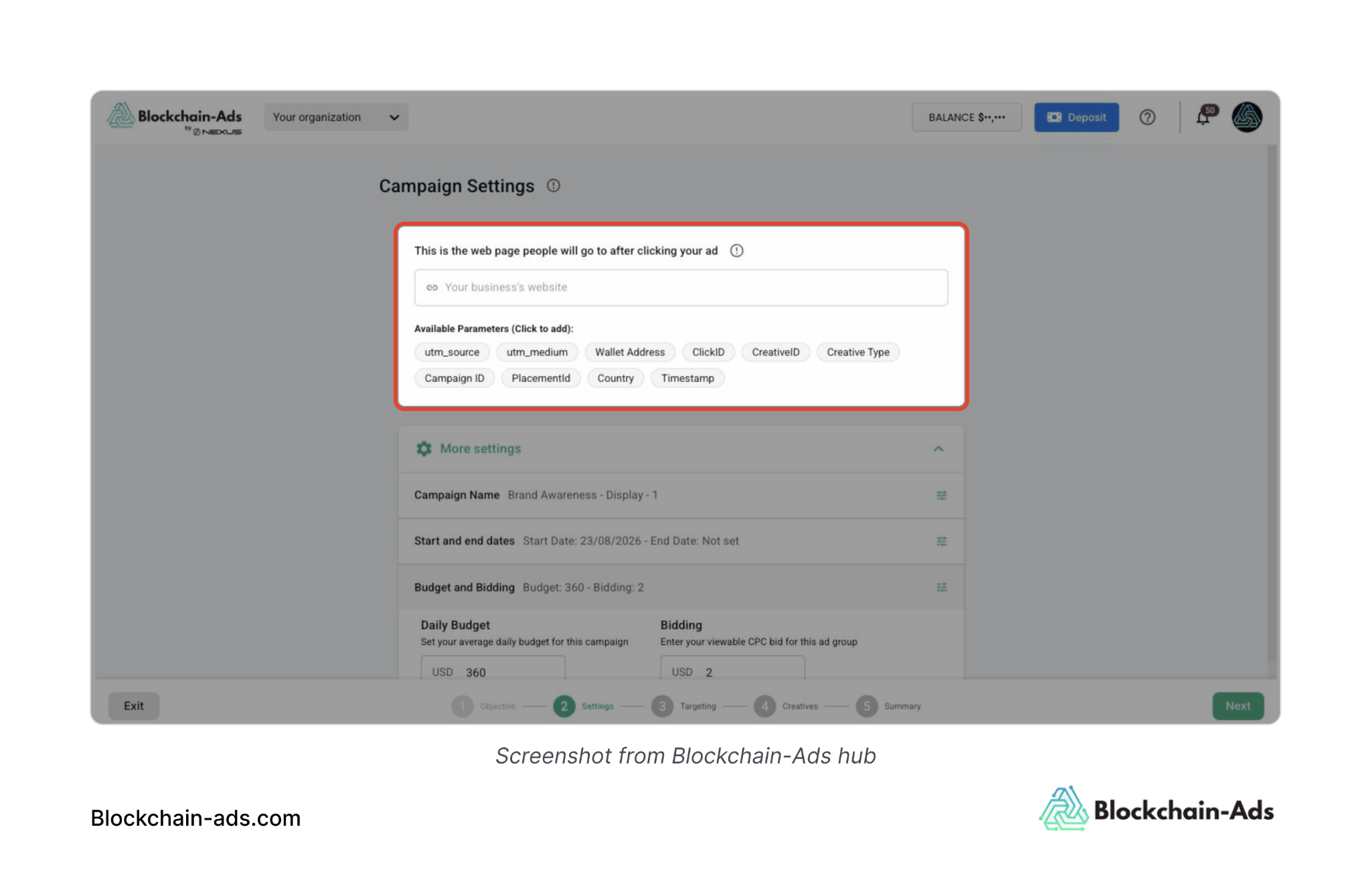
Keep your naming conventions consistent across campaigns and ad sets. This makes it easier to compare results by audience, creative, and market when you review performance.
Before moving on, check that the destination URL works and that your conversion tracking is firing. A campaign can generate clicks without giving you reliable information about what happens after them.
Set the Budget and Bidding
Set a daily budget that gives your campaign enough room to generate useful data. Then choose a bidding approach that fits your objective and buying model.
Your first campaign should help you learn which audiences, creatives, and markets respond. Avoid spreading a limited budget across so many ad sets that none receives enough spend to produce a meaningful signal.
Start with a manageable test, monitor delivery, and make adjustments after you have performance data. If impressions are low, review your bid and targeting before increasing the budget.
Build the Audience
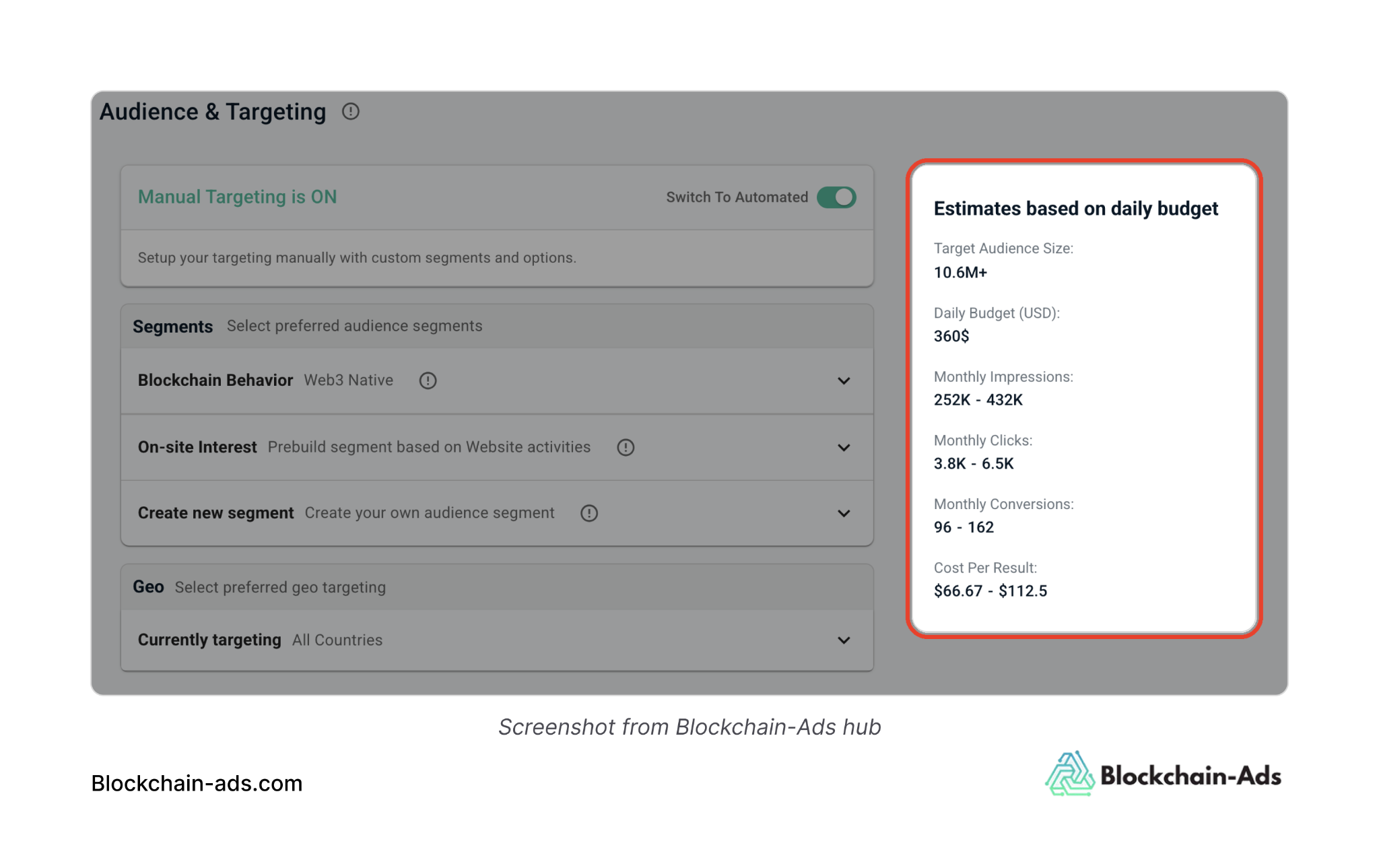
Choose who you want to reach based on your product and campaign goal. Use automated targeting to let the platform identify relevant audiences, or manual targeting when you need more control over segments and locations.
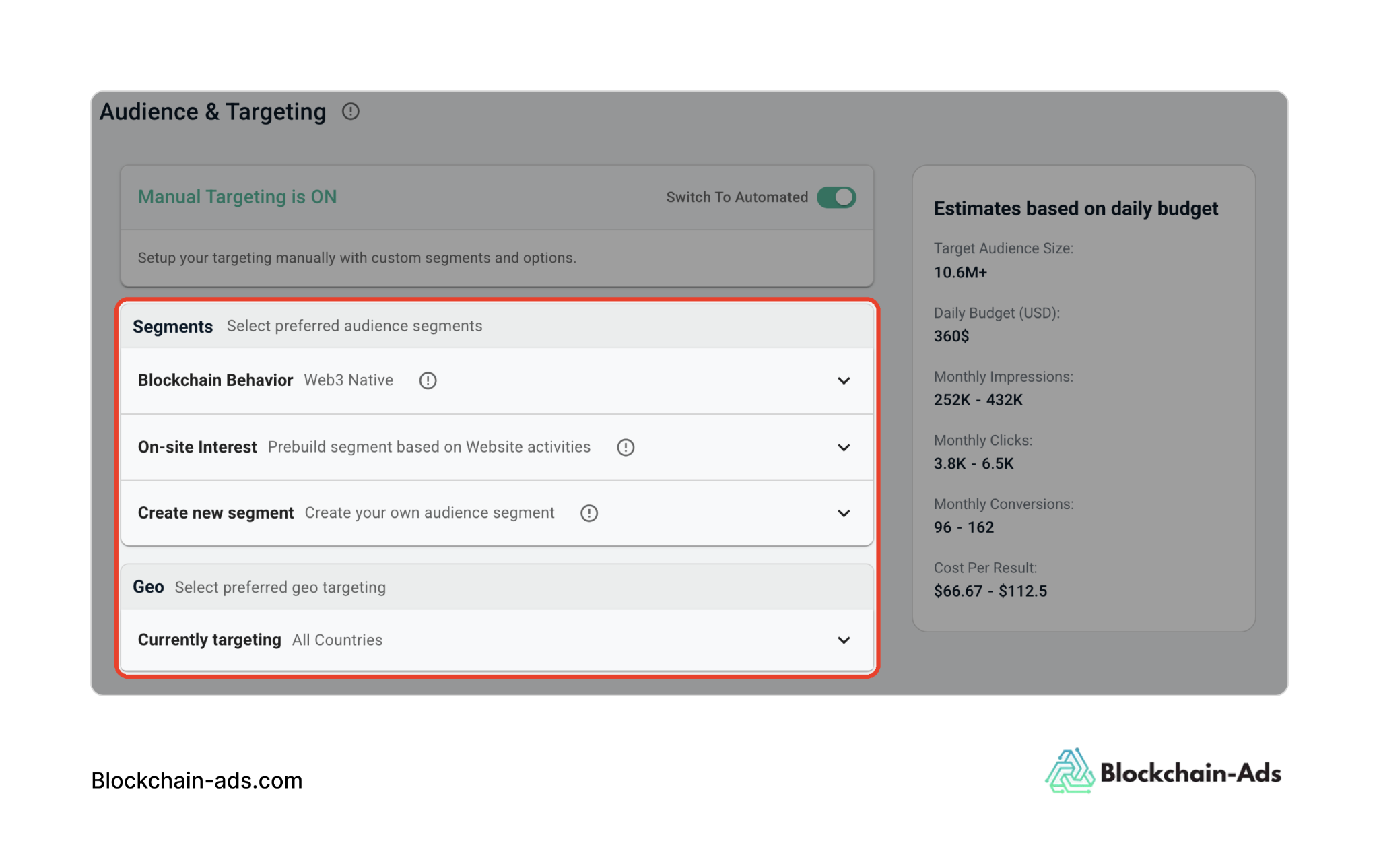
If you choose manual targeting, start with a small number of distinct audience groups. Separate markets, devices, or behavioral segments when those differences matter to your campaign. Avoid stacking overlapping segments simply to make targeting feel more precise.
Marko recommends testing each layer before adding another: “My rule is to add one layer at a time and measure CPA against reach loss.”
Use the audience estimates to check whether your targeting leaves enough people to reach. Once the campaign is live, compare conversion cost and reach before deciding whether to narrow the audience further.
Upload Creatives and Launch
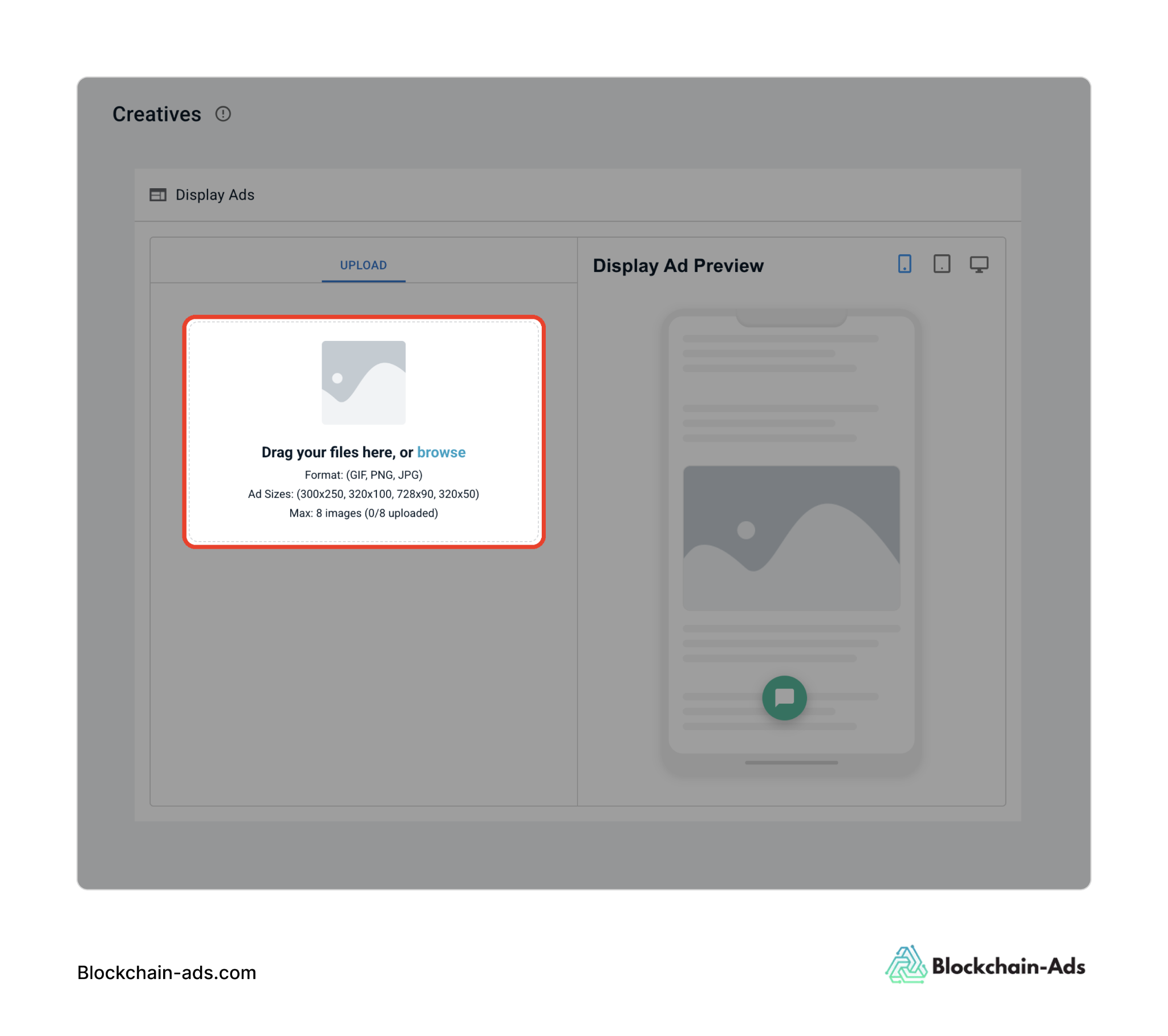
Upload your ads, add the relevant headlines and calls to action, and check that each creative matches the offer on your landing page. Prepare multiple variations so you can learn which messages attract the right users.
Before launching, review the full setup:
- The objective matches the conversion event.
- The landing page and tracking URLs work.
- The budget, bid, schedule, and locations are correct.
- Audience settings match your intended test.
- Creatives display properly and use a clear call to action.
Marko makes a useful distinction when evaluating campaign outcomes: “Ultimately the question is whether the cohort generates real revenue over time, not just a cheap first action.” Once everything checks out, launch and monitor delivery. Give the campaign time to collect useful data before changing several variables at once.
Launch Several Ad Sets in Your First Month
Advertisers who ran five or more ad sets in their first month captured a first deposit that month 87% more often than advertisers who ran just one (56% against 30%). Launch several ad sets during your first month to learn which audiences, creatives, and targeting approaches generate results.
Each extra ad set gives you another audience or creative to compare, so you have more evidence when you decide what to pause and what to scale. Keep each one funded well enough to produce a readable signal, as covered in the budget step above.
How to Measure Crypto Paid Media
Measure crypto paid media against the action each campaign is designed to drive. Track these metrics:
- Awareness: Reach, impressions, and engagement.
- Traffic: Click-through rate (CTR), cost per click (CPC), and cost per thousand impressions (CPM).
- Acquisition: Registrations, app installs, first deposits, or trades. Track conversion rate and cost per acquisition (CPA).
- Retention: Repeat transactions, returning users, and revenue per user.
- Profitability: Return on ad spend (ROAS) and ROI, where reliable revenue and cost data are available.
For a deeper look at measuring conversions across Web2 and Web3 channels, read our guide to Web3 attribution.
How to Scale What Works
Scale an ad set that delivers conversions at an acceptable cost by raising spend gradually while you watch conversion cost and user quality.
Vlad recommends giving campaigns enough time to gather data before deciding what to scale. As he explains, “The learning phase should finish the moment when you receive as much data as you can so you can evaluate if this is good or if it’s not.”
How Much to Budget for Crypto Paid Media
Budget enough for each test to reach a readable number of conversions at your target CPA, then add a reserve.
Calculate your budget by multiplying the number of tests by the planned spend per test, then keep a reserve for promising campaigns or tests that need more data. For example, four tests at $500 each need $2,000, plus whatever reserve you set aside to extend the ones that show promise.
Use our paid media budget allocation guide to build your budget.
Common Crypto Paid Media Mistakes
Optimizing for Clicks Instead of Conversions
Many advertisers focus on click-through rates and cost per click because they’re easy to track. However, high engagement means little if visitors don’t complete the actions that drive revenue.
As Vlad explains, “Without conversion, the click-through rate means nothing. So, what you need to do is optimize the metric that is closest to the actual revenue versus the one that is closer to the click.”
Setting Up Conversion Tracking Incorrectly
Some advertisers launch campaigns without confirming that their conversion events record the right actions. This creates reporting gaps and makes it harder to identify what drives results. Test your tracking before launch and verify that each event fires correctly.
Ignoring Bot Traffic and Click Fraud
Inflated clicks and impressions can make an underperforming campaign look successful. Monitor traffic quality, investigate unusual activity, and verify conversions before increasing spend.
Using Inconsistent Attribution Windows
Tracking registrations and purchases across different attribution windows can leave gaps in your reporting. You may overlook conversions that happen days or weeks after an ad interaction.
Vlad highlights the ongoing challenge of attribution: “Attribution isn’t a solved problem. It’s an ongoing problem. And you’re ending up undercounting conversions from your paid attribution.” Use consistent attribution rules across the funnel and account for the time users need to convert.
FAQs
Is it legal to advertise crypto?
Yes, in most markets. But you need the right license and clear risk disclosures first. And every country, product, and platform has its own rules, so check each one before you spend a dollar.
Can you advertise crypto on Google and Facebook?
Yes, you can. You just need permission first. Google wants you certified for every country you target, and Meta wants written approval or proof of an eligible license.
How much does it cost to advertise crypto?
It depends on your channel, your market, and how you pay (CPM, CPC, or CPA). The better question is how much each test needs. Give every ad set enough budget to reach a readable number of conversions at your target CPA.
What are the best crypto advertising platforms?
If you want crypto-native users, start with a crypto ad network like Blockchain-Ads, where you can target people by their wallet activity. Licensed exchanges and wallets can also run on Google.
Launch Your First Crypto Campaign
Running crypto paid media successfully starts with the right foundations. Get your licensing in order, define the conversion events that matter to your business, and set up tracking before you spend. Then use your first month to test audiences and creatives, identify what brings in valuable users, and scale the campaigns that deliver.
Blockchain-Ads case studies show what paid campaigns can achieve. Coinbase acquired 31,896 new traders across Southeast Asia at a blended CPA of $12.85 and reported 19.8x ROAS. Your results will depend on your product, target market, and campaign setup, but a structured testing process gives you a clearer basis for decisions.
Put these steps into practice with a campaign built around your acquisition goals. Launch your first crypto campaign with Blockchain-Ads.
Freelance content writer/editor for B2B SaaS, AI, technology, partnerships brands.
View full profile →