Understanding How Blockchain Is Used in Marketing and Advertising
Key takeaways
- Practical applications: Blockchain marketing supports audience targeting, loyalty rewards, payment automation, and ad verification.
- Wallet targeting: You can build audiences based on token holdings, trading activity, and smart contract interactions.
- On-chain measurement: Blockchain transactions can provide verifiable conversion records when linked to campaign tracking.
- Current adoption: Blockchain-Ads analyzes activity across 11M+ wallets on 82 blockchains to build advertising audiences.
- Key limitation: Blockchain records can verify transactions but cannot independently prove that an ad caused a conversion.
Blockchain marketing helps you target ad audiences, run token-based loyalty programs, and track campaign-related transactions.
You can build advertising audiences from wallet activity rather than relying only on browsing behavior or demographics. These audiences can be based on token holdings, trading frequency, and interactions with DeFi protocols.
This guide explains how blockchain works in marketing and advertising, where it's being used today, and what you should consider before adopting it.
What Is Blockchain Marketing?
Blockchain marketing is the use of blockchain technology to support marketing activities such as audience targeting, loyalty rewards, advertising verification, and conversion measurement.
Blockchain-based systems use records maintained across a distributed network. You can verify transactions, identify wallet activity, and automate processes through smart contracts.
This is different from marketing a blockchain company, which refers to promoting crypto exchanges, wallets, tokens, or other blockchain-based products. Blockchain marketing focuses on how the technology itself supports marketing operations.
What Blockchain Is, in Plain Terms
A blockchain is a digital record of transactions maintained across a network of computers rather than controlled by a single central database.
The network groups transactions into blocks and links them together using cryptography. This creates a record that's difficult to alter once confirmed. On public blockchains such as Ethereum, anyone can inspect recorded transactions and smart contract activity.
For marketers, three capabilities matter most:
- Verifiable records: Blockchain transactions provide a shared record that anyone can independently verify.
- Observable activity: Public wallet transactions can reveal token holdings, transfers, and interactions with decentralized applications.
- Programmable transactions: Smart contracts can execute predefined instructions, including transferring rewards or payments when specified conditions are met.
However, not every marketing interaction happens on a blockchain. Ad impressions, clicks, and website registrations typically occur off-chain, so connecting those activities to blockchain records still requires additional tracking systems.
How Blockchain Is Used in Marketing
You can use blockchain for marketing activities such as loyalty programs, customer incentives, and payments through verifiable records and programmable agreements.
Data Privacy and User Control
Blockchain-based marketing systems can give users greater control over how they share information and participate in advertising.
For example, a marketing platform could let users opt into personalized ads and control which information they share. It could also match ads locally on their devices without sending their browsing histories to advertisers.
However, blockchain doesn't automatically protect personal information. Public blockchains record wallet transactions that anyone can inspect, and analyzing those records can reveal patterns that identify users. Privacy depends on how the marketing platform collects, connects, and protects data.
Loyalty Programs and Token Rewards
Blockchain lets you reward customers with digital tokens or other blockchain-based assets for completing specific activities.
For example, you can offer rewards for completing onboarding steps, participating in a campaign, or reaching a loyalty milestone. Depending on the program, customers can redeem these rewards, hold them in a wallet, or use them to access exclusive benefits.
Unlike loyalty points stored only in a company's private database, on-chain rewards can provide independently verifiable records of ownership and distribution. However, whether customers can transfer or redeem those rewards depends on the program's rules.
Smart Contracts for Payments
A smart contract is a program that runs on a blockchain and follows instructions written into its code. For example, you could configure one to release a token reward when a customer completes an eligible on-chain action.
You can also use smart contracts to manage payments in marketing partnerships. A contract could release an agreed payment after it receives confirmation that a specified milestone is complete.
However, smart contracts cannot independently verify off-chain activities such as published content, ad impressions, or completed registrations. They need an external data source, called an oracle, to supply that information before they can evaluate the payment conditions.
How Blockchain Is Used in Advertising
Blockchain in advertising helps you verify certain advertising records, target audiences based on wallet activity, and measure on-chain conversions.
Ad Verification and Fraud Prevention
Blockchain can make advertising transactions easier to audit by creating records that participating parties can independently verify.
An advertising platform could record campaign payments, delivery confirmations, or other agreed events on a blockchain. You could then compare those records against invoices and campaign reports to identify discrepancies.
Recording an event on a blockchain doesn't prove that the event was genuine. A fraudulent impression or bot-generated click remains fraudulent even if a system records it accurately.
That's why blockchain for advertising still requires reliable verification methods. These include traffic validation, bot detection, and supply-chain transparency measures such as those outlined by the IAB Tech Lab.
Targeting Audiences by On-Chain Activity
Blockchain advertising lets you target wallets that hold specific tokens, trade on decentralized exchanges, or interact with DeFi lending protocols.
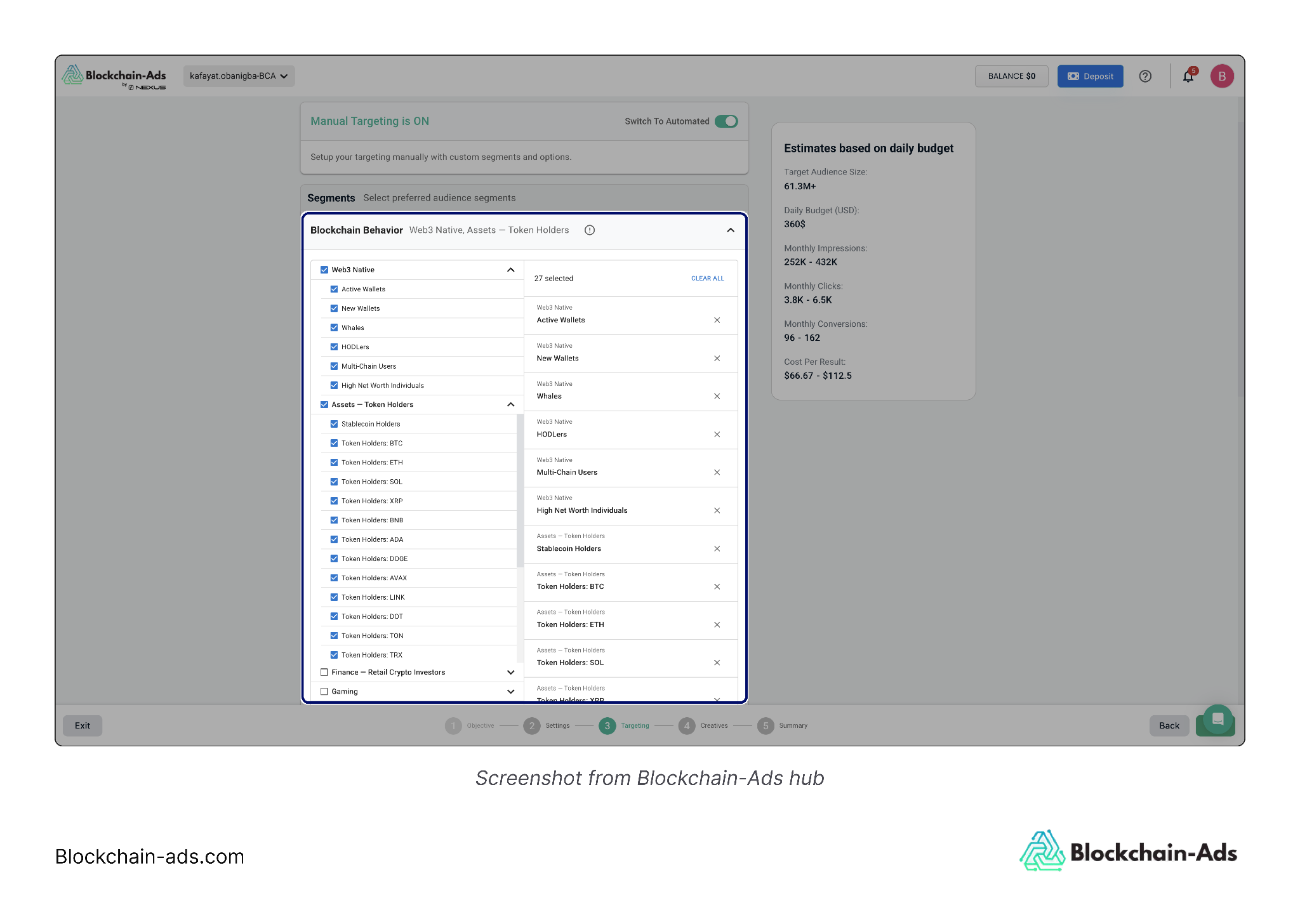
With Blockchain-Ads' Wallet Targeting, you can use these behavioral signals. The platform analyzes on-chain activity across 11M+ wallets and 82 blockchains to build advertising audiences.
You can use its prebuilt crypto audiences or build segments around specific blockchain behaviors, including:
- On-chain traders: Wallets showing trading activity across supported blockchains.
- Token holders: Wallets holding particular cryptocurrencies or digital assets.
- Crypto app users: Audiences active across cryptocurrency exchanges, wallets, and trading applications.
- DeFi users: Wallets interacting with decentralized finance protocols.
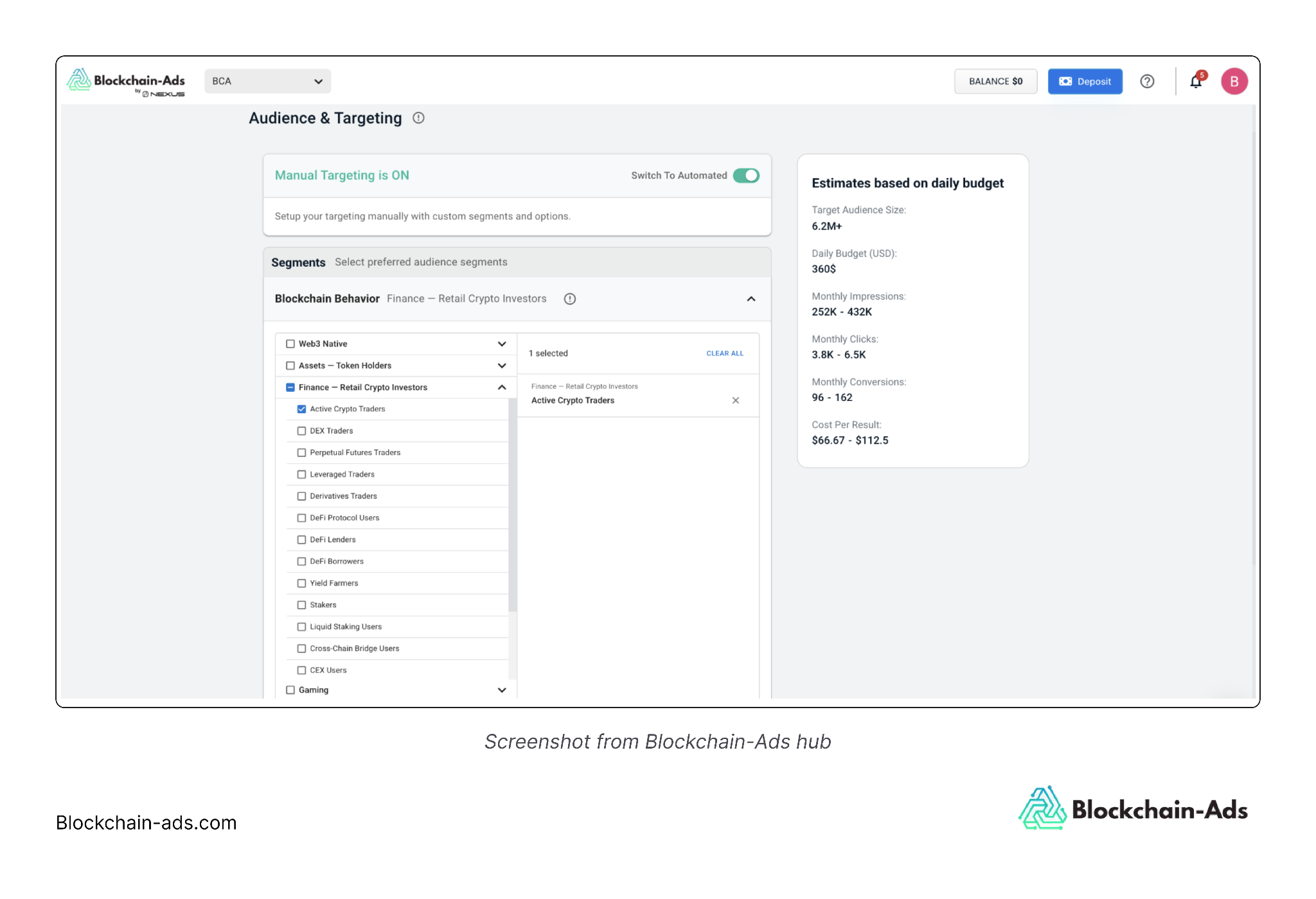
If you're advertising a DeFi lending product, you could target wallets that have interacted with similar lending protocols instead of targeting everyone interested in cryptocurrency.
A wallet doesn't necessarily represent one person, and on-chain activity doesn't automatically identify someone you can reach with an ad. The advertising platform still needs a method to connect wallet-based audiences with reachable users.
Measuring Conversions On-Chain
On-chain conversion measurement helps you connect advertising activity to blockchain transactions such as token purchases, swaps, deposits, and other wallet interactions.
Unlike a standard website conversion, which might record a completed registration or button click, an on-chain transaction provides an independently verifiable blockchain record.
You can measure whether someone who clicked an ad later completed a qualifying deposit or interacted with a specified smart contract. The Blockchain-Ads conversion tracking setup lets you create conversion events and add optional Wallet ID and Transaction Value parameters for on-chain and revenue reporting.
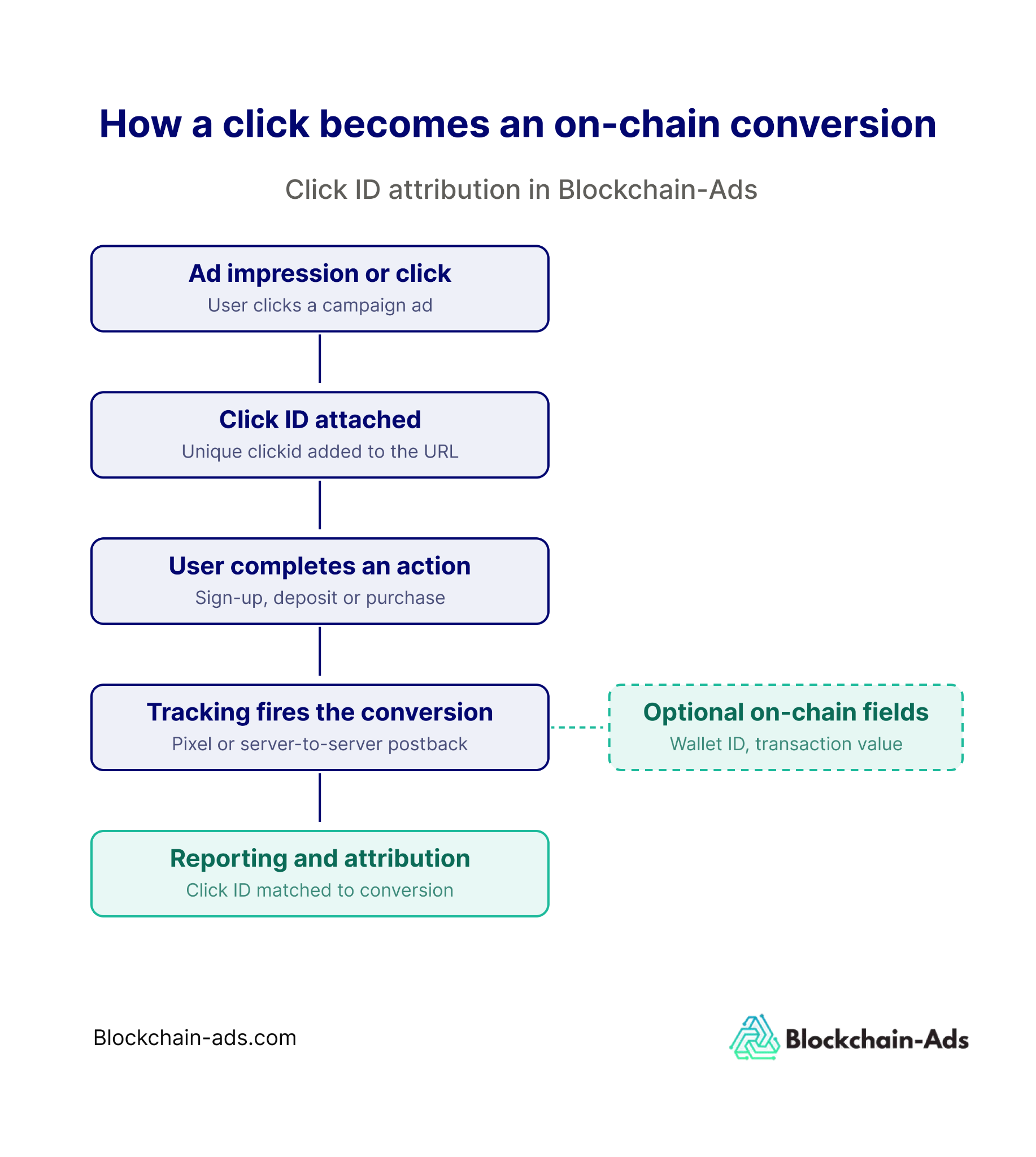
Blockchain-Ads also supports browser-based pixels and server-to-server tracking. With server-to-server tracking, a click ID links the original ad interaction to a conversion event your tracking system reports.
Blockchain records alone don't establish which advertisement caused a transaction. You still need accurate event tracking, attribution rules, and a reliable way to connect campaign interactions with the resulting wallet activity.
Benefits of Blockchain in Marketing and Advertising
Blockchain digital marketing gives you access to verifiable transaction data, more specific audience signals, and programmable reward systems.
The main benefits include:
- More precise audience targeting: You can build audiences based on observable activities such as token holdings, trading frequency, and interactions with blockchain applications. These signals help you reach users whose behavior is relevant to your product.
- Greater transparency: Public blockchain records let you independently verify transactions, token transfers, and other recorded activities. You don't have to rely entirely on reports from the platform managing those transactions.
- Verifiable conversion data: You can confirm whether a wallet completed a purchase, deposit, swap, or other qualifying on-chain action. When connected to campaign tracking, these records help you evaluate acquisition performance.
- Automated rewards and payments: Smart contracts can distribute tokens or execute payments when predefined conditions are satisfied, reducing the need to process each eligible transaction manually.
- More flexible loyalty programs: You can issue blockchain-based rewards that customers hold in their wallets and, where permitted, transfer or redeem across participating services.
The value of blockchain marketing and advertising depends on the goal you're trying to achieve. If you're targeting active crypto users or measuring wallet transactions, on-chain data can provide useful signals that conventional website analytics may not capture.
For campaigns focused entirely on off-chain actions, such as newsletter signups or product demos, traditional marketing tools may be sufficient without including blockchain infrastructure.
Challenges and Limitations
Blockchain marketing introduces privacy, cost, and regulatory challenges that you need to consider before adopting the technology.
Privacy and Public Blockchain Data
Public blockchains make transaction histories visible, which can create privacy risks when you use wallet activity for marketing.
Although wallet addresses don't directly reveal someone's name, transaction patterns can expose financial behavior and potentially identify individuals. Ethereum's privacy documentation explains how analysts can study publicly visible activity and link it to users.
You also need to consider how your platform connects wallet addresses with other information, such as email addresses, website activity, or customer profiles. Combining these records may create additional data protection obligations.
Implementation and Transaction Costs
Blockchain-based marketing requires additional infrastructure, technical expertise, and transaction fees.
For instance, distributing token rewards through smart contracts may involve development, security testing, wallet integrations, and network fees. On Ethereum, these fees are called gas fees. They cover the computational resources needed to process transactions and execute smart contracts, and their cost varies with network demand and transaction complexity.
Some costs also depend on your implementation. Using an existing advertising platform to reach wallet-based audiences is different from developing and maintaining your own blockchain-based loyalty system.
Hence, you should compare the blockchain solution's cost with the benefits it offers over your existing marketing tools before making any investments.
Regulatory and Compliance Requirements
Blockchain marketing must comply with applicable advertising, privacy, and financial regulations, which vary by jurisdiction and campaign activity.
For example, the European Data Protection Board's blockchain guidelines explain how storing personal data on an immutable ledger can conflict with GDPR requirements. Some of the affected requirements include data minimization and erasure.
Token-based rewards and financial product promotions may also trigger additional requirements depending on how the tokens function, where you advertise, and whom you target.
As such, its advisable to review the applicable rules before collecting wallet-linked customer data, launching token incentives, or advertising regulated blockchain products.
Blockchain Marketing Examples
These examples show how companies use blockchain marketing for audience targeting, privacy-focused advertising, and customer rewards.
Targeting Audiences Based on Wallet Activity
Blockchain-Ads combines wallet-based audience targeting with advertising delivery and campaign measurement.
Through its NEXUS Ad Exchange, the platform delivers display, native, video, and other ad formats to audiences built from wallet activity. You can select prebuilt segments or create custom audiences based on specific tokens, chains, or smart contracts. You can also combine wallet-based targeting with conversion tracking to measure registrations, deposits, and other campaign outcomes.
pump.fun used Blockchain-Ads to reach wallets by what the users had already done on-chain. Campaigns targeted Solana-active wallets, EVM wallets that had bridged to Solana within 90 days, and wallets active in memecoin trading. They also retargeted wallets that hadn’t yet created or traded a token.
Over five months, the campaign acquired 2,250 active wallets at a $107 CPA, and the 30-day activity rate rose from 28% to 49%. EVM wallets that had bridged to Solana converted at 2.6 times the rate of Solana-native segments, which shaped where the budget went.
Rewarding Users for Advertising Attention
Brave Rewards lets users opt into advertisements and earn Basic Attention Tokens (BAT) for eligible ads they see.
Users can choose among supported ad formats, including sponsored images and notifications. They can also use BAT to support content creators or exchange it for other assets.
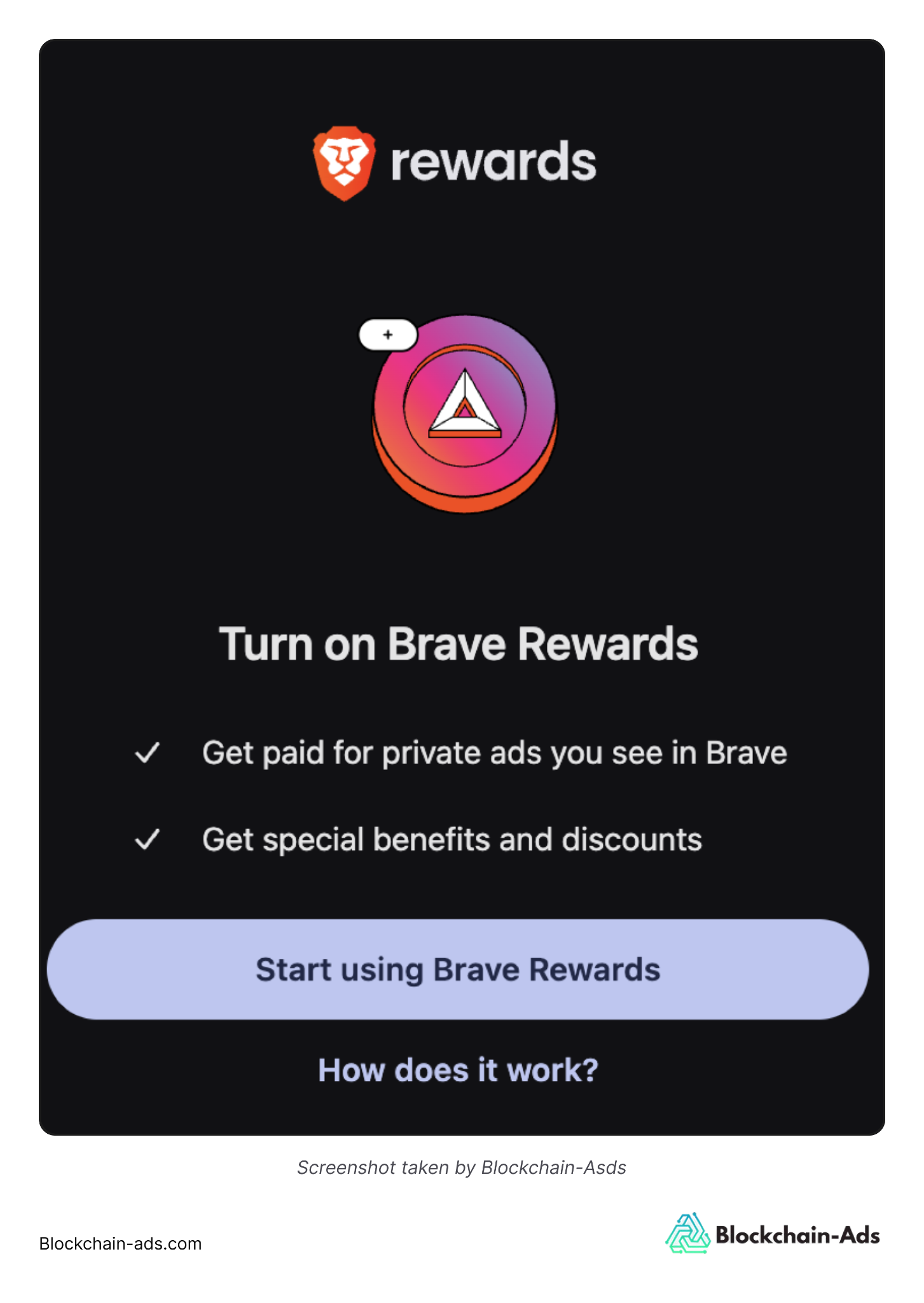
Alt text: Brave Rewards lets users opt into ads and earn BAT through the browser interface.
Brave keeps browsing data on the user's device instead of sending it to advertisers. This allows its advertising system to match ads without building centralized browsing profiles. BAT earnings require an eligible payout account, and availability varies by device and region.
Rewarding Customer Participation
Galxe Quest lets brands and communities create campaigns that reward users for completing specific tasks.
You can configure quests around activities such as community participation, educational tasks, or referrals. Depending on the campaign, participants can earn loyalty points, tokens, or On-Chain Achievement Tokens (OATs).
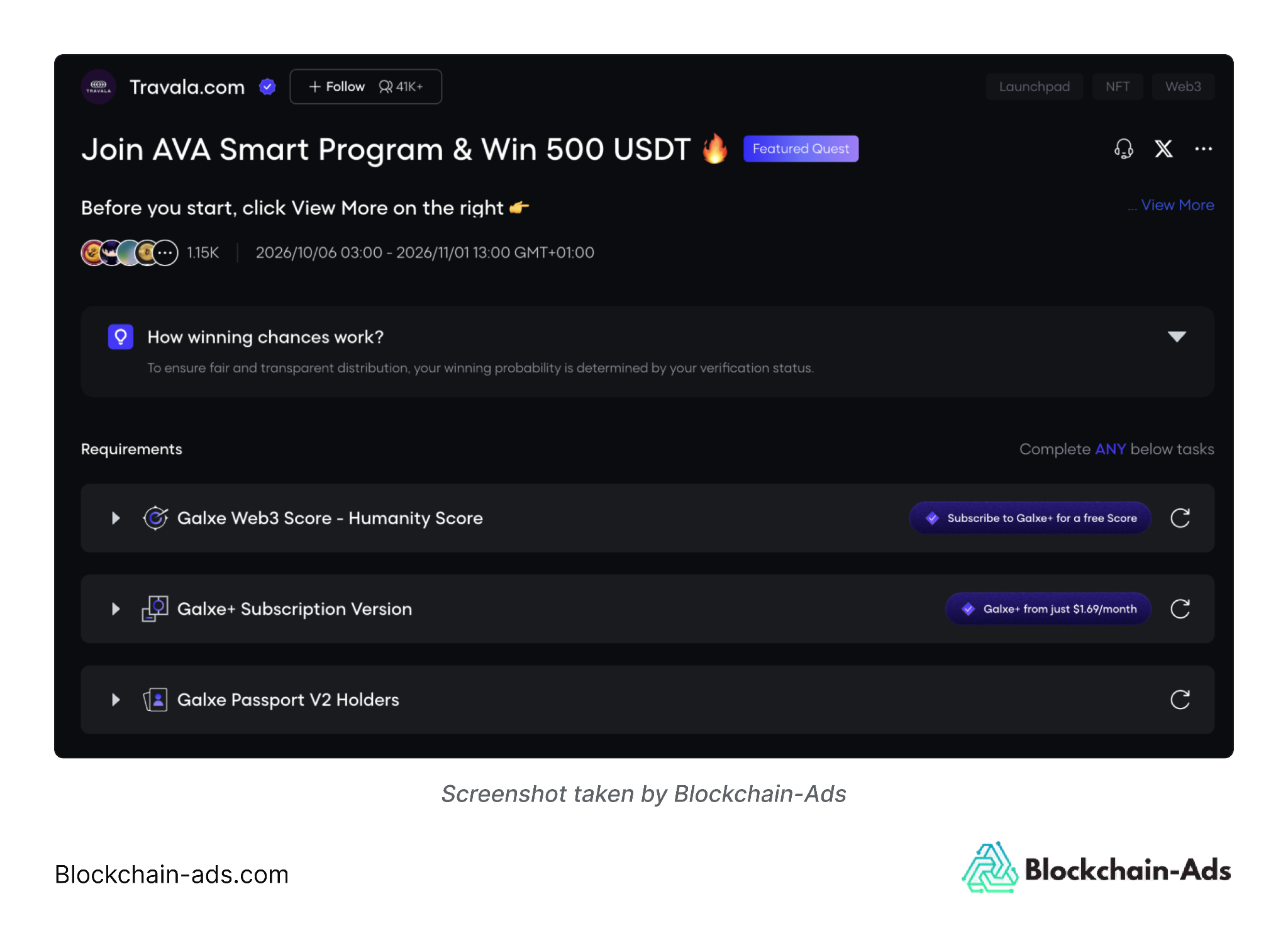
Alt text: Galxe Quest campaign by Travala.com showing participation requirements and a chance to win 500 USDT.
Galxe also supports different reward-distribution methods. Token raffles can use on-chain records, while first-come, first-served token rewards operate off-chain.
You can track campaign participation, engagement, and reward distribution through the platform's reporting tools.
Marketing for Blockchain Companies
If you're marketing a cryptocurrency exchange, wallet, or DeFi application, your goals are to:
- Attract potential users.
- Build trust in your product.
- Turn interest into product adoption.
You can achieve these goals through traditional marketing channels or blockchain-based advertising. The difference is that marketing a blockchain company focuses on promoting the product itself. Blockchain marketing, by contrast, uses on-chain data, smart contracts, and token-based systems to support marketing activities.
Your crypto marketing strategy might combine content marketing, SEO, community engagement, partnerships, and paid advertising. The right combination depends on your product, acquisition goals, audience, and applicable advertising restrictions.
FAQs
How Is Blockchain Used in Digital Marketing?
Blockchain helps digital marketers build audiences from wallet activity, distribute token-based rewards, automate payments, and verify recorded transactions. You can also connect on-chain conversion events to advertising campaigns when you have the appropriate tracking setup.
Can Blockchain Prevent Advertising Fraud?
Blockchain can help you audit advertising records, but it cannot prevent fraud on its own. Recording an impression or click on a blockchain doesn't prove that a real person generated it. You still need traffic verification, bot detection, and reliable event data to identify fraudulent activity.
Is Blockchain Marketing Only for Cryptocurrency Companies?
No. Companies outside the cryptocurrency industry can use blockchain for loyalty programs, token rewards, and transaction verification. However, wallet-based audience targeting is particularly relevant when your customers interact with cryptocurrencies or blockchain applications.
How Do You Measure Blockchain Advertising Performance?
Measure blockchain advertising performance by linking campaign interactions to conversion events such as registrations, deposits, or token purchases. You can use tracking pixels or server-to-server integrations to attribute conversions, while on-chain records help verify qualifying blockchain transactions.
Reach Audiences by Their On-Chain Activity
Understanding how blockchain works in advertising helps, but putting that data to work starts with identifying the audience you want to reach and the actions you want them to take.
With Blockchain-Ads, you can build campaigns around wallet activity, token holdings, and interactions with blockchain protocols. You can then connect those campaigns to conversion tracking to measure outcomes such as registrations, deposits, and transactions.
Request access to Blockchain-Ads to explore the available audiences and campaign options.
Raphael is a B2B SaaS and technical SEO writer covering digital advertising, Web3, fintech, and growth strategy.
View full profile →