The 7 Best Demand-Side Platforms (Programmatic DSPs) in 2026
Key takeaways
- Platform fit: Choose a DSP based on your advertising budget, target audiences, channels, and campaign management needs.
- Minimum spend: Published minimums differ from required deposits, and several DSPs don't disclose their entry requirements.
- Buying options: Self-serve offers direct campaign control, while managed services provide execution support.
- Channel coverage: Check whether a DSP can measure your conversion goals, not just deliver ads across your preferred channels.
- Industry eligibility: Advertisers in regulated industries must meet platform requirements and applicable market licensing rules.
Choosing the best DSP platforms in 2026 means looking beyond audience reach and ad formats. With dozens of options available, you may need a sales call to learn what a platform costs, whether your team can manage campaigns directly, and which advertisers it accepts.
Demand-side platform (DSP) companies also differ in how they handle targeting, attribution, and inventory access. A DSP built for enterprise omnichannel advertising may be overkill for a smaller agency. Similarly, a platform suited to e-commerce campaigns may not meet a crypto exchange's acquisition needs.
We've compared seven DSPs using six criteria: reach, targeting, measurement, formats, pricing, and support. This guide covers their buying models, published minimums, strengths, limitations, and the use cases each platform suits.
The Best DSP Platforms at a Glance
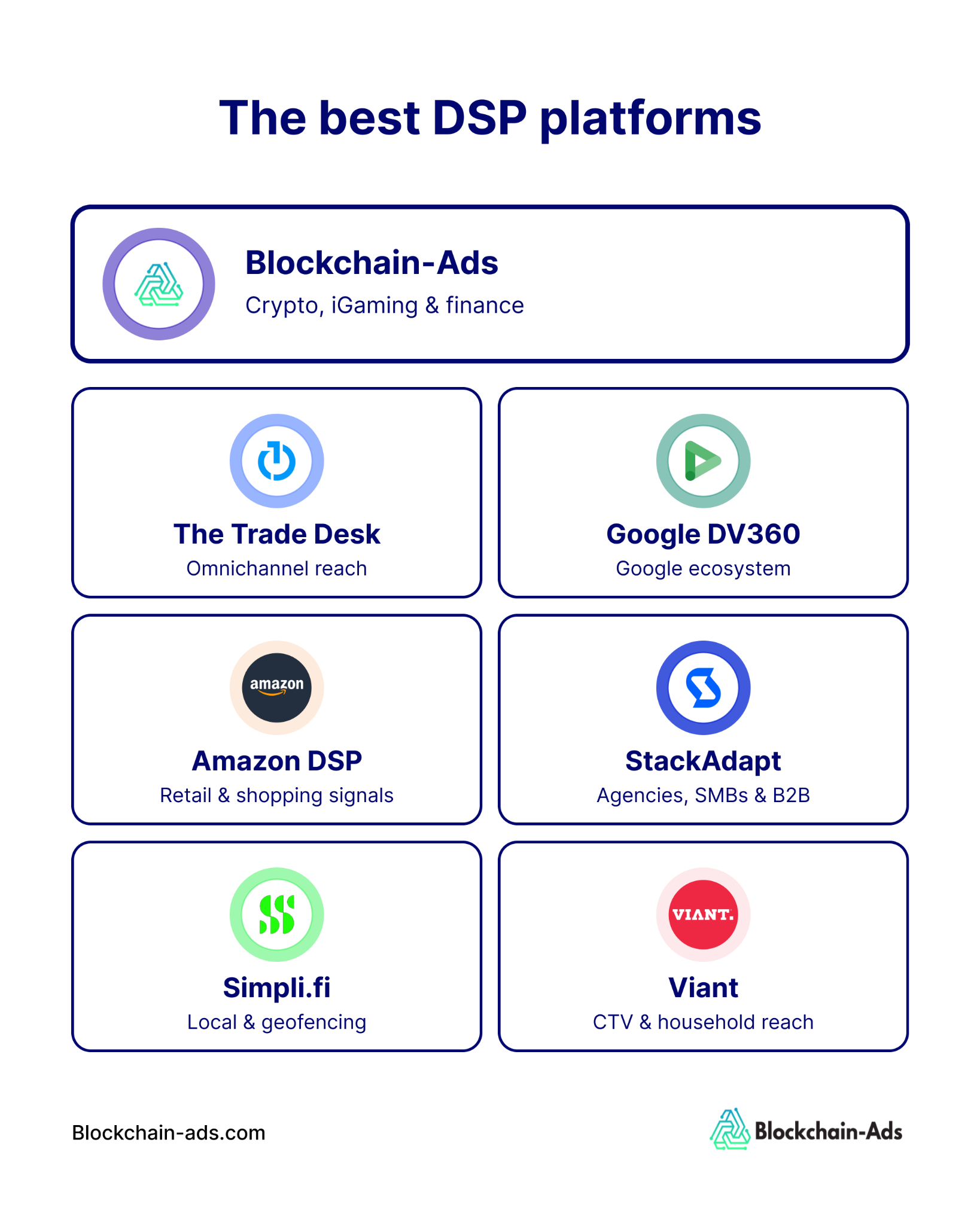
The top DSP platforms serve different advertisers, from teams running cross-channel campaigns to businesses focused on retail conversions or regulated customer acquisition.
These demand side platform examples show how buying models, targeting, and channel coverage differ. Compare the available buying model and minimum commitment first, then check whether each platform supports the audiences and conversion events you need.
An undisclosed minimum doesn't mean a platform has no minimum. Confirm Amazon's DVA+ availability and account-specific pricing before committing.
How We Scored Each Demand-Side Platform
We evaluated the best demand-side platform tools against six criteria that affect campaign execution, cost, and measurable acquisition results. Each criterion receives a score from 1 to 5, giving every DSP a possible total of 30 points.
Some highly recommended demand-side platforms excel in specialized areas but don't offer the widest channel coverage or the lowest entry cost. For example, a CTV advertiser may care more about strong household targeting than broad mobile inventory, while an agency managing smaller accounts may prioritize flexible access.
For pricing, we considered minimum spend, buying flexibility, public pricing information, and access restrictions. A no-minimum option doesn't automatically earn a higher score if it's available only through selected partners or limited rollouts.
Where a platform doesn't publish its minimum spend, we've marked it as undisclosed rather than assuming there's no minimum. We apply the same standard to access restrictions and product capabilities.
The 7 Best DSPs, Reviewed
These seven DSPs offer different combinations of inventory access, targeting, campaign control, and measurement.
Blockchain-Ads
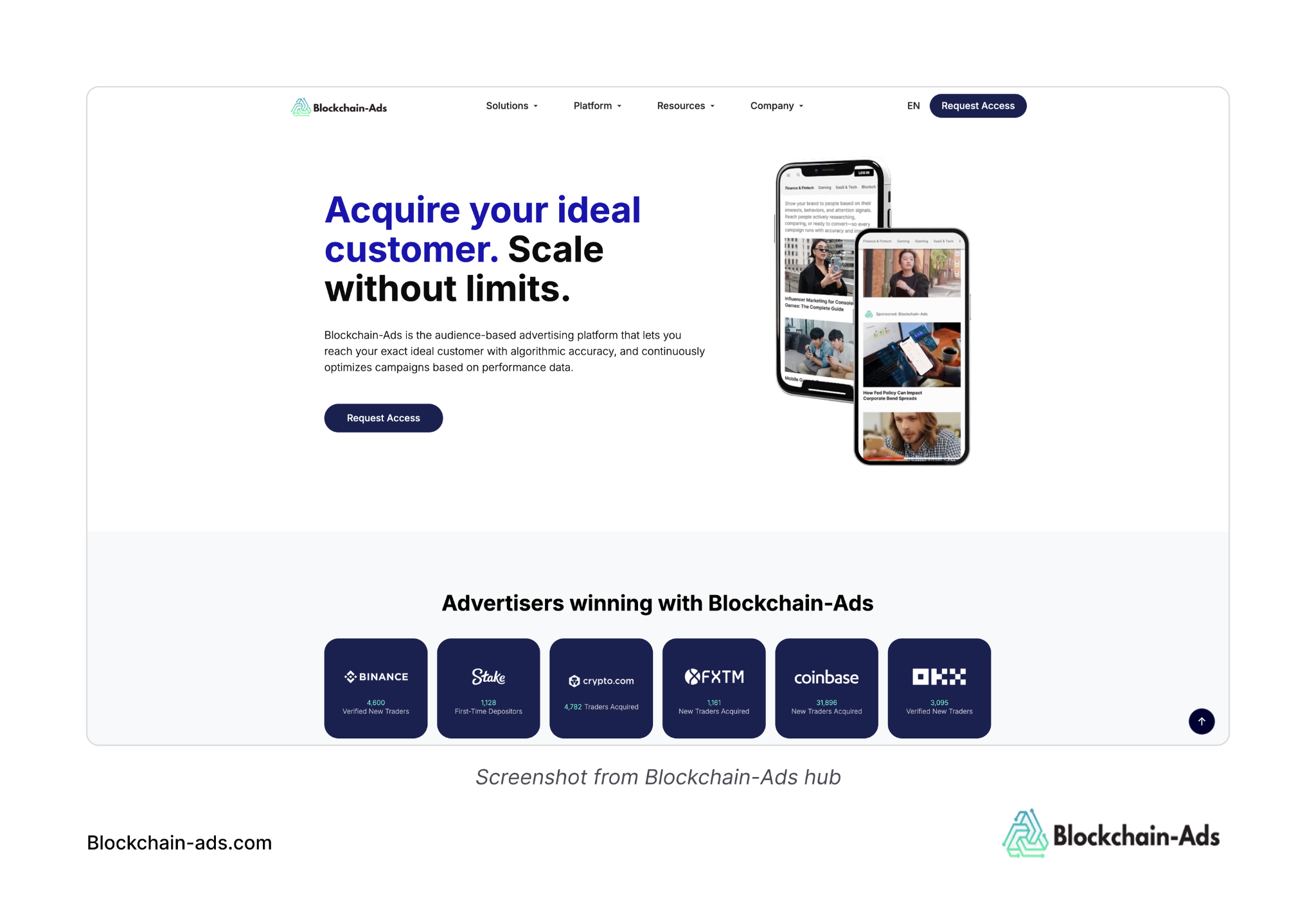
Blockchain-Ads offers self-service programmatic buying with an optional managed service for advertisers in crypto, iGaming, finance, and other regulated industries.
Through the Blockchain-Ads demand-side platform, you can buy display, native, video, in-app, and CTV inventory. The platform combines behavioral targeting, interest-based audiences, and on-chain signals, while attribution across eight dimensions helps connect campaigns to customer acquisition outcomes.
Our in-app measurement covers the journey from installation through sign-up, KYC, and first trade or deposit, letting you use conversion attribution to optimize beyond installs.
Self-service starts with a $10,000 deposit, while managed service requires at least $30,000 in monthly ad spend and supports up to 500 live campaigns per account.
Where it stops: The minimum deposit limits access for advertisers with small test budgets. Accounts also require approval, and advertisers remain responsible for licensing and compliance in their target markets.
Score: 28/30
The Trade Desk
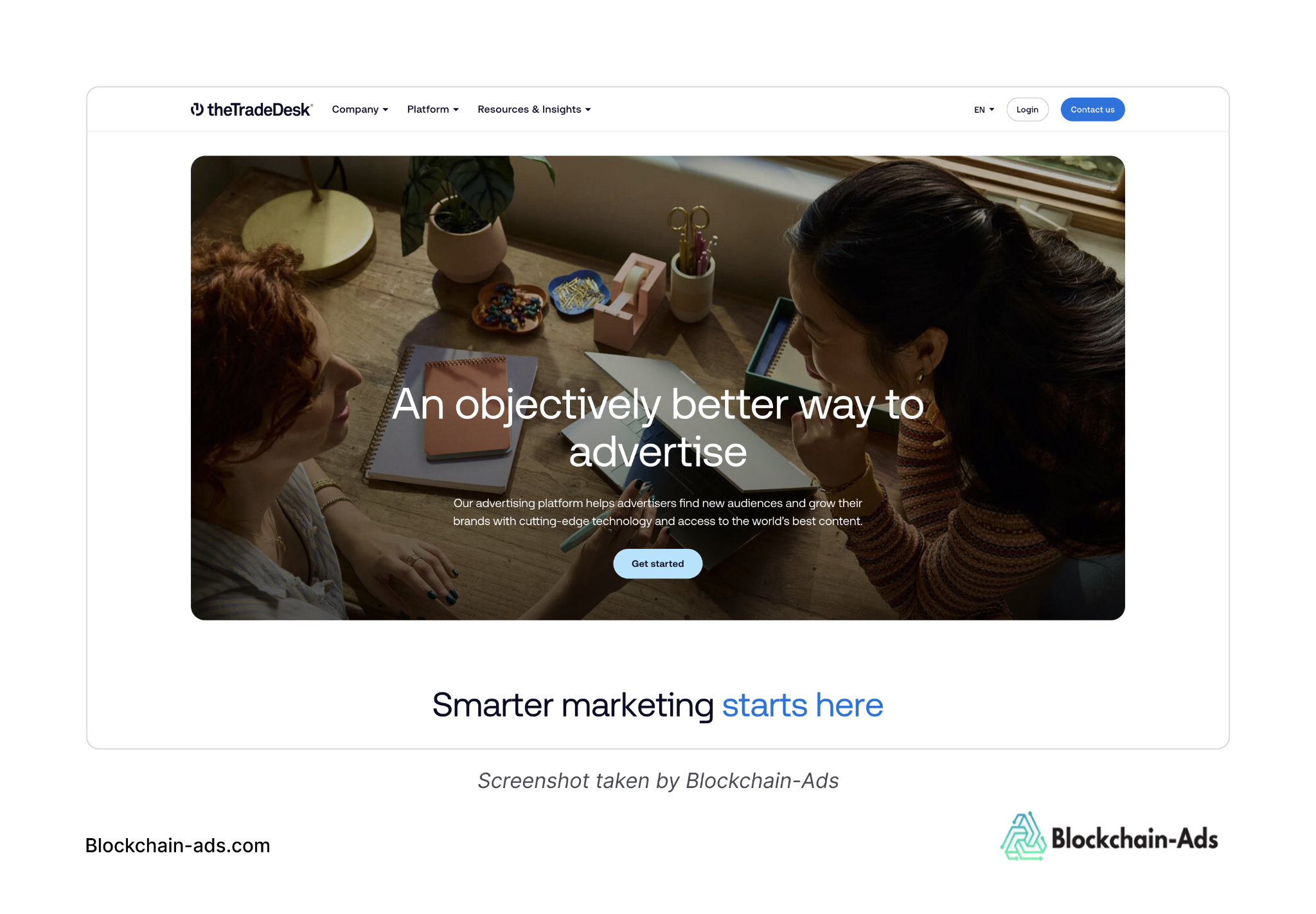
The Trade Desk suits large advertisers and agencies managing omnichannel campaigns across the open internet. Its Kokai buying platform supports audience planning, automated bidding, inventory selection, and campaign optimization.
You can combine first-party data with retail, contextual, and third-party audience signals. Its buying capabilities span CTV, video, display, audio, and other programmatic formats, with measurement tools connecting cross-channel exposure to business outcomes.
Where it stops: The platform has extensive buying and data-management capabilities that may exceed what smaller teams need. It doesn't publish a universal minimum spend, so you should confirm access arrangements, fees, and financial commitments before proceeding.
Score: 27/30
Google DV360
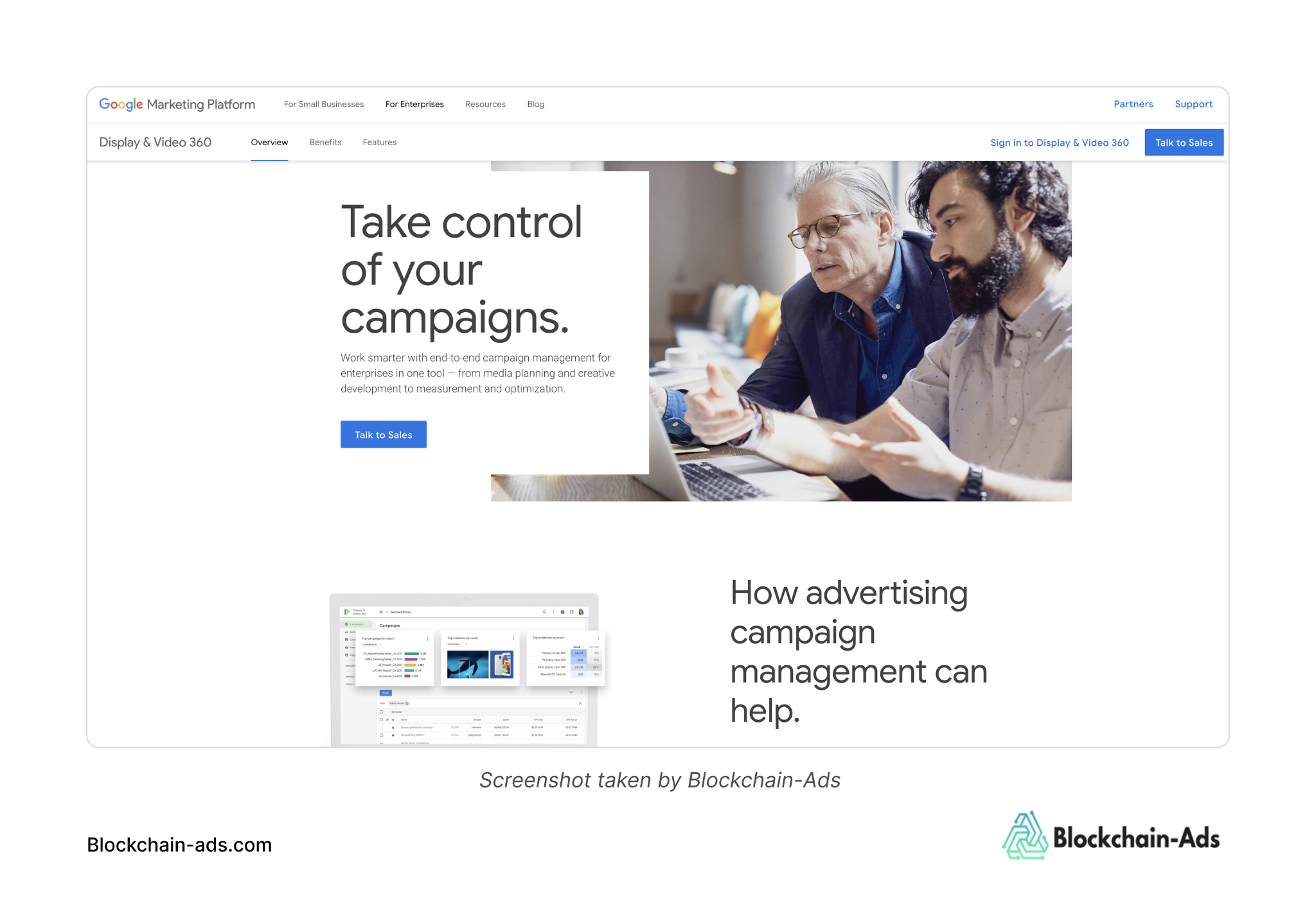
Google Display & Video 360 suits enterprise advertisers and agencies that need centralized programmatic buying alongside Google's advertising and measurement products.
DV360 combines media planning, audience management, creative, inventory buying, and reporting. Advertisers can activate first-party and Google audience data, use automated bidding, and buy inventory across YouTube, third-party exchanges, display, video, CTV, and audio.
Its integrations with Campaign Manager 360 and Analytics 360 also support broader campaign measurement and reporting.
Where it stops: Access typically involves a commercial arrangement with Google or an authorized partner rather than an unrestricted self-service signup. Pricing and minimum commitments aren't universally published, so you'll need to confirm terms before comparing costs.
Score: 27/30
Amazon DSP
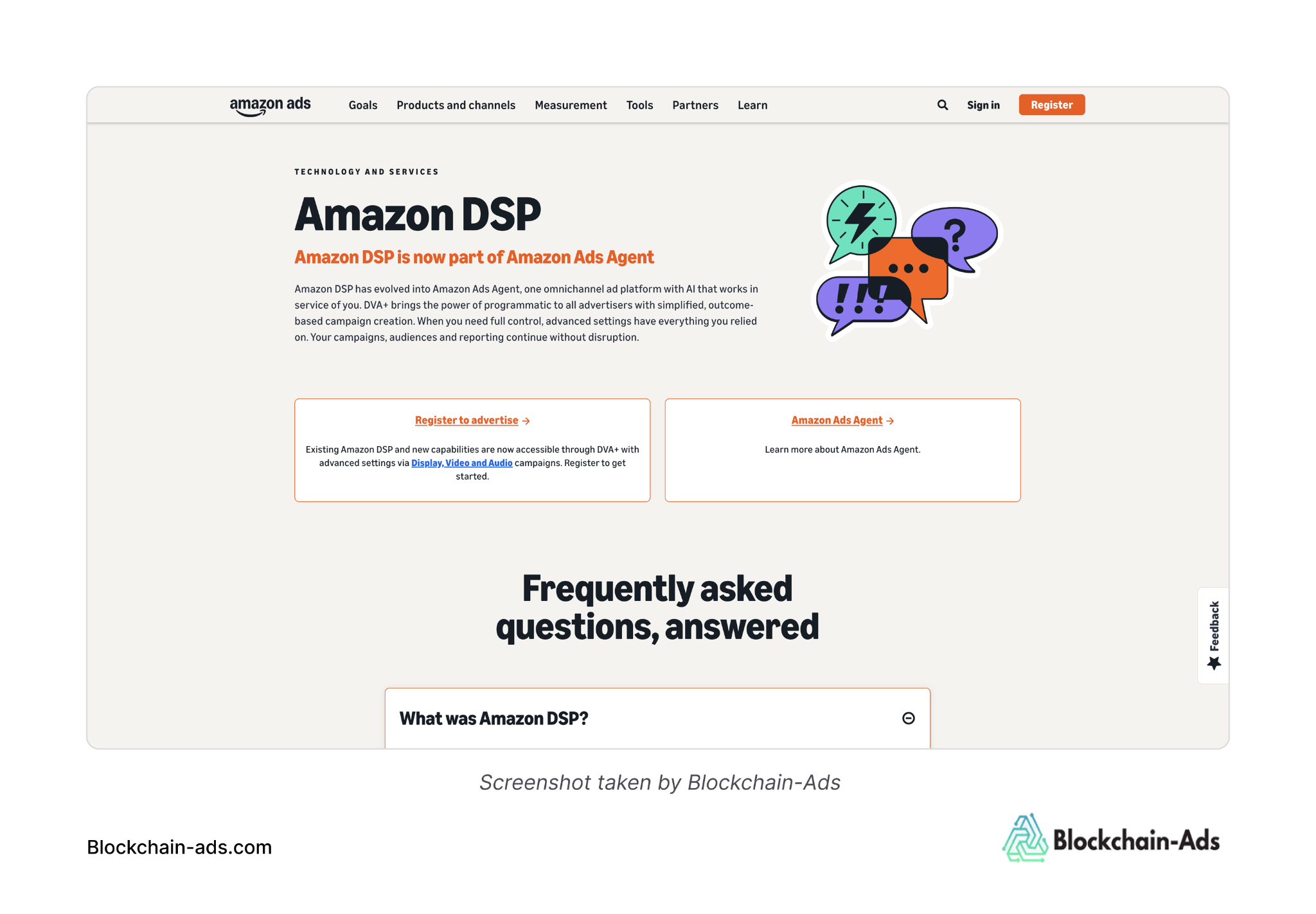
Amazon DSP suits retail and e-commerce advertisers looking to use Amazon's shopping, browsing, and streaming signals for audience targeting and conversion measurement.
Amazon DSP has evolved into Amazon Ads Agent, with DVA+ providing a unified display, video, and audio buying experience. DVA+ supports automated targeting and bidding, with advanced settings for advertisers who need greater control.
Self-service and managed-service options both continue, and Amazon doesn’t publish a minimum for either.
Where it stops: DVA+ launched with limited availability, so access depends on eligibility and market rollout. Advertisers also need to distinguish its newer self-service offering from established managed DSP arrangements when comparing prices and capabilities.
Score: 27/30
StackAdapt
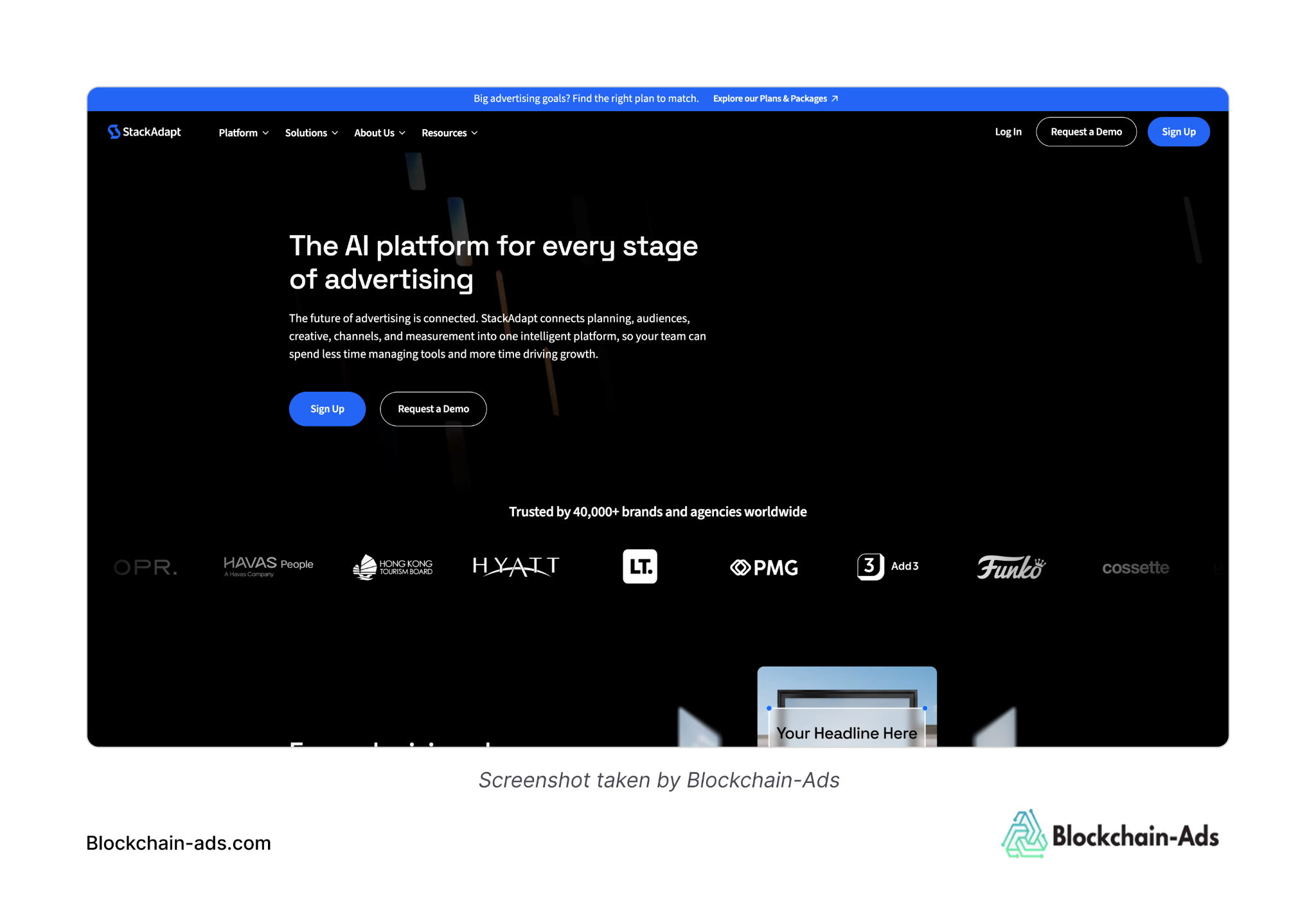
StackAdapt suits small and mid-sized agencies, B2B advertisers, and marketing teams seeking direct campaign control without giving up access to managed support.
Its platform supports native, display, video, CTV, audio, and digital out-of-home advertising. Advertisers can combine first-party audiences with contextual targeting, account-based marketing, automated optimization, and cross-channel reporting.
Self-service, hybrid, and managed options allow teams to choose how much campaign execution they handle internally.
Where it stops: StackAdapt states it has no minimum spend requirement, but self-serve access requires an application and approval, and it lists no prices for its plan tiers. Confirm the financial requirements and available support for your intended plan.
Score: 27/30
Simpli.fi
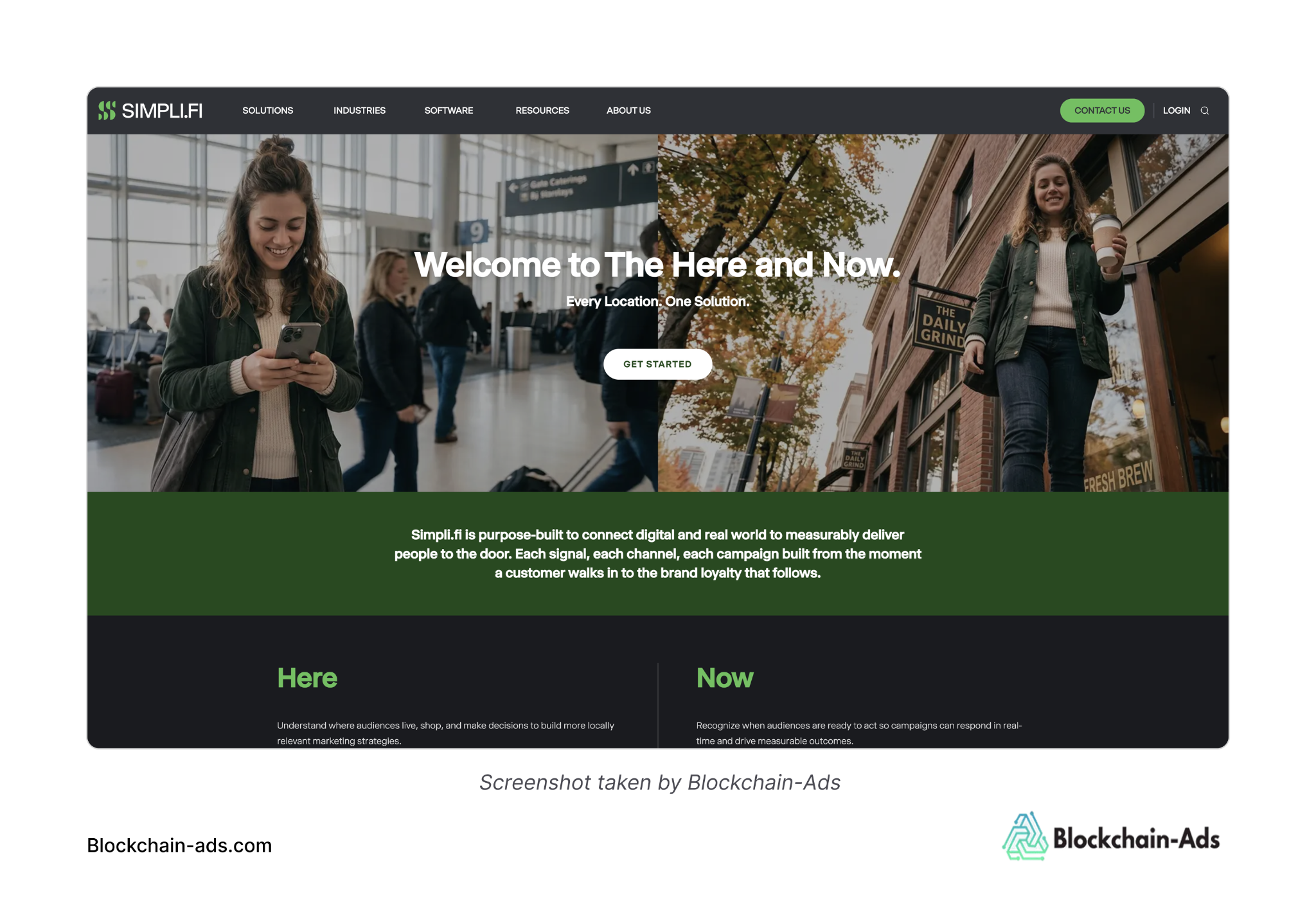
Simpli.fi suits local businesses, multi-location brands, and agencies that prioritize geographic targeting and measurable local outcomes.
Its programmatic capabilities include geofencing, household-level targeting, keyword targeting, and first-party audience activation. Advertisers can buy display, native, video, CTV, and other formats while connecting campaign activity to online or physical-location outcomes.
Its location-focused tools make it particularly relevant for businesses trying to reach customers within defined geographic areas.
Where it stops: Its strongest differentiation is local and location-based advertising, so advertisers focused on broader international audience acquisition may find other platforms better aligned with their needs. A universal minimum spend isn't publicly disclosed.
Score: 24/30
Viant
Viant suits advertisers prioritizing connected TV, household-level targeting, and cross-device measurement. Its programmatic platform combines CTV with display, video, audio, and other channels.
Viant Household ID helps you manage reach and frequency across devices associated with a household. Its CTV measurement capabilities also connect television ad exposure with subsequent online actions, helping you evaluate outcomes beyond completed views.
You can also use first-party data and additional audience integrations to manage cross-channel targeting.
Where it stops: Viant's household-centered approach may be less relevant to buyers whose main objective is granular mobile-app acquisition. Its public materials also don't establish a universal minimum spend, so you need to confirm commercial terms.
Score: 27/30
DSP Score Comparison
The Best DSP for Each Use Case
The best DSP depends on your campaign goals, preferred channels, and how you measure conversions. Use this shortlist to narrow your options before speaking with sales.
What a Demand-Side Platform Does in Programmatic Advertising
DSPs are tools for programmatic advertising, used by advertisers to buy digital ad inventory across multiple publishers and exchanges through one interface. Instead of negotiating placements individually, you set audiences, budgets, bids, and campaign goals, and the DSP automates buying decisions.
Programmatic DSP platforms can also manage frequency caps, optimize bids, and measure conversions across supported channels. Many use real-time bidding (RTB), where automated auctions evaluate and purchase eligible ad impressions.
How a DSP Differs From an SSP
A DSP helps advertisers buy ad inventory, while a supply-side platform (SSP) helps publishers sell it. DSPs focus on reaching audiences within an advertiser's budget, whereas SSPs help publishers manage inventory and advertising revenue.
How a DSP Differs From an Ad Network
A DSP buys inventory across multiple sources through automated bidding, often with greater control over targeting, bids, and reporting, while an ad network sells a pre-packaged set of placements. The difference between a DSP and an ad network comes down to how inventory is accessed and controlled.
How a DSP Differs From a DMP
A DSP buys advertising inventory, while a data management platform (DMP) organizes audience data for segmentation and targeting.
A DMP can supply audience segments to a DSP, but it doesn't execute the media purchase itself. Some DSPs also have built-in audience management capabilities, reducing the need for a separate DMP.
Types of Demand-Side Platforms: Self-Serve, Managed and Specialist
The main types of demand-side platforms differ in who manages campaigns and which advertisers they serve. Most fall into three categories:
- Self-serve DSPs: Your team controls targeting, budgets, bids, creative, and optimization directly. A self-serve DSP suits advertisers with in-house programmatic expertise who want greater control over campaign execution.
- Managed DSPs: The provider handles campaign setup, buying, optimization, and reporting. This works for advertisers without dedicated media buyers, although managed services may require higher spending commitments or additional fees.
- Specialist DSPs: These focus on particular industries, audiences, or channels. Examples include platforms specializing in CTV, location-based advertising, or regulated industries.
These categories can overlap. A specialist DSP may offer both self-service and managed options, so compare the buying arrangement separately from the platform's advertising capabilities.
How to Choose a Programmatic DSP for Your Budget, Team and Channels
Use these four questions to compare programmatic advertising platforms and narrow your options:
- What's your available budget? Compare required deposits, monthly minimums, platform fees, and management charges. Your paid media budget should cover audience and creative testing as well as platform access.
- Who's managing campaigns? Choose self-service if your team can handle setup, optimization, and reporting. Otherwise, compare managed-service costs and the responsibilities the provider will assume.
- Which channels and conversions matter? Match inventory access to your acquisition goals. For example, an app advertiser should check whether the DSP can measure registrations and purchases after installation, while a CTV advertiser should examine cross-device attribution.
- Can you advertise in your target markets? Crypto, gambling, and financial advertisers should confirm platform eligibility, certification requirements, and geographic restrictions before committing funds. Access to a DSP doesn't override crypto advertising regulations, other advertising policies, or local licensing laws.
What DSPs Cost: Fees and Minimum Spend
DSP costs depend on the buying model, required deposit, media spend, and additional service fees. Some platforms publish their entry requirements, while others provide pricing through sales agreements.
When comparing quotes, ask whether the minimum covers media spend alone or includes platform, data, measurement, and management fees.
Also confirm whether commitments apply per campaign, month, or contract. For platforms without published minimums, request written pricing before deciding whether they fit your budget.
FAQs
Which DSP is best for mid-sized digital agencies?
StackAdapt is a strong option among the best demand-side platforms for mid-sized digital agencies because it offers self-service, hybrid, and managed buying options across multiple channels. Agencies focused on local advertising and geofencing should also consider Simpli.fi.
Is DV360 a DSP or an SSP?
Google Display & Video 360 (DV360) is a DSP. It helps advertisers purchase inventory across exchanges and publishers, manage audiences, and optimize campaigns through a centralized platform.
Which DSPs have no minimum spend?
StackAdapt states it has no minimum spend requirement, though self-serve access requires approval. Viant offers no-minimum access through its AdTegral partnership, a co-managed model. Amazon, The Trade Desk, Google DV360, and Simpli.fi don’t publish a minimum. An unpublished minimum shouldn’t be mistaken for no minimum.
What is the best alternative to Simpli.fi for geofencing ads?
StackAdapt is worth evaluating if you need location-based targeting alongside broader contextual and cross-channel advertising. However, before switching, compare its geographic targeting controls, available location data, and offline conversion measurement against Simpli.fi's dedicated geofencing capabilities.
Which DSPs use AI to find new customers?
Several AI-powered DSPs for customer acquisition use machine learning to improve audience selection, bidding, and campaign optimization. The Trade Desk, Google DV360, Amazon DSP, StackAdapt, and Viant offer AI-supported capabilities. Compare how each platform uses conversion signals to optimize toward your acquisition goals.
What happened to Xandr?
Microsoft discontinued media buying through Microsoft Invest, its demand-side platform formerly associated with Xandr, on February 28, 2026. Advertisers needing a replacement should compare active DSPs based on their existing inventory requirements, audience data, campaign workflows, and measurement needs.
Is there a complete list of demand-side platforms?
No single list of demand-side platforms covers every provider, specialist offering, and buying arrangement. Rather than comparing every available vendor, shortlist platforms based on your budget, target industries, preferred channels, and required conversion measurement.
Choose a DSP That Fits Your Acquisition Goals
Before committing to a DSP, shortlist two or three platforms. Ask each provider to confirm its minimum spend, campaign management options, supported conversion events, and eligibility requirements in writing.
If you’re advertising in crypto, iGaming, finance, or another regulated industry, check whether the platform can reach your intended audience. Also confirm that it can measure valuable actions beyond clicks, such as verified sign-ups, deposits, or trades.
Blockchain-Ads supports these acquisition goals through behavioral and on-chain targeting, cross-channel buying, and conversion attribution. You can manage campaigns yourself or use our managed service, depending on your team's resources.
Request access to Blockchain-Ads to discuss your campaign goals, confirm eligibility, and explore the right buying option.
Raphael is a B2B SaaS and technical SEO writer covering digital advertising, Web3, fintech, and growth strategy.
View full profile →