Media Buying vs Media Planning: Key Differences, Processes & Best Practices
The major difference between media planning and media buying is simple. Media planning decides who you want to reach, where to reach them, and how budget and KPIs should be set. Media buying takes that plan and turns it into live campaigns by purchasing inventory, setting bids, and optimizing performance.
The core differences are clear once you put them side by side:
| Aspect | Media Planning | Media Buying |
|---|---|---|
| Focus | Strategy and research | Execution and transactions |
| Timing | Happens first and covers the full campaign period | Happens after planning and moves quickly to launch and adjust |
| Ownership | Audience, channels, budgets, timing, and KPIs | Negotiations, deal types, bids, trafficking, and delivery |
| Methods | Selects channels and measurement approach | Uses direct or programmatic deals to buy the media |
| KPIs | Tracks reach, frequency, audience fit, and brand impact | Tracks CPM, CPC, CTR, CPA, and final conversions |
| Output | Produces a media plan document | Produces live campaigns, pacing views, and performance reports |
| Feedback | Gives direction for campaigns | Sends performance data back so future plans improve |
Media planning and media buying work best when they feed into each other, not when they run as two separate workflows that never talk. A best practice is to use a platform like Blockchain-Ads, to makes both processes seamless.
Blockchain-Ads is a full‑stack programmatic platform that brings both into one workflow. It enables teams to plan smarter and launch faster with real‑time optimization and verifiable results across regulated industries. In this article, you’ll see what each role does, how they differ, and how to align them so your media budget drives real business outcomes instead of fragmented reports.
What Is Media Planning?
Media planning is the strategy stage. It starts with marketers deciding who they want to reach, where those people spend their time and how much budget should go to each channel. The primary objective is to identify the right media channels and maximize reach and impact.
Planners start with the campaign brief. That is digging into audience research, market trends and competitor activity. They also choose the right channels, whether that’s TikTok, connected TV, search or podcasts.
What Is Media Buying?
Media buying is the tactical execution stage. Buyers basically take the strategy from the planners and turn it into live campaigns that real audiences see. They’re responsible for securing ad inventory, negotiating rates and of course, making sure placements run where and when they’re supposed to.
One of the ways to approach media buying is through direct buying. Here, buyers work with publishers, networks or platforms through contracts and insertion orders. The second way is programmatic buying. This often runs through DSPs and real-time bidding systems that automate inventory purchases.
Media Planning vs Media Buying: Side-by-Side Comparison
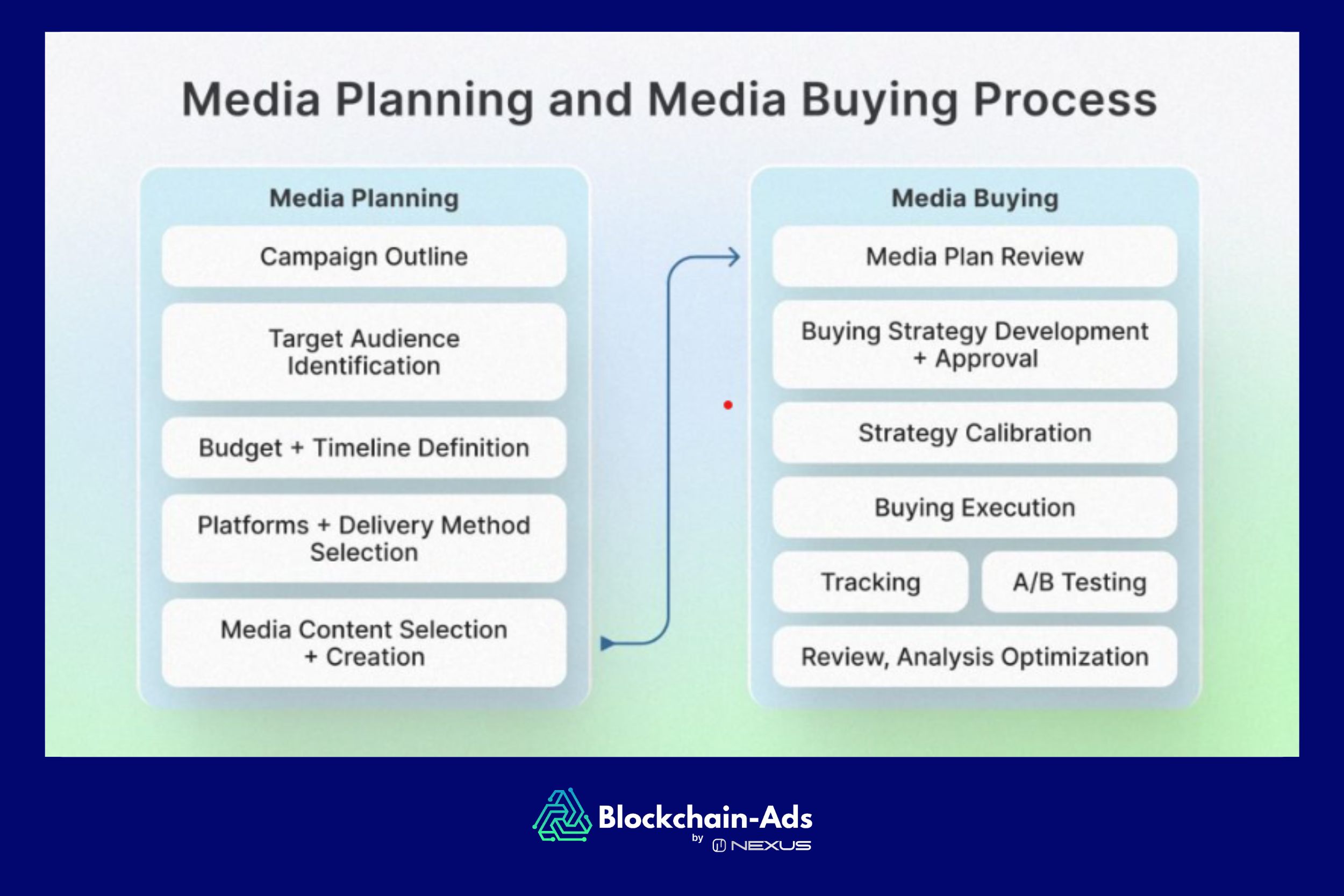
Stage & Timeline – Strategic vs tactical phases.
Media planning comes first. It’s the long-view stage where teams map out audience, channels, budget and timing before spending anything. Media buying happens after. It’s the technical phase of those plans, often with quick turnarounds and adjustments.
Core Functions – Research & strategy vs negotiation & execution.
Planners handle the research. These include market trends, consumer insights and competitor measures. Their job is to decide what should happen. Buyers come in to make it real. Of course, by negotiating rates, purchasing ad space, setting up campaigns and ensuring ads actually run.
Goals & KPIs – Reach, frequency, audience insights vs cost efficiency metrics.
Media planning KPIs center on who sees the ad and how often. It can be reach, frequency, brand lift or audience segmentation quality. On the other hand, media buying KPIs are more about efficiency. That is CPMs, CPCs, CTRs and cost per conversion. Basically, one side measures the quality of the strategy and the other measures whether it was executed at the best price.
Outputs – Media plan blueprint vs live campaign and performance reports.
The final product of media planning is a blueprint. It’s a detailed document outlining channels, budgets, timelines and KPIs. Media buying delivers the live campaign itself. It includes ads, dashboards full of performance data and post-campaign reports that reveal what worked and what didn’t.
| Feature | Media Planning | Media Buying |
|---|---|---|
| Stage and timeline | Happens first | Comes after |
| Core functions | Audience research, channel mix, budget allocation | Negotiating rates, securing placement and activating campaigns |
| Goals & KPIs | Maximize reach, frequency audience fit and brand impact | Achieve cost efficiency, optimize CPM/CPC/CPA, drive measurable conversions |
| Outputs | Media plan blueprint | Live campaigns running across chosen platforms |
How Media Planning Supports Media Buying
Media planning sets the stage. However, it only matters if the buying team can act on it. You think of it like ‘’planning is the playbook and buying is the actual game.’’ Without a solid plan, then the execution tends to be messy and expensive.
Planners define the campaign objectives. These can be driving app installs, boosting brand awareness or hitting a sale target. They also decide how much budget should be allocated across channel and which ones deserves priority. This framework basically give buyers a clear guidance when negotiating rates or bidding programmatically.
Finally, planners set KPIs like reach, frequency and cost per acquisition. Buyers then track those metrics in real time. They adjust bids or placements if the campaign drifts off course. In short, planning gives purpose and buying brings it to life.
The Media Planning Process
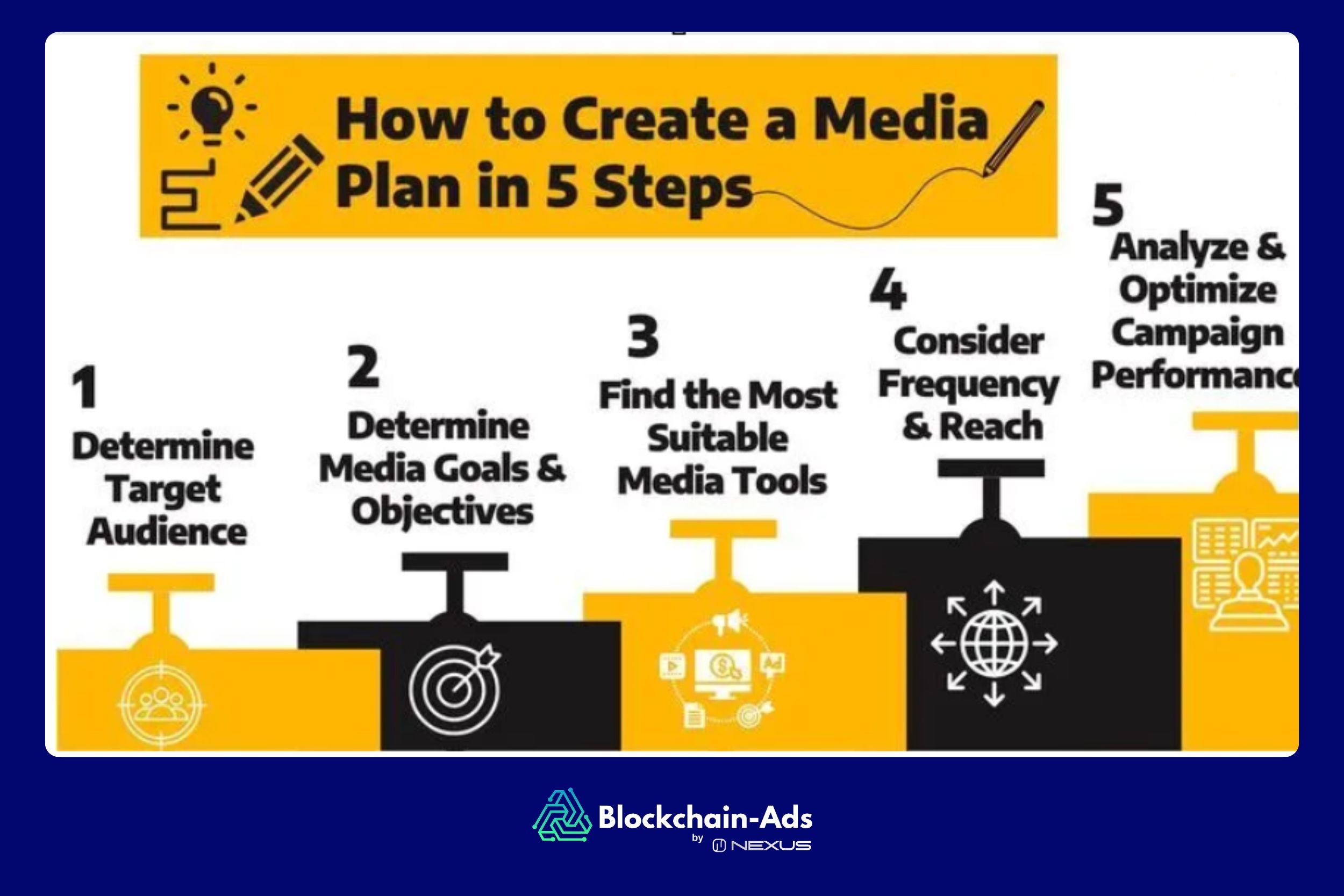
Step 1: Campaign brief & objective setting.
Everything starts with a brief. What’s the business goal? Are we aiming for brand awareness, lead generation or direct sales? The objective actually defines how success will be measured and set the tone for the entire plan.
Step 2: Audience research & segmentation.
Next comes digging into the audience. Planners look at demographics, online behavior, media consumption habits and even purchase intent. This step normally include segmenting audiences into groups. This can be students vs professionals or early adopters vs mainstream buyers so that the message can be tailored.
Step 3: Media mix & budget allocation.
Once the audience is clear, it’s time to choose the channels. You need to know if the money should go towards connected TV, podcasts or social media ads like TikTok and Instagram. Budget allocation is about balance. It’s important to invest where the target audience spend most of the time in.
Step 4: Timeline & campaign flighting.
Campaigns don’t run forever. Planners decide when the ads should go live and how often they should appear. For example, a retail brand might increase spend during the holiday season while a fintech app could push harder around tax season.
Step 5: Plan documentation & approval.
Finally, everything is put into a formal plan. It will be a blueprint that buyers will later execute. The document is reviewed, refined and approved by stakeholders before moving into buying stage.
The Media Buying Process
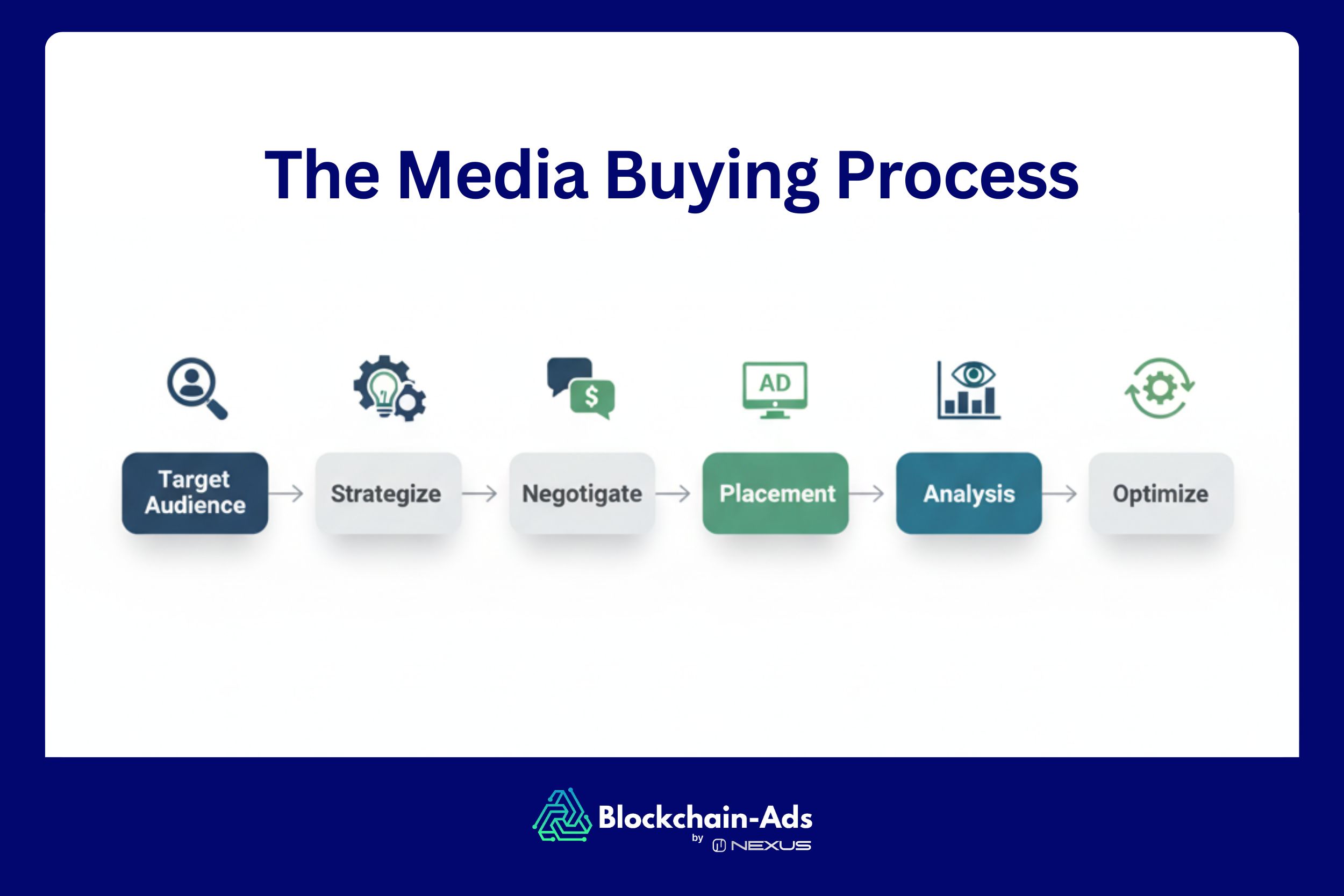
Media buying is the part where all the planning finally gets tested. Most advertisers adopt a media buying template to make this process so much easier. The media buying process typically follow these steps:
Step 1: RFPs & vendor selection.
Buyers reach out to publishers or platforms, compare offers and figure out who can deliver the audience at the right price. Most advertisers refuse to go through the stress of comparing publishers or platforms. Instead they use Blockchain-Ads because the DSP combines a full-stack programmatic platform with a large premium publisher network with 78 supply partners.
Step 2: Rate negotiation & insertion orders.
Once the options are on the table, buyers push for better deals. This can be cheaper CPMs, bonus impressions or more flexible terms. Nothing moves forward until both sides sign the insertion order which acts as the contract.
Step 3: Trafficking & ad setup (programmatic & direct).
At this stage, creative files get handled off and campaigns are plugged into DSPs for programmatic buys. Alternatively, campaigns are coordinated directly with a publisher’s ad team for traditional deals.
Step 4: Campaign monitoring & optimization.
As soon as the campaign goes live, buyers keep one eye on delivery and another on performance. If something looks off, they shift the spend, swap out creatives or tweak targeting.
Step 5: Reporting & post-campaign analysis.
After the campaign ends, buyers compile reports to measure ROI and key KPIs. They look at what worked, what flopped and what lessons should be carried into the next buy.
Modern Trends Impacting Planning & Buying
Like every other industry, media buying is adapting to new technology, shifting consumer habits and first-party data privacy marketing rules. This has created media buying trends such as:
Programmatic growth
Programmatic advertising has actually moved from a side tactic to the default way media is bought. Buyers rely on DSPs and automation to handle scale while planners focus on strategy, data and ensure that the placements aligns with the campaign goals.
Cookieless targeting
Third-party cookies are on their way out. Planners, therefore, are leaning into contextual targeting, partnership for clean data and first-party audience strategies that help keep campaigns relevant and privacy-safe.
Cross-channel integration
Consumers switch between platforms constantly. They stream on connected TV, scroll on TikTok, listen to podcasts and search on Google. In fact, research shows that 60% of millennials and 75% of Gen Z customers expect consistent interactions across all channels. This makes cross-channel campaigns useful for brands that want to remain relevant.
The rise of In-housing
More brands are building in-house media teams to help keep data closer and move faster. They’re still using agencies for specialized skills or execution at scale. A recent survey conducted by WFA shows that 66% of brands have in-house agencies and 21% are considering one. The same survey shows that 70% already have strategic capabilities in-house and many more are planning to shift from external agencies in the next three years. In short, the in-housing model is really redefining how campaigns are managed day to day.
Best Practices for Integrated Media Strategy
When planning and buying teams align, campaigns see stronger results and budgets stretch further. In fact, according to a report by Proxima, over 60% of marketers say poor collaboration between planning and buying leads to wasted ad spend. Google also reports that good collaboration can boost ROI by up to 35%. This proves how valuable the coordination can be. A few best practices to focus on include.
Connect the data.
Media planners rely on research while buyers rely on performance data. If these insights don’t flow together, many opportunities get lost. A HubSpot study found that companies using unified data strategies were 2.5x more likely to exceed their campaign goals.
Optimize as you go.
Campaigns that adjust in real time consistently outperform static ones. Insider Intelligence reported that real-time adjustments can reduce ineffective spend by up to 20%. It doesn’t matter whether it’s shifting budget from underperforming placements or testing new creatives.
Align on KPIs.
Planning teams often track reach and frequency. Buying teams focus on CPMs or CPCs. But unless both are tied together, the campaign risks pulling in different directions. HubSpot notes that 58% of marketers cite measuring ROI as their single biggest challenge. This makes KPI alignment critical for success.
Tools & Technologies to Know
Behind every successful media plan or buy, there is the right tech, and the most important media buying tools include:
Demand-Side Platforms (DSP).
DSPs like Blockchain-Ads, Google DV360 and Amazon are critical parts of programmatic buying. They let buyers access multiple ad exchanges in one place, set bids in real time and apply data to reach the right audience.
Ad servers
Ad servers such as Blockchain-Ads and Google Ad managers help manage the actual delivery of ads. They handle trafficking, pacing and reporting. Their task is to ensure that impressions go where they’re supposed to and performance is accurately tracked.
Planning software
Tools such as MediaOcean or Bionic help make the planning smooth. They help planners to build media mixes, track budgets and generate approval-ready plans.
Analytics platforms
Platforms like Google Analytics help provide the feedback loop. They connect the dots between spend, performance and business outcomes. This helps both planners and buyers refine their decisions.
Case Study: Personal Finance App
Capital One wanted to reach people who were actively looking for financial products. Their challenge was finding users who were comparing credit cards, researching saving options or exploring budgeting tools across different markets.
Their campaign started with clear planning. Identifying high intent users across US, Canada and UK. From there, messaging was tailored to reach every market. Rewards and cashback cards in the US, low-fee options in the UK and budgeting tools in Canada.
On the buying side, Capital One used Blockchain-Ads to put the plan into action. The ad campaign lasted for 60 days and the strategy focused on wallet-based targeting and retargeting. Ads were delivered to users who had already shown finance-related behavior online.
The result of this campaign was impressive. There were 2,310 new conversions, an average CPA of $23.75 and a 5.2x return on ad spend.
Conclusion
Media planning and buying are basically essential components of any successful advertising campaign. Knowing the difference, how they complement one another and the challenges involved can guide marketers create and execute campaigns that perfectly reach their target audience and achieve their business goals.