10 Best Real-Time Bidding Platforms for 2026: Complete Comparison & Guide
One of the biggest challenges in programmatic advertising is reaching the highest-intent audience without wasting money. A good Real-Time Bidding platform can solve this efficiency issue. You need a solution that goes beyond basic targeting and focus on transparency and measurable ROAS.
The good news is that the market for programmatic buying is now dominated by enterprise-level Demand-Side Platforms (DSPs) and high-performance exchanges. These use AI and proprietary data to navigate the cookieless future. The top platforms setting the standard for 2026 include:
- Blockchain-Ads DSP
- Google Display & Video 360 (DV360)
- The Trade Desk
- Xandr (Microsoft Advertising)
- MediaMath
- Amazon DSP
- PubMatic
- Smaato
- Magnite
- Adobe Advertising Cloud
Here is a quick comparison table based on each platform’s focus, ideal users and the primary benefits:
| Platform Category | Focus | Ideal Users | Example Platforms |
|---|---|---|---|
| Specialized Performance DSPs | Regulated industries | Growth-focused brands | Blockchain-Ads |
| Omnichannel/Open Internet DSPs | Transparency, CTV, Cross-channel reach | Enterprise agencies and brands | The Trade Desk, Xandr, MediaMath |
| E-Commerce DSPs | Proprietary Shopper data, video | Retailers, Google heavy users | Amazon DSP, Google DV360, Adobe Ad Cloud |
| Supply-Side Platforms (SSPs) | Inventory quality, Publisher monetization, fraud prevention | Publishers, premium buyers | Magnite, PubMatic, Smaato |
When choosing these platforms, always consider the following factors:
- Their ability to provide Omnichannel capabilities
- Deep targeting & data integration
- Strong Inventory quality and brand safety controls
- Effective AI-powered bidding & optimization.
1. Blockchain-Ads DSP: Built for Growth-focused brands in finance, gaming, SaaS, blockchain and other regulated industries

You need speed, precise targeting and absolute confidence in the numbers. Blockchain-Ads DSP is a full-stack performance advertising platform used by 9,400+ businesses to help solve the complexity of targeting high-value audiences. It combines behavioral, predictive and identity-level intelligence to ensure your ad reaches 420M+ users when their attention is genuinely highest.
One of the top reasons Blockchain-Ads DSP is ranked as number one is the verifiable outcomes. For example, Coinbase used Blockchain-Ads DSP to target high-value Southeast Asian crypto users. The campaign achieved $8.1M in trading volume and 31,896 traders in six months.
In addition, OKX used Blockchain-Ads DSP to run a user acquisition campaign for the crypto exchanges. They secured 3,095 active traders, generating $5.16M total transaction volume in 60 days. For the iGaming brands, BC.Game launched a targeted regional campaign to target Latin American markets. They acquired 18,00 new players and achieved 7.2x ROAS.
Key features:
- On-chain targeting: The platform segments the audience based on behaviors like wallet holding, token ownership and recent DeFi protocol interaction.
- Performance tracking & integrity: Uses proprietary tracking and a built-in system for full transparency.
- NEXUS AI optimization: The real-time AI adapts and optimizes campaigns based on predicted conversion and transaction goals.
| Pros | Cons |
|---|---|
| Verifiable ROAS of at least 7x | Requires a higher minimum investment (often $10,000+ to start) |
| Superior data integrity & viewability of 90+% | |
| Exceptional engagement of at least 2.5x higher CTR versus the network average |
2. Google Display & Video 360 (DV360): Best for service businesses targeting specific solutions and E-commerce brands
.jpg)
DV360 is Google’s enterprise Demand-Side platform used by 87% of marketers for comprehensive and programmatic media buying. It is integrated with Google’s proprietary assets like first-party data and lookalike modeling. This helps advertisers who need audience controls, especially for large-scale video campaigns on YouTube and vast inventory access on the Google Display Network.
Key features:
- Omni-Channel access: Provide access to GDN, 100+ Ad Exchanges, private marketplaces (PMPs) Connected TV (CTV) and audio inventory.
- Dynamic Creative Optimization (DCO): Allows real-time ad creative personalization based on data signals like location or browsing history.
- Smooth Google Integration: Connects with Google Analytics 360 for deep attribution and Campaign Manager 360 for advanced ad serving.
| Pros | Cons |
|---|---|
| Access to over 90% of global display inventory and premium ad inventory across YouTube Reserve and Google Preferred | Limited inventory outside of Google’s network |
| 32% reduction in CPA for acquisition campaigns | Requires 2–4 weeks for AI optimization to stabilize |
| Advanced AI that minimizes manual keyword management by up to 60% |
3. The Trade Desk: Best for advertisers who want data-driven and precise targeting

Founded in 2009, The Trade Desk is a Real-Time bidding DSP platform built on the principle of transparency across the open internet. Its proprietary Koa AI handles optimization and analyzes up to 15 million ad opportunities each second. This helps you optimize your campaigns with control and visibility.
Key features:
- Audience-first and data-driven targeting: Help identify potential customers and offer the best ways to reach them.
- Premium omnichannel inventory: Provide access to inventory across digital channels like video, display, native, digital audio, connected TV and digital out-of-home (DOOH).
- Unified ID 2.0 (UID2): This is a privacy-conscious identity solution that helps replace third-party cookies for cross-device targeting and measurement.
| Pros | Cons |
|---|---|
| Offers up to 94% lower CPA than the campaign average | UID2 raises effective CPM by 116% |
| Supply chain efficiency of at least 3x win rate | Challenging learning curve, especially for newcomers to programmatic advertising |
| 95% client retention rate | Performance issues with slot reporting and campaign building |
4. Xandr (Microsoft Advertising): Best for advertisers for the global marketplace and publishers to monetize ad server solutions

The Xandr, acquired by Microsoft, is a Real-Time bidding platform that combines Microsoft Invest DSP and Microsoft Monetize SSP. It enables advertisers and publishers to buy, manage and measure digital, audio ads and connected TV. One of its best capabilities is that it serves 250+ billion ad impressions per day.
Key features:
- Cross-screen reach: Campaigns run across mobile, display, CTV, and video for omnichannel reach.
- Private marketplaces: Platform allows deals with sellers and specific buyers for direct access to ad inventory.
- Advanced TV advertising: Uses data-driven TV ad targeting across broadcast, cable and streaming.
| Pros | Cons |
|---|---|
| Smooth activation of Microsoft's first-party audience data for better targeting | Premium features and the internal system are complex for users without prior experience |
| Uses Microsoft’s device graph for device coordination and measurements | Core competency remains programmatic display and video and not search advertising |
| Access to premium Microsoft ad inventory across Outlook, MSN and Skype | |
| Allows buying Bing search and native ad inventory programmatically |
5. MediaMath: Best for large agencies, enterprise brands and retail media networks looking for great control over supply path economics
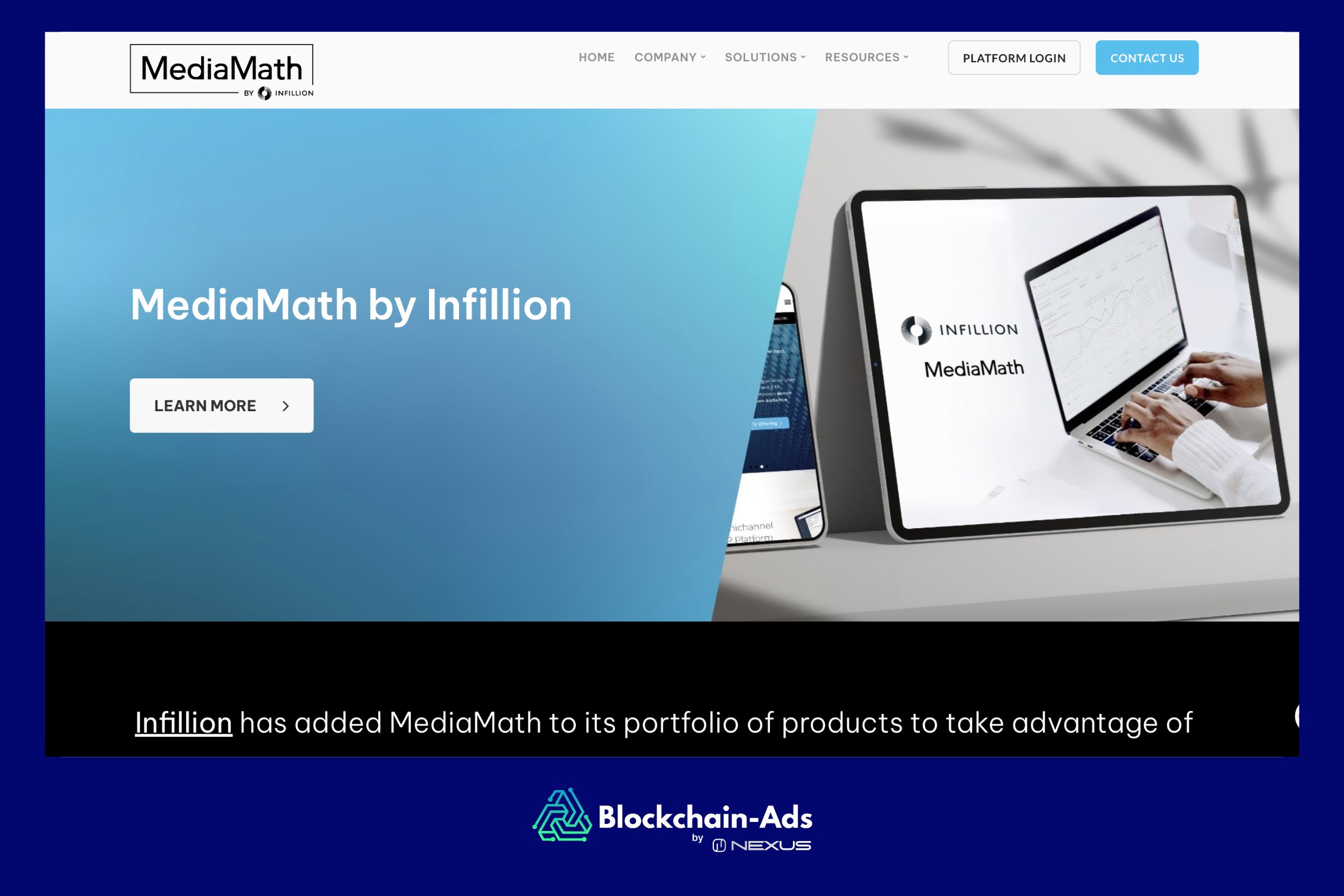
MediaMath by Infillion is an omnichannel programmatic DSP empowering over 3,500 advertisers globally. Since its launch in 2007, it has been emphasizing flexibility, transparency and a future-proofed identity core. Its main value is a modular and API-first approach. This allows advertisers to build a custom tech stack, integrating their own data and creative solutions smoothly.
The platform is also a leader in driving efficiency across complex channels. For instance, MediaCom wanted to improve their reach, CTR, VCR and OTT. They used MediaMath and achieved a VCR of 81% and a CTR of 1.76%.
Key features:
- Omnichannel advertising: The platform reaches the audience across channels like desktop, mobile and connected devices.
- Advanced targeting capabilities: MediaMath uses behavioral, geographic and demographic data to target the right audience.
- Machine learning algorithms: The platform uses unique algorithms to improve campaign performance.
- Data-driven insights: MediaMath integrates different data providers to offer actionable insights for audience targeting.
| Pros | Cons |
|---|---|
| Unique campaign options and exceptional customer support | Limited inventory supply and software instability |
| Supports various advertising formats including DOOH, CTV, display, video and audio | |
| Uses proprietary technology like the Brain algorithm for performance optimization | |
| Integrates with SSPs and DMPs |
6. Amazon DSP: Best for retail media strength
.jpg)
The Amazon DSP is great for brands seeking to connect their programmatic campaigns directly to the buying habits of consumers. This DSP platform generated $13.9 billion in Q1 2025 revenue and this represents 19% year-over-year growth.
Its proprietary advantage is the closed-loop data that is derived from billions of purchases and searches conducted across Amazon.com. This enables targeting that is incredibly effective. It allows you to reach shoppers who viewed a competitor’s product, placed an item in their carts but didn’t buy or recently purchased an item.
Key features:
- Sponsored products: Appears in search results and product pages, making it easier to capture high-intent shoppers.
- Enhanced video ad formats: The platform includes streaming TV ads through Prime Video and Freevee. These help track the customer journey from external ads to Amazon purchases
| Pros | Cons |
|---|---|
| Easy to use makes setup and integration quick | Less specialized for non-retail branding objectives |
| Fast and reliable customer support | Bulk campaign creation is challenging and this complicates the overall experience with Amazon DSP |
| Reaches audiences based on verifiable shopping and purchase behavior | |
| Provides the clearest link between ad spend and final sale revenue |
7. PubMatic: Best for premium publishers, app developers and advertisers who want to maximize ad revenue and ROI
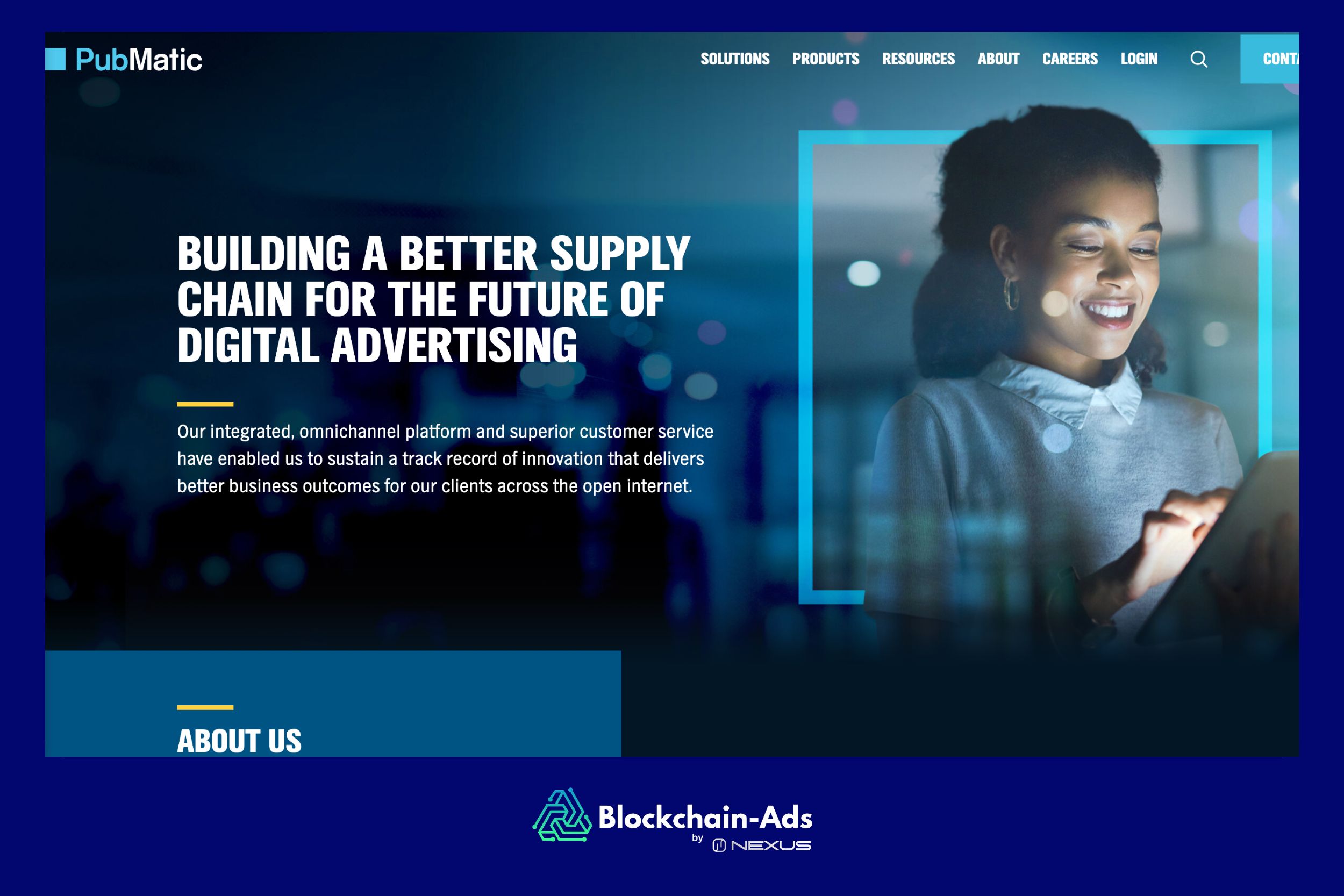
Offering solutions like Real-Time bidding and automated ad serving, PubMatic serves supply sources, publishers, DSPs, advertisers, exchanges and third parties. It processes nearly 87 trillion impressions in a quarter and is an industry leader in Supply Path Optimization (SPO). This is a feature that represents over 55% of its total platform activity in Q3 2025.
The platform is also leading in emerging channels. Its revenue from CTV advertising grew over 50% year-over-year and currently monetizes inventory from over 90% of the top 30 global streaming campaigns.
Key features:
- Header bidding: Allows publishers to manage and monetize inventory with a unique approach at the impression level.
- Private marketplace program (PMP): Enables publishers to control, price and manage their reserved inventory.
- AI Yield Optimization: Uses advanced AI models to automate pricing and drives an average of 10% revenue increase for publishers.
| Pros | Cons |
|---|---|
| Advanced ad targeting | Complex setup |
| Real-time reporting | Requires a learning curve, especially for new advertisers |
| Strong growth and direct relationships with top global streamers provide access to premium and high-attention video inventory |
8. Smaato: Best for advertisers and app developers prioritizing mobile-first inventory and in-app monetization
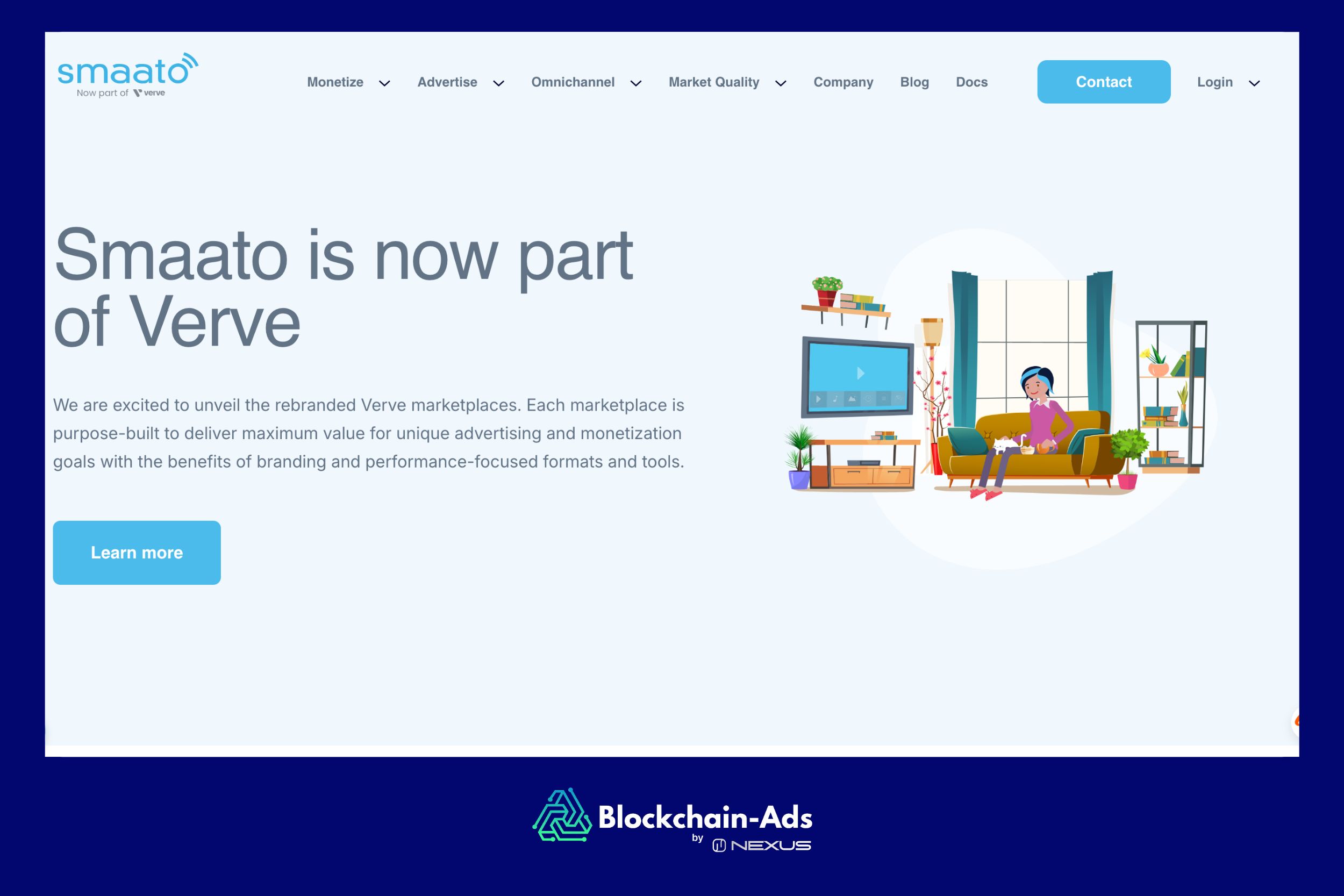
Smaato (now part of Verve) is an omnichannel ad server and monetization solution. One of its main strengths is the in-app. It uses real-time pricing competition to give you more control over your inventory and deliver up to 230% higher revenue than other integrations.
Its NextGen SDK also ensures monetization for mobile developers while improving latency for users. Besides, Smaato’s technology handles hundreds of billions of ad requests monthly and reaches well over 1 billion unique mobile users worldwide.
Key features:
- Protected marketplace: The platform uses an automated system and human expertise to create a secure and safe environment.
- No ad-serving fee: Smaato offers a free-to-use server to give you more control, better reach and a 30+% increase in revenue
- Wall garden: The platform offers you control to develop your own space and this improves transparency for both marketers and publishers.
| Pros | Cons |
|---|---|
| Over 1 billion unique reach | Advertisers must still buy inventory via a separate DSP or their own system |
| Supports mobile formats with higher engagements and eCPMs like rich media and rewarded video | |
| Easy to bring data from third-party providers and manage | |
| Free-to-use server that increases revenue by over 30% |
9. Magnite: Best for premium media owners, major streaming services and advertisers seeking high-attention video & CTV
Previously operating as Rubicon Project, Magnite allows real-time bidding by activating as a supply-side platform (SSP). It connects publishers with 86.5M global advertisers to buy and sell ad inventory in real time. Magnite also supports ad formats across mobile web, video, desktop web and mobile app.
Key features:
- Mobile app market: Magnite allows access to over 72% of the premium mobile app market. This helps unlock measurable in-app inventory for agencies and brands running omnichannel campaigns.
- Brand-aligned monetization: Magnite’s SDK supports ad experiences that build trust and drive long-term yield.
- Omnichannel advantage: Mobile SDK allows buyers to activate campaigns across screens through a single platform.
| Pros | Cons |
|---|---|
| Largest independent CTV access which accounts for 45% of the ex-TAC | It is a sell-side platform; therefore, advertisers must purchase inventory through a third-party DSP |
| Strong balance sheet and revenue growth of 11% | |
| Provide advanced tools for publishers that directly benefit advertisers such as reducing the frequency of ad repeats and improving delivery speed. |
10. Adobe Advertising Cloud: Best for enterprise experience integration

Adobe Advertising Cloud is a digital ad DSP platform that bridges the gap between media execution and customer experience data. Its main preposition is the native and deep integration with the wider AEC suite. These include Adobe Analytics, Adobe Real-Time CDP and Adobe Creative Cloud.
Adobe Advertising Cloud also includes two powerful components. a DSP for (display, video, CTV and search) and Search & Commerce (SSC) for wallet garden optimization. Deakin University combined these two components and achieved a 64% decrease in cost per action. Realtor.com also combined the two components to achieve 18% more efficient cost per reach through campaign optimization.
Key features:
- Real-time CDP integration: Allows the use of a unified customer profile for hyper-personalized targeting and suppression.
- Advanced cross-channel analytics: Feeds click and view data directly into Adobe Analytics and customer journey analytics for full-funnel measurements and modeling.
| Pros | Cons |
|---|---|
| Smooth integration of tools that enhances efficiency | Time to implement the platform fully and achieve 10% ROI takes up to 12 months. |
| Facilitate rapid testing and iteration of creative assets at scale and this leads to high lift in performance for retargeting campaigns |
Understanding Real-Time Bidding and How it Works
RTB is an automated and impression-by-impression auction for buying and selling digital ads. This mechanism powers the majority of the $500 billion+ programmatic advertising markets.
Real-time bidding usually relies on three technological pillars that connect advertisers (Demand) to publishers (Supply):
- DSP (Demand-Side platform): This is a software that allows advertisers to set campaign budgets, audience parameters and bidding goals (like a target ROAS or CPA). Its AI then analyzes the auction data and automatically calculates the optimal bid price. A standard DSP must process data at a rate that allows it to bid on millions of ad opportunities often in under 100 milliseconds.
- SSP (Supply-Side Platform): This is used by publishers (website owners, app developers) to manage, automate and maximize the price at which their ad inventory is sold. It connects the publisher’s ad slots to multiple exchanges and DSPs simultaneously. Publishers using advanced SSLs see an average of 10% revenue increase and 95%+ fill rate for inventory.
- Ad Exchange: It is a digital marketplace where DSPs and SSPs connect to facilitate the programmatic action of ad inventory in real-time. A single Ad Exchange handles hundreds of billions of transactions monthly. They execute the final auction within a window that is often less than 50 milliseconds to ensure that the final RTB process finishes before the user loads the page.
The step-by-step Auction Flow (Under 200 ms)
Typically, the entire process takes 100-200 milliseconds to complete. Here’s how:
- User event triggers: A user opens a webpage or app with an empty ad slot
- Bid request generation (SSP): The publisher identifies the empty slots and compiles the bid request.
- Auction broad (exchange): The programmatic SSP forwards the request to the Ad Exchange which instantly broadcasts the opportunity to hundreds of connected DSPs.
- DSP evaluation & bid submission: Your chosen DSP’s AI analyzes the impression against the goals (e.g., target CPA of $50), calculates the optimal bid price (e.g., $4.25) and submits it. This must happen in under 100 milliseconds.
- Auction clears (Exchange): The Ad Exchange selects the highest qualified bid.
- Ad served: The winning bid is routed back to the publisher and displayed instantly.
Why Use RTB Platforms?
The global real-time bidding market in 2023 was estimated to be $14.37 billion and is projected to hit $39.61 billion by 2030 (Grand View Research). This massive growth shows that RTB platforms play a major role in driving efficiency and precision across the media space.
Benefits of RTB platforms for advertisers (DSPs):
- Allows bids to be placed on a per-impression basis and most advertisers achieve up to 3x higher conversion rates compared to traditional display buying.
- You only pay the minimum required to win the impression and leads to a 15%-25% reduction in effective CPM for buyers.
- DSP algorithm uses machine learning to predict response and improves campaign performance and ROI by an average of 10.5% over conventional methods.
- Provides centralized access to inventory across web, mobile apps and CTV.
Benefits of RTB platforms for publishers (SSPs):
- RTB maximizes revenue and yield optimization by introducing competition, which increases CPM by up to 50%.
- Increased fill rate by exposing inventory to hundreds of global demand sources instantly.
These are the key features to look out for when choosing an RTB platform:
Omnichannel Capabilities
RTB platform must smoothly manage campaigns across display, mobile, audio and CTV. This helps in controlling frequency and telling a consistent story.
Targeting & Data Integration
A platform is only as effective as the data it can access. Prioritize solutions that support first-party data onboarding and future-proof identity methods. Look for platforms that guarantee over 70% of their available impression are targeted in a cookieless environment.
Inventory Quality & Brand Safety
Fraud and brand risk increase your budget instantly. Insist on pre-bid solutions that filter out invalid traffic (IVT) to ensure placement quality before the auction starts.
Reporting & Analytics
Your team needs actionable and real-time insights. Demand closed-loop measurements that prove how ad exposure influenced final sales or sign-ups.
AI-Powered Bidding & Optimization
Modern campaigns rely on machine learning to win the right impression at the best price. AI must focus on predictive optimization. This helps you determine the chances of a high-value conversion for every impression.
How to Choose the Right RTB Platform – Step-by-step evaluation criteria and decision matrix.
Choosing an RTB platform is a strategic decision that commits your media budget for the long term. The process moves beyond feature lists and forces you to match the platform’s competence directly to your business goals. Here’s how to pick the right RTB platform.
- Identify your main problem: Clearly define the most expensive problem you are trying to solve. If it’s precision and compliance and you want to target users in regulated markets, focus on specialist DSPs like Blockchain-Ads. If it's retail conversions and you want to drive sales from off-site traffic, focus on Amazon DSP.
- Demand proof: Make an evaluation based on verifiable and third-party proof that the platform has successfully executed campaigns identical to what you plan to run. Ask for case studies that exactly match your industry.
- Audit the supply path optimization (SPO): Insist on full transparency into the supply chain. You must be able to audit and reduce the number of intermediaries between your DSP and the final publisher.
- Evaluate data strategy and identify readiness: Your platform must have a clear and viable strategy for cookieless strategy. Ask what identical solutions they use. If not first-party or Unified ID 2, they will lose addressability quickly.
- Run a controlled test: Do a measurable trial by allocating $10,000 for 30 days to your top two contenders like DV360 vs. Blockchain-Ads. Compare the results based on your bottom-line metrics like CPA, transaction volume, and ROAS.
Current Trends in RTB
- Cookie-less targeting and identity solutions: The end of third-party cookies is forcing an immediate shift in how audience addressability is managed. 61% of big companies are already focusing on first-party data activation and collaborative identical solutions. They are adopting frameworks like Unified ID 2.0 to maintain audience reach and frequency capping without traditional cookies.
- Connected TV (CTV) growth: CTV has become a premier channel that has merged the impact of television with digital precision. U.S. CTV programmatic ad spending will reach $33.35 billion in 2025 with 98.4% going to video ads (eMarketer) and this makes expertise in this area essential. 58% of marketers plan to increase CTV budgets\, demanding superior Ad Pod Optimization from DSPs to reduce repetition and maximize the high-attention viewing environment.
- Retail Media ad Networks: Retailers are monetizing their proprietary shopper data. They’ve created the strongest signal of purchase intent available. Global digital retail media spending is forecast to hit $169 billion by the end of 2025, capturing 21.9% of all digital ad spend (eMarketer). This growth is fueled by closed-loop attribution which directly links off-site ad exposure to final product purchases.
- Supply Path Optimization: SPO is auditing to maximize working media dollars. Advertisers actively consolidate buying to platforms that guarantee a direct path to the publisher, improving the working media ratio. This strategic consolidation leads to a 34% reduction in viewable eCPM by eliminating unnecessary intermediaries and the substantial ad tech tax.
- AI Automation in Bidding and Creative: AI has played a major role in optimization. Programmatic advertising will account for 90% of worldwide digital display budgets by 2026 due to this automation.
Frequently Asked Questions (FAQ)
What is a real-time bidding platform?
RTB is a technology that allows automated auctions for buying and selling digital ad inventory. It includes three technologies: DSPs, SSPs and Ad Exchange, all completing in under 200 milliseconds.
What is the best online auction site?
The best ad auction sites are the leading enterprise DSPs and exchanges. Top choices like Blockchain-Ads, DV360 and The Trade Desk are the leaders because they provide the best combination of inventory quality, transparency and data control for performance-driven media buyers.
Is RTB better than traditional advertising?
For performance, precision and measurability, RTB is better. It allows you to target individual users based on specific intent and provides real-time data ROAS.
Conclusion & Next Steps
The best RTB platforms in 2026 are the ones that prioritize precision, transparency and high ROAS. This means leaning into specialist platforms that use superior data like Blockchain-Ads for finance, gaming, SaaS, blockchain and other regulated industries. Alternatively, choosing best-in-class generalists like The Trade Desk for CTV and cross-channel scale. Now, schedule a trial. Identify your 2-3 platforms that align with your industry and audience and conduct an SPO audit.