What Google Allows for Crypto Ads and How to Get Certified
Key takeaways
- Eligibility varies: Google allows some crypto ads without approval, requires approval for exchanges and wallets, and bans other products.
- Country approval: Advertisers need local licensing and Google certification, and approval in one country does not carry over to another.
- Banned products: ICO presales, crypto loans, liquidity pools, trading signals, and investment advice stay prohibited, even with certification.
- Check first: Complete verification, apply in Google Ads, and confirm approval before launch; if an ad is disapproved, fix it and resubmit or appeal.
Can you advertise crypto on Google? Yes, crypto ads on Google are allowed, but what campaign you can run depends on your product and target market.
Google sorts them into three groups:
- Ads that run without certification.
- Exchanges and software wallets that require certification in approved countries.
- Products Google bans outright.
Before launching crypto ads on Google, identify which group your product falls into and which markets you can target. This guide explains what Google allows, where you can advertise, and how to get certified.
What’s Changed in Google’s Crypto Ad Policy
Google’s cryptocurrency ad policy has changed repeatedly since Google banned crypto ads in 2018. A rule you read last year might not match what Google enforces today. Here are the major changes, with the newest policies first:
August 2026: Iceland, Liechtenstein, and Norway added.
- What changed: Google opened Iceland, Liechtenstein, and Norway to exchanges, software wallets, and hardware wallets that meet its requirements, including MiCA CASP authorization where required.
- Who it affects: Exchange and wallet advertisers targeting these three EEA countries outside the EU.
- Source: Update to Cryptocurrencies and related products policy (August 2026)
July 1, 2026: France requires a MiCA license.
- What changed: France’s DASP registration was replaced by MiCA CASP authorization.
- Who it affects: French DASP registrants.
- Source: Updates to Cryptocurrency Advertising Policy in France (July 2026)
May 2026: Certification moves fully into Google Ads accounts.
- What changed: New crypto certification applications moved into Google Ads.
- Who it affects: New applicants; existing approvals are unaffected.
- Source: Update to the Google Ads Certification Process (May 2026)
February 2026: In-account certification begins rolling out.
- What changed: In-account applications began rolling out under Admin > Policy > Account.
- Who it affects: Crypto certification applicants.
- Source: Update to the Google Ads Certification Process (February 2026)
February 2026: Indonesia added
- What changed: Exchanges need OJK licensing and certification.
- Who it affects: OJK-licensed advertisers in Indonesia.
- Source: Updates to Financial Products and Services Policy (February 2026)
September 2025: Argentina added
- What changed: Exchanges and wallets need CNV registration; non-trading hardware wallets may qualify.
- Who it affects: Registered exchanges and wallet advertisers in Argentina.
- Source: Updates to Cryptocurrencies and Related Products Policy (September 2025)
July 2025: Canada added
- What changed: Google allowed exchanges and software wallets to advertise in Canada with FINTRAC registration as a money services business.
- Who it affects: Exchanges and software wallets targeting Canada.
- Source: Updates to Cryptocurrencies and Related Products Policy (July 2025)
April 23, 2025: EU-wide rules under MiCA
- What changed: EU-wide crypto rules took effect under MiCA on April 23, 2025.
- Who it affects: EU exchange and wallet advertisers.
- Source: Updates to Cryptocurrency Advertising Policy in the EU (April 2025).
February 26, 2025: United Arab Emirates added
- What changed: Google allowed eligible exchange and wallet ads in the UAE with an FSRA or VARA license.
- Who it affects: Licensed UAE advertisers.
- Source: Updates to Cryptocurrencies and Related Products Policy (February 2025)
February 12, 2025: South Africa added
- What changed: Exchanges and wallets need FSCA registration; non-trading hardware wallets may qualify.
- Who it affects: Registered South African advertisers.
- Source: Updates to Cryptocurrencies and Related Products Policy (January 2025)
January 15, 2025: United Kingdom requirements updated
- What changed: UK exchanges and wallets need FCA registration and Google certification.
- Who it affects: UK exchange and wallet advertisers.
- Source: Updates to Financial Products and Services Policy (January 2025)
January 2024: Crypto coin trusts allowed in the US
- What changed: Certified advertisers can promote qualifying US crypto coin trusts.
- Who it affects: US crypto trust issuers and marketers.
- Source: Updates to Cryptocurrencies and Related Products Policy (December 2023)
September 15, 2023: NFT games allowed
- What changed: Google clarified when blockchain games with NFTs can advertise.
- Who it affects: NFT game studios.
- Source: Updates to Cryptocurrencies and related products policy (August 2023)
August 3, 2021: US exchanges and wallets allowed with registration
- What changed: US exchanges and wallets needed registration; earlier certifications were revoked. ICOs, DeFi, signals, advice, and affiliates stayed banned.
- Who it affects: US exchanges and wallet advertisers.
- Source: Decrypt
October 2018: Regulated exchanges allowed in the US and Japan
- What changed: Certified exchanges could advertise in the US and Japan, with separate certification per country; wallets, coin offerings, and trading advice remained banned.
- Who it affects: Exchanges in either market.
- Source: Search Engine Journal
June 2018: Google bans crypto ads
- What changed: Google banned ads for ICOs, exchanges, wallets, and trading advice, effective in June.
- Who it affects: Crypto advertisers.
- Source: 9to5Google
Crypto Ads Google Allows Without Certification
Some crypto businesses can advertise without certification if ads, landing pages, and local law meet Google’s policies.
- Businesses accepting crypto payments: Promote goods or services, not crypto transactions.
- Mining hardware: Equipment used to mine cryptocurrency.
- Supporting services: Tax, legal, security, and blockchain platforms that don’t sell tokens.
- Educational content: No investment advice, trading tips, odds, financial calculators, or technical trend analysis.
- Certain NFT games: Purchased in-game items must improve gameplay or help players progress.
Note: Eligibility depends on the product. A blockchain platform may qualify while an exchange or token sale on the same site does not. Local law applies.
Crypto Ads That Need Google Certification
Exchanges, hosted software wallets, hardware wallets, US coin trusts, and certain complex speculative products need certification.
The table below summarizes the Google Ads crypto policy requirements for each product, based on Google’s Cryptocurrencies and Related Products policy.
Crypto exchanges
Exchanges need local regulator registration and Google certification. Examples include FinCEN registration in the US, FCA registration in the UK, MiCA CASP authorization in the EEA, and FINTRAC registration in Canada.
Licenses don’t cross borders. An exchange targeting the UK and Canada needs FCA registration for one and FINTRAC registration for the other, plus a separate Google certification for each.
Software wallets
Hosted wallets need exchange-level licensing and certification. Unhosted (self-custody) software wallets are prohibited.
Hardware wallets (the exception to the license rule)
Hardware wallets need Google certification but no financial license if they only store private keys. If the device or companion app enables trading, exchange and wallet requirements apply.
Crypto ETFs and complex speculative products
Coin-trust ETFs need certification and can target the US only. CFDs, rolling spot forex, and spread betting need local licenses and certification. Crypto CFDs follow CFD rules.
NFTs and blockchain games
Eligible NFT games need no crypto certification. Games where players stake NFTs and social casino games rewarding NFTs are prohibited. Follow Google’s gambling and games policy.
Crypto Ads Google Bans
Google prohibits these products and destinations based on Google’s Cryptocurrencies and related products policy, and licensing cannot make them eligible.
Google describes these as non-exhaustive examples. A product that functions like a prohibited offering may still violate the policy, even if it uses a different name.
A clean ad that sends users to a crypto comparison page or broker review still breaks the policy. This restriction applies to crypto affiliate and review sites in every market.
NFT gambling sits on the same list. Google bans games where players stake NFTs for real-world value, along with other prohibited gambling-related NFT offerings. Google issues a warning at least seven days before suspending an account, so fix or remove a flagged ad quickly.
Where Google Approves Crypto Exchange and Wallet Ads
Google approves exchange and wallet ads in 45 locations: 30 EEA countries and 15 others. Use each country’s listed regulator; FCA registration won’t qualify in Canada or the UAE. MiCA can cover the EEA. Last checked: October 21, 2026.
Source: Google’s approved targeted locations for crypto ads.
Hardware wallets can target listed locations with certification if they offer no trading.
Markets that aren’t on Google’s list
Google doesn’t support exchange or wallet ads in unlisted locations, including Australia, New Zealand, Singapore, India, Brazil, and Mexico.
In Australia, for example, exchanges and wallets cannot advertise, even with AUSTRAC registration. Check “What’s Changed” for updates, or see the alternatives section below for other channels.
How to Get Google Ads Crypto Certification
For Google Ads for crypto, confirm eligibility, prepare your license, complete verification, and apply through your Google Ads account.
Last checked: October 21, 2026. Source: Google’s crypto advertising policy.
Step 1: Check your product and target country
Use the tables above to confirm that Google allows your product and accepts ads for it in each target country.
If your product is banned, stop here. Certification won’t make it eligible. If your target country isn’t on Google’s approved list, choose an eligible market before applying.
Step 2: Complete advertiser verification
Complete advertiser verification, check for financial services verification, and review regulator requirements.
Step 3: Gather your license documents
Prepare each market’s required license. US advertisers may need FinCEN and state registrations; UK advertisers need FCA compliance. Non-trading hardware wallets may qualify without one.
Step 4: Submit your certification application
In Google Ads, follow these steps:
- Go to Admin and select Policy.
- Open Account.
- Select Apply for certification.
- Choose the certification and submit the requested details.
Step 5: Apply for every target market
Google asks for a separate application for each location or group of locations you want to target. For example, an exchange targeting the US, UK and Canada needs approval for each of those markets, backed by that country’s license.
Step 6: Check your status before launching
Check the Ads page’s Status column. “Not eligible” and “Certificate required” mean certification for that location is not in place yet. Google gives no review timeframe.
If you’re already certified and manage several accounts under one manager account, you can apply for Manager Account Certification to extend that crypto certification to those accounts. Eligibility depends on the advertiser and certification type.
Why Crypto Ads Get Disapproved and How to Fix Them
Cryptocurrency Google ads fail when the product, targeting, ad, or landing page breaks policy. Find the reason, fix it, and request review or appeal.
Go to Campaigns > Ads, hover over “Disapproved,” and view policy details.

Common reasons crypto ads get disapproved
Use this table to find the issue and fix it.
How to edit a disapproved ad for re-review
Edit and save the ad to request a new review, then check its status in the Ads page.
- Go to Campaigns, then Ads.
- Hover over the ad or asset and select Edit.
- Make the ad compliant.
- Select Save.
.gif)
If the landing page caused disapproval, fix it and check status.
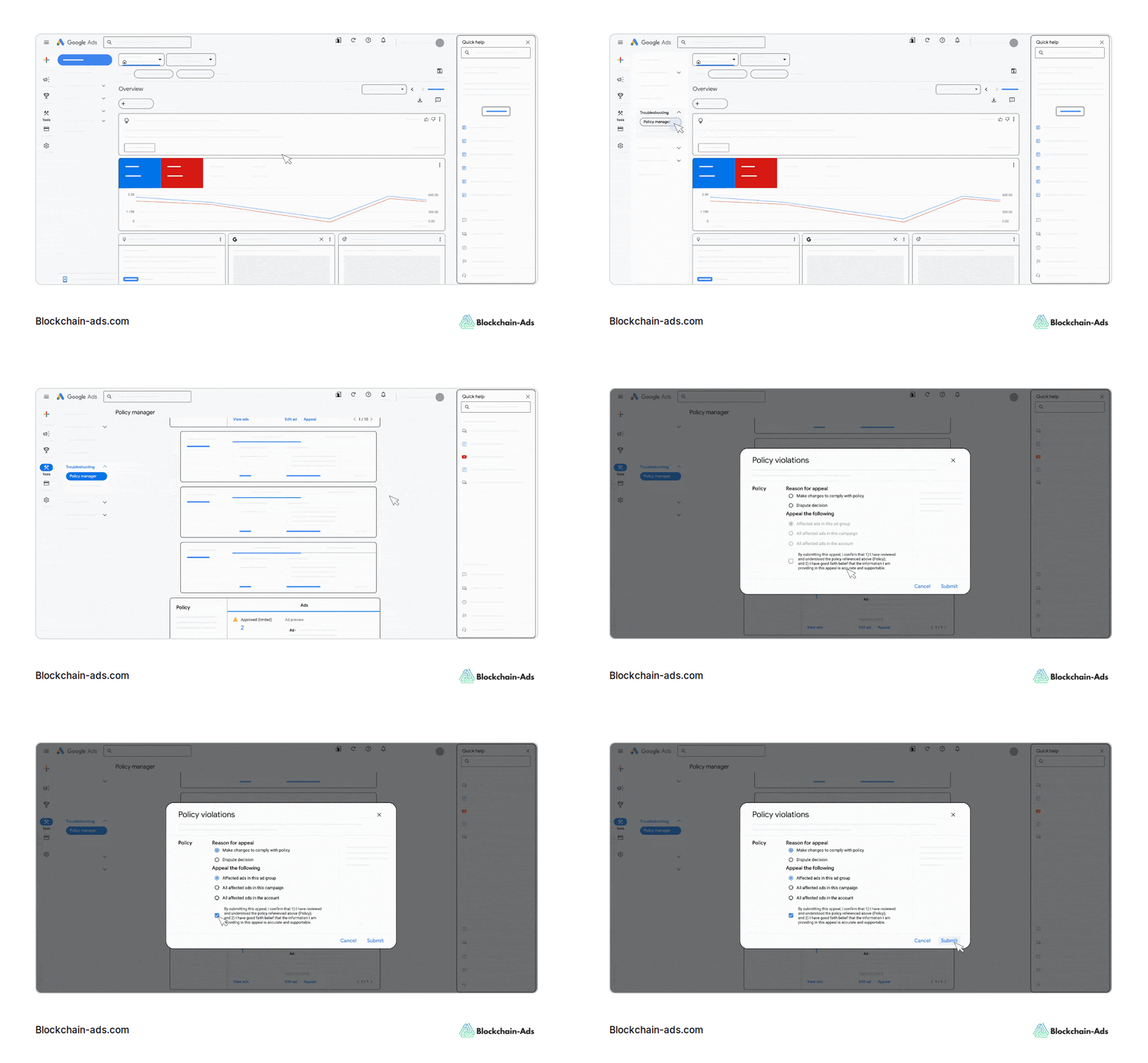
How to appeal a policy decision
Appeal after you fix the issue or dispute Google’s decision.
- Go to Tools, Troubleshooting, then Policy Manager.
- On policy issues, select Appeal for the affected ad.
- Choose “Dispute decision” or “Make changes to comply with policy.”
- Select Submit.
Track appeals in appeal history. Limits:
- Each ad gets three appeals; then contact support.
- Wait 24 hours between appeals on the same ads.
- Appeal by ad group or campaign.
- Since July 21, 2026, decisions older than six months require support.
If an appeal fails or is marked duplicate, edit the ad text or final URL and save for a fresh crawl. Remove unfixable ads; repeated violations can lead to suspension after seven days’ warning.
Alternatives to Google Ads for Crypto Advertisers
Google Ads alternatives for crypto include open web and in-app ads for licensed products. Licensing in each market stays with the advertiser, and local laws and platform rules still apply.
For country-specific rules beyond Google, see our guide to crypto advertising regulations.
FAQs
Is crypto advertising allowed on Google again?
Yes. Eligible products can advertise. Exchanges and software wallets need certification in approved markets; others remain restricted or prohibited.
Does Google allow NFT ads?
Some NFT games qualify when purchased items improve gameplay or progress. NFT gambling is prohibited.
Do you need a separate certification for each country?
Yes. Google requires a separate application for each location or group of locations, and you must hold the license each market requires.
How long does Google crypto certification take?
Google publishes no standard review time. Complete verification and documents first.
Can you pay for Google Ads with crypto?
No, Google Ads does not accept cryptocurrency as a payment method. Available payment options depend on your billing country and account settings. Check Google’s payment methods guide.
Can a crypto agency run Google Ads for clients?
Yes, if the product, market, license, and certification meet Google’s rules. The advertiser remains responsible.
Reach Crypto Users With Blockchain-Ads
For licensed crypto products, reaching the right audience starts with understanding on-chain activity and user interests. Blockchain-Ads Wallet Targeting reads on-chain activity across 11M+ wallets and 82 chains, with prebuilt audiences such as on-chain traders, token holders, DeFi users, and crypto app users.
Campaigns can run across display, native, video, in-app, connected TV (CTV), push notifications, and Telegram Mini App ads.
Freelance content writer/editor for B2B SaaS, AI, technology, partnerships brands.
View full profile →