Top 10 Decentralized Crypto Exchanges for Listing in 2026
One of the major benefits of decentralized crypto exchanges (DEX) is their permissionless nature, meaning anyone can list a token without needing approval. Listing on these platforms also costs less than listing on centralized exchanges (CEX). However, there are numerous DEXs, and knowing the top options (and what they offer) can help you decide where to list your token.
This guide will cover the top ten decentralized exchanges, the benefits and drawbacks of listing on a decentralized exchange. It’ll also discuss how you can promote your token to grow liquidity, because unlike centralized exchanges, DEXs do not promote newly listed tokens. Token issuers must handle the marketing of their digital assets themselves. One of the best ways to do this is through ad networks, such as Blockchain-Ads.
That said, here are the top decentralized exchanges for listing your token in 2026:
1. Uniswap
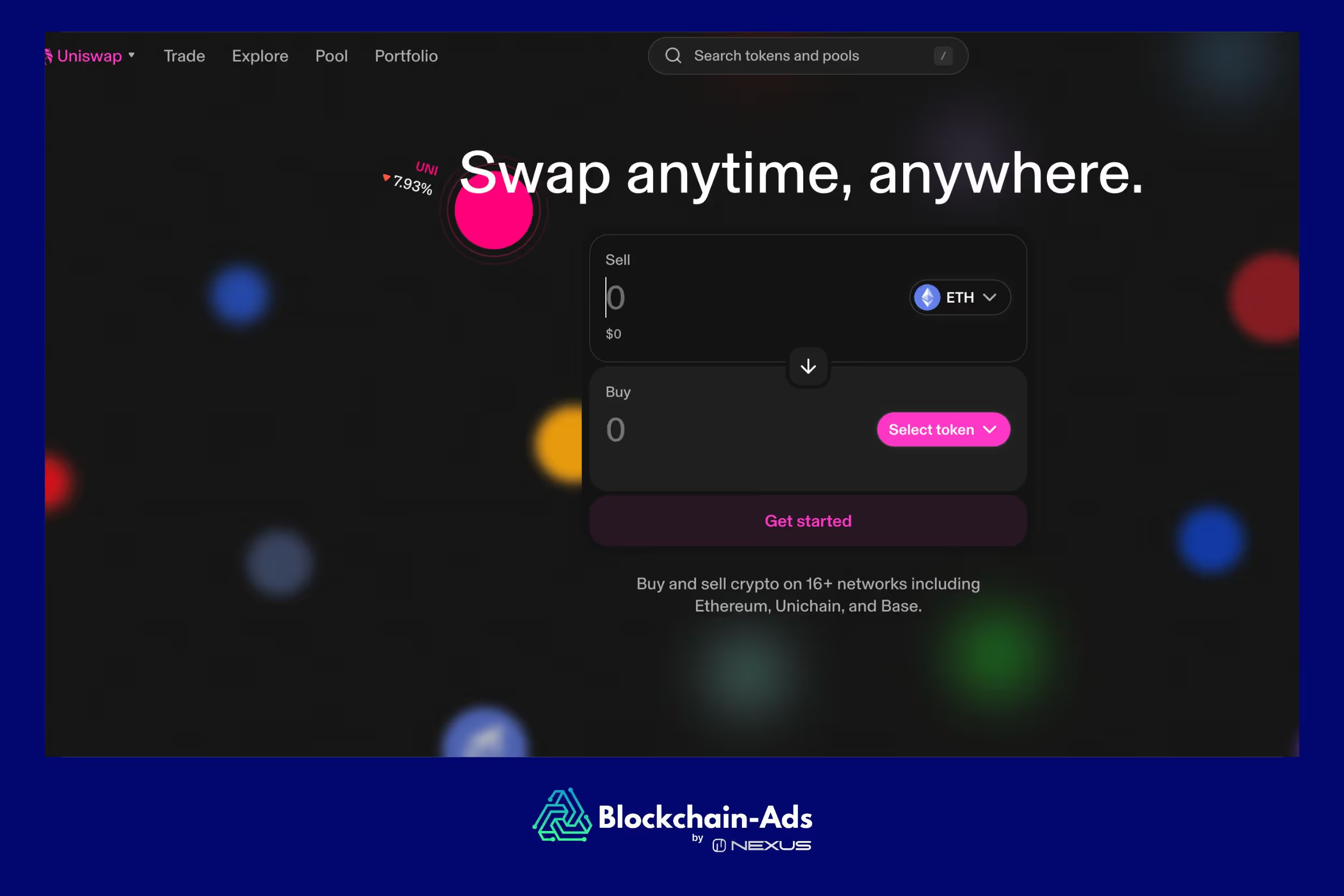
Uniswap is a decentralized exchange built on the Ethereum blockchain with a permissionless model. This means that anyone can trade, list a token, or provide liquidity using smart contracts without authorization from a central authority.
It has its own cryptocurrency called UNI, and holding this asset gives you voting power to contribute to modifications to the protocol. Like many other DEXs, Uniswap uses an automatic market maker (AMM). As such, prices are determined by an algorithm based on the tokens in a liquidity pool.
Uniswap’s permissionless model allows you to list your token and add liquidity without an approval, thereby eliminating needless delays. You also do not need to pay any listing fees. Plus, you retain full control of your assets since it’s a non-custodial platform.
More importantly, it’s one of the largest DEXs by trading volume. As a result, listing your asset here exposes it to a large audience, which boosts the chances of strengthening liquidity. That said, Uniswap only supports listing and trading ERC-20 tokens.
2. Curve Finance
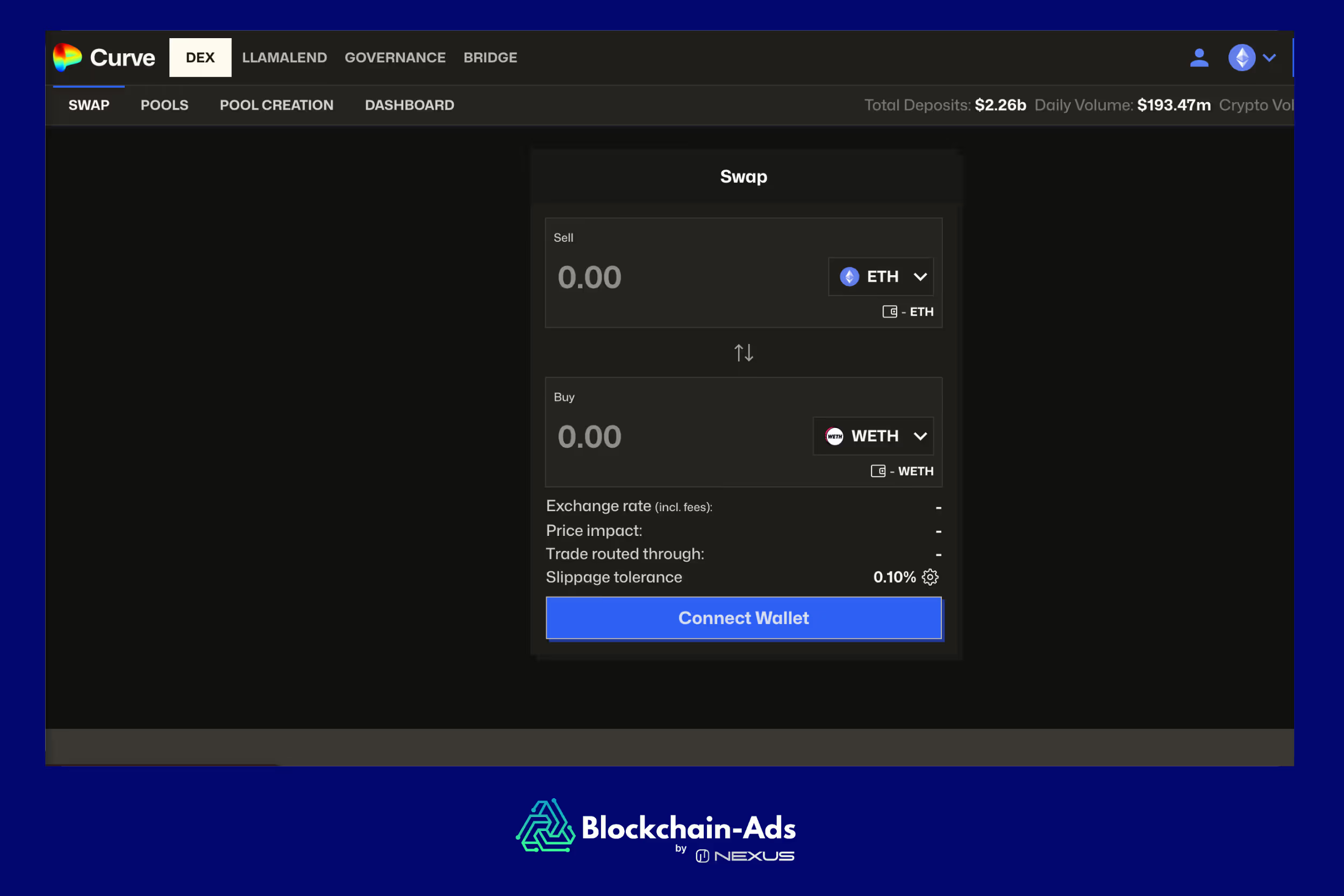
Founded in 2020 by Russian software engineer Michael Egorov, Curve Finance primarily facilitates the trading of stablecoins. As a decentralized exchange, it uses an automated market maker model to execute trades instead of traditional order books.
It also has a dedicated token called CRV, which users can earn as rewards for providing liquidity to liquidity pools. At the same time, owning the CRV token gives you governance power in the Curve Finance protocol.
That said, the focus on stablecoins like USDC and USDT is what makes Curve Finance popular in the DeFi ecosystem. These tokens are often similarly priced and not as volatile as other cryptocurrencies, mostly because they’re pegged to fiat currencies like the US dollar. As such, trading them via Curve Finance results in low slippage and impermanent loss.
This feature alongside the incentives for providing liquidity have resulted in Curve Finance having one of the deepest liquidity pools among DEXs. As a result, it is integrated with a wide range of DeFi platforms, mostly for yield farming. Curve Finance’s integration with other protocols means listing your token on the exchange will likely lead to exposure in the DeFi space.
3. SushiSwap
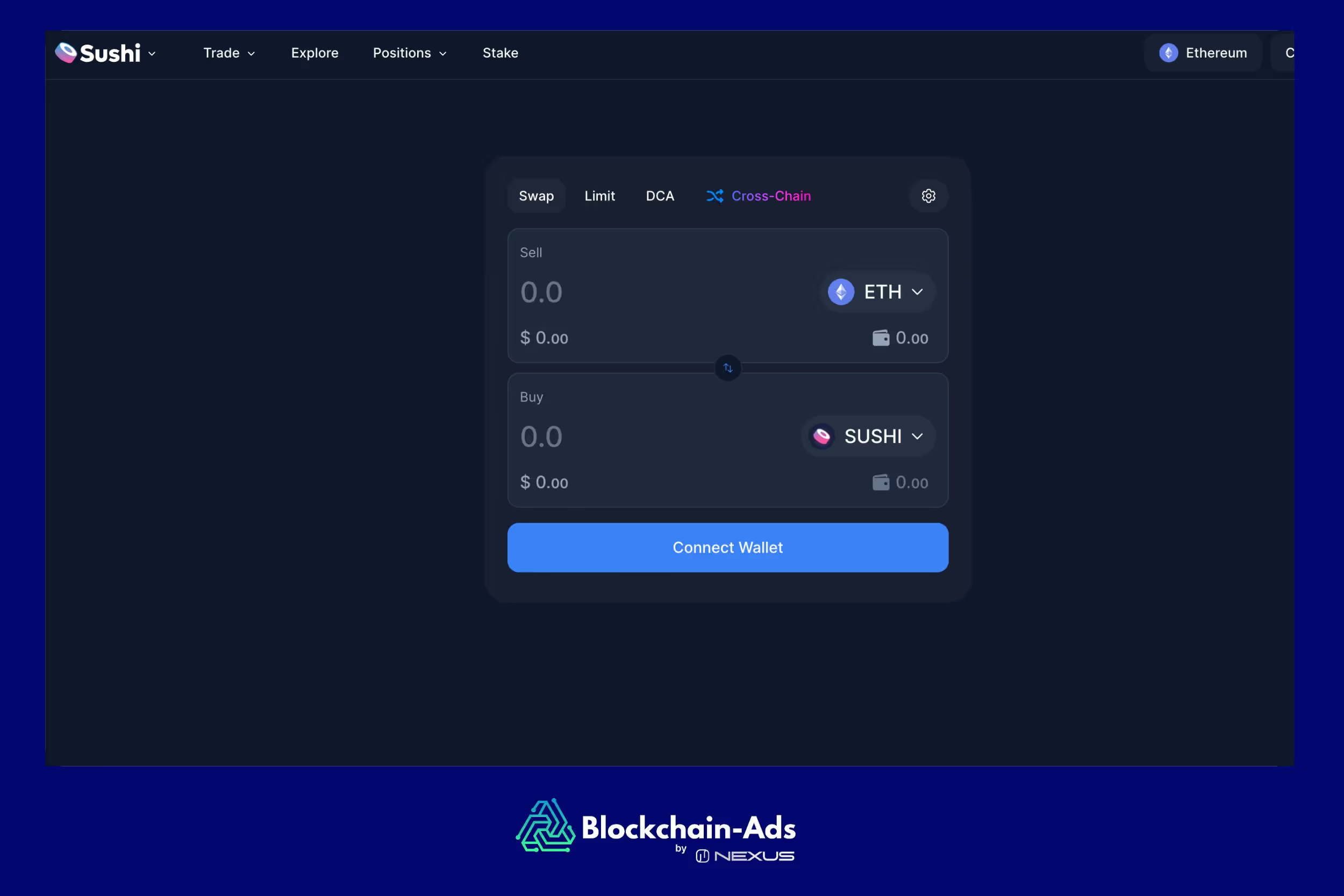
SushiSwap was built by two anonymous individuals known as Chef Nomi and 0xMaki, who copied the code of Uniswap and included some variations. One of the most notable tweaks is how the platform attracted Uniswap users. By using the smart contract Sushi Chef, Uniswap liquidity providers could move their pools to SushiSwap, earning SUSHI—the platform’s dedicated token—as a reward.
Also, while Uniswap only rewards liquidity providers with 0.3% of trading fees, SushiSwap offers 0.25%. The other 0.05% goes to all SUSHI token holders. In other words, the protocol guarantees rewards for all users.
Furthermore, SushiSwap actively supports the growth of new tokens within its protocol via the MISO (Minimal Initial SushiSwap Offering) and Onsen programs. MISO helps token issuers raise capital for new digital assets. On the other hand, Onsen offers additional incentives to users who provide liquidity for recently listed tokens, thereby encouraging participation among community members.
Although SushiSwap was built on the Ethereum blockchain, it has expanded to 25 other blockchains, including Avalanche, Mantle, Polygon, and Binance Smart Chain. Using the SushiXSwap feature, users can seamlessly swap their tokens across any of these networks.
4. PancakeSwap
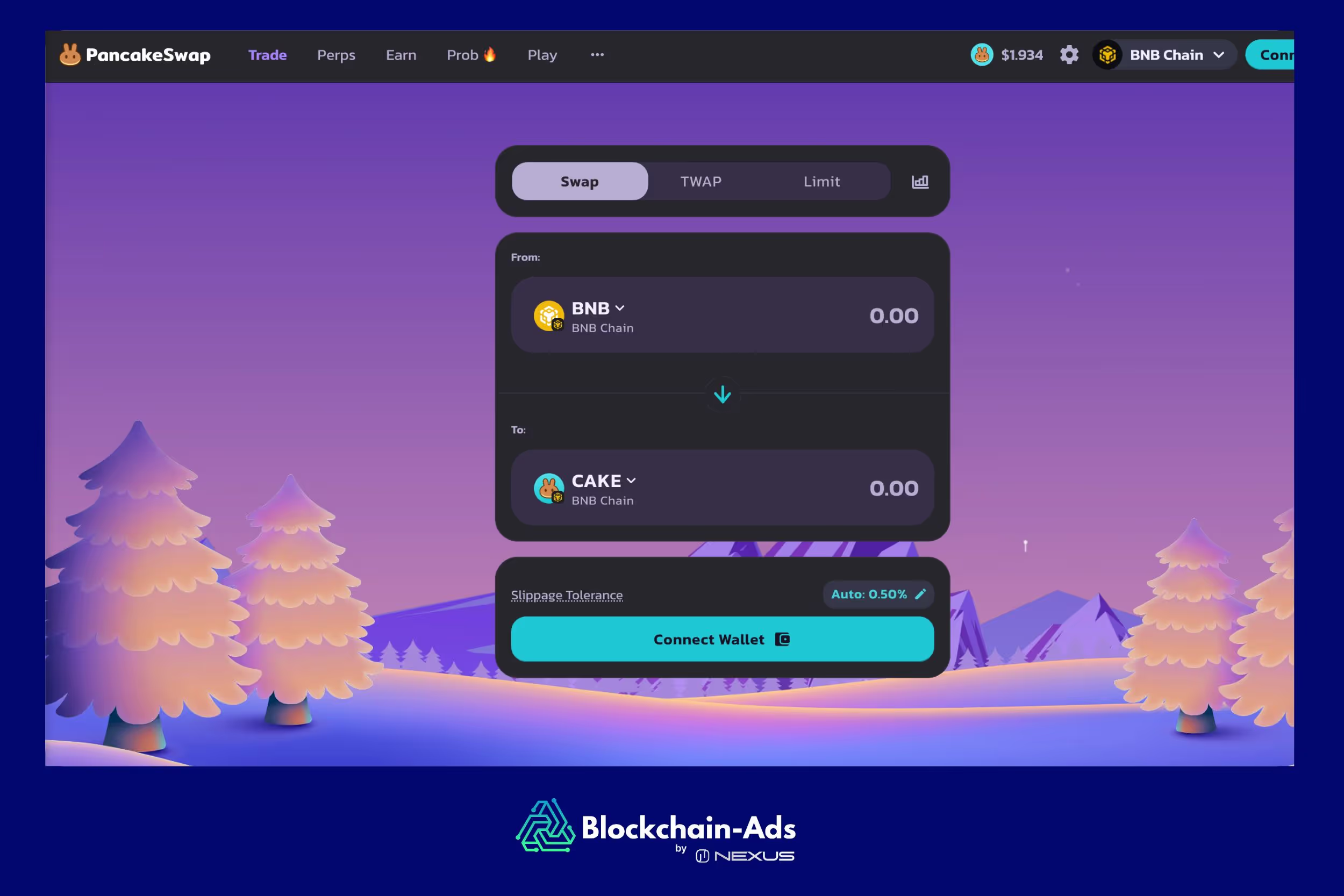
PancakeSwap has all the usual features that you can expect from a DEX. For instance, it facilitates trades using smart contracts and an AMM model. Users can also earn CAKE—the platform’s token—as rewards for providing liquidity, and this, in turn, grants them governing rights within the protocol.
However, the exchange’s standout feature is the fact that it exists on the Binance Smart Chain (BNB Chain). The BNB Chain is widely known for having higher efficiency than other networks. As such, transactions within the PancakeSwap protocol are much faster and demand less fees compared to other DExs.
The platform is also more user-friendly when it comes to listing new tokens. It offers the PancakeSwap Springboard platform that allows you to create and launch a token without any code. In addition, multi-chain swaps are supported across eight networks, including Ethereum and Arbitrum One, via the PancakeSwap Bridge.
5. 1inch
.avif)
1inch isn’t a decentralized exchange per se; instead, it is a DEX aggregator that uses the Pathfinder algorithm to find the best deal for a cryptocurrency swap across multiple DEXs and liquidity pools. As an aggregator, it gives you access to exchanges across numerous blockchains, including Ethereum and Binance Smart Chain.
Despite not being a traditional decentralized exchange, 1inch shares some features with these platforms, such as a dedicated 1INCH token. It is offered as a reward for using the aggregator's products and gives holders governing rights within the protocol.
Listing your token on any of the DEXs within 1inch’s ecosystem automatically results in wider exposure, which has benefits for the asset’s liquidity.
6. Balancer
Unlike traditional DEXs that support creating liquidity pools with only two tokens, Balancer allows you to have up to eight tokens in a liquidity pool. In addition, you can set the ratios and trading fees in these pools as you see fit.
This feature offers more flexibility compared to the 50/50 ratio and fixed fees of most decentralized exchanges. Balancer’s flexible asset ratios within a pool can also help to reduce impermanent loss in the long term. Furthermore, with more assets in a pool, investors have the opportunity to create a diverse portfolio compared to other DEXs.
Alongside its unique features, Balancer offers the other benefits of traditional decentralized exchanges. One of these perks is rewarding liquidity providers with the BAL token, thereby giving them protocol governing power.
7. dYdX
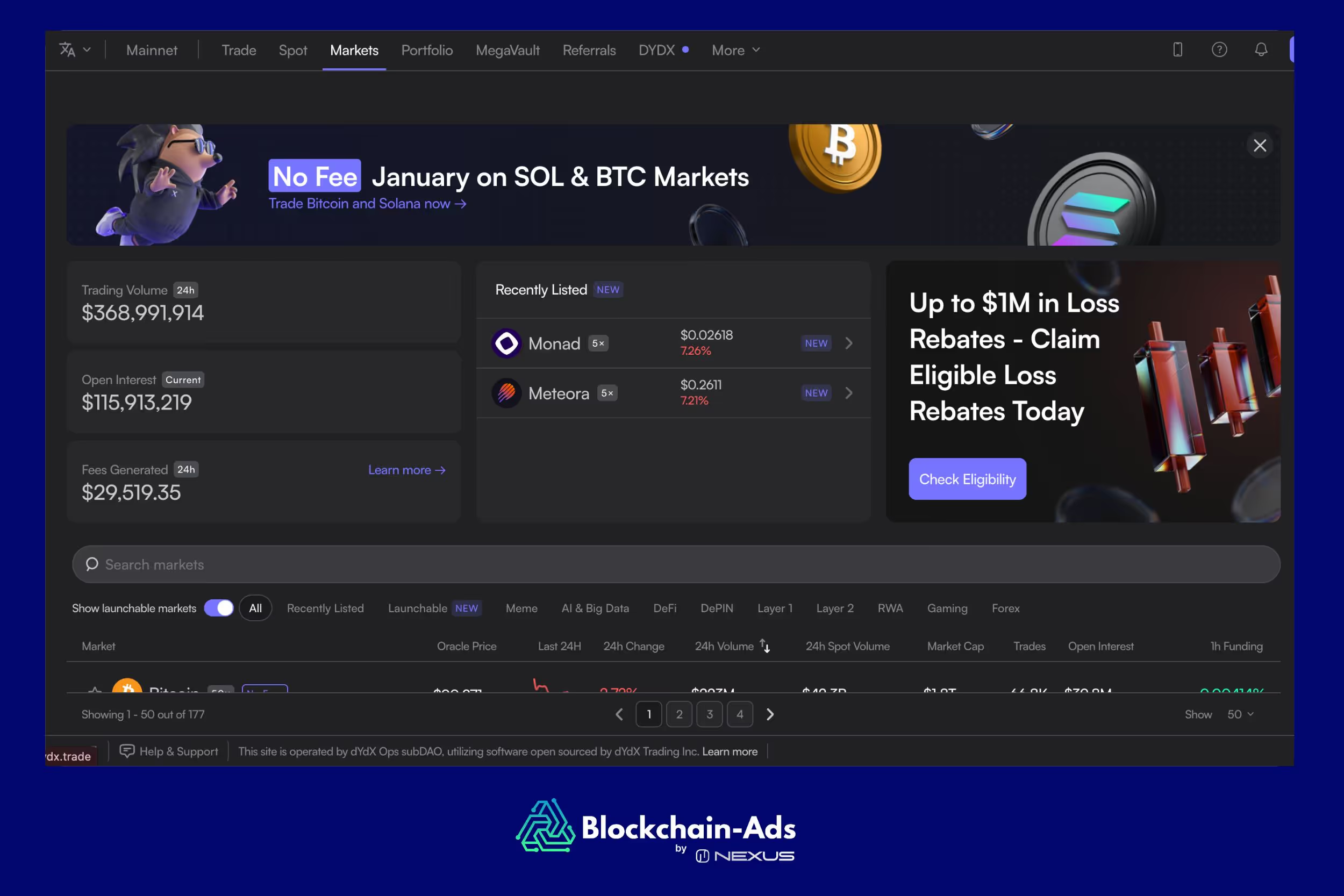
dYdX is a dedicated decentralized exchange for perpetual trading of more than 200 cryptocurrencies with leverage of up to 125x. The platform was initially created on the Ethereum blockchain, but it now operates on its own custom blockchain built using Cosmos SDK. As a result, it offers faster transactions with trading fees as low as 0.05%.
The governing token in the protocol is DYDX, which can be earned by providing liquidity and used to vote on developments within the ecosystem.
As the largest DEX for perpetual trading, it offers credibility, a wide audience in the DeFi sector, and deep liquidity for newly listed tokens.
8. Raydium
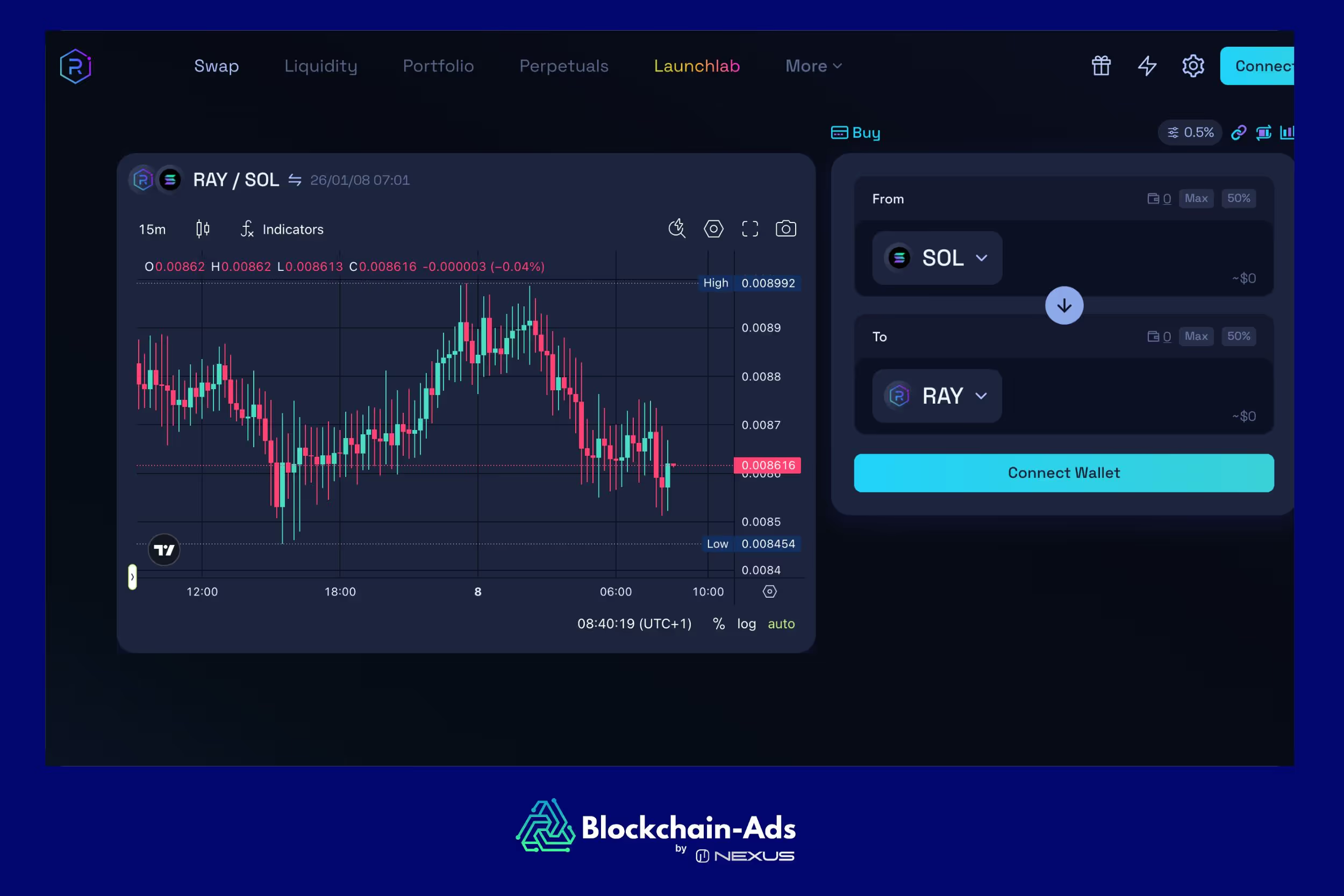
Raydium is the first decentralized exchange built on the Solana network. The platform’s choice of network is a major appeal, as it offers near-instant transactions with lower gas fees compared to Ethereum DEXs.
It also features a user-friendly interface that facilitates the permissionless creation of new tokens and liquidity pools within a few steps. Recently launched tokens are automatically accessible within the Solana ecosystem, exposing them to a massive base of DeFi investors. In addition, it offers the AccleRaytor program for new projects to raise capital and gain stable liquidity.
RAY is the platform’s dedicated token, and holding the token allows you to contribute to Raydium’s development.
9. IDEX

IDEX combines features from centralized and decentralized exchanges, such as using off-chain order books to match trades while settlement happens on the blockchain. This hybrid model typically results in less slippage, faster transaction speeds, and lower gas fees. It also guarantees fewer failed transactions, which is one of the major attractions of the IDEX protocol.
Listing your token on IDEX means you benefit from the platform’s efficiency. In other words, it’s considerably easier, faster, and less expensive for investors to trade your token compared to other DEXs, such as Uniswap. IDEX is built on the Ethereum blockchain, but it also has support for the Polkadot and Binance Smart Chain.
10. Kyber Network
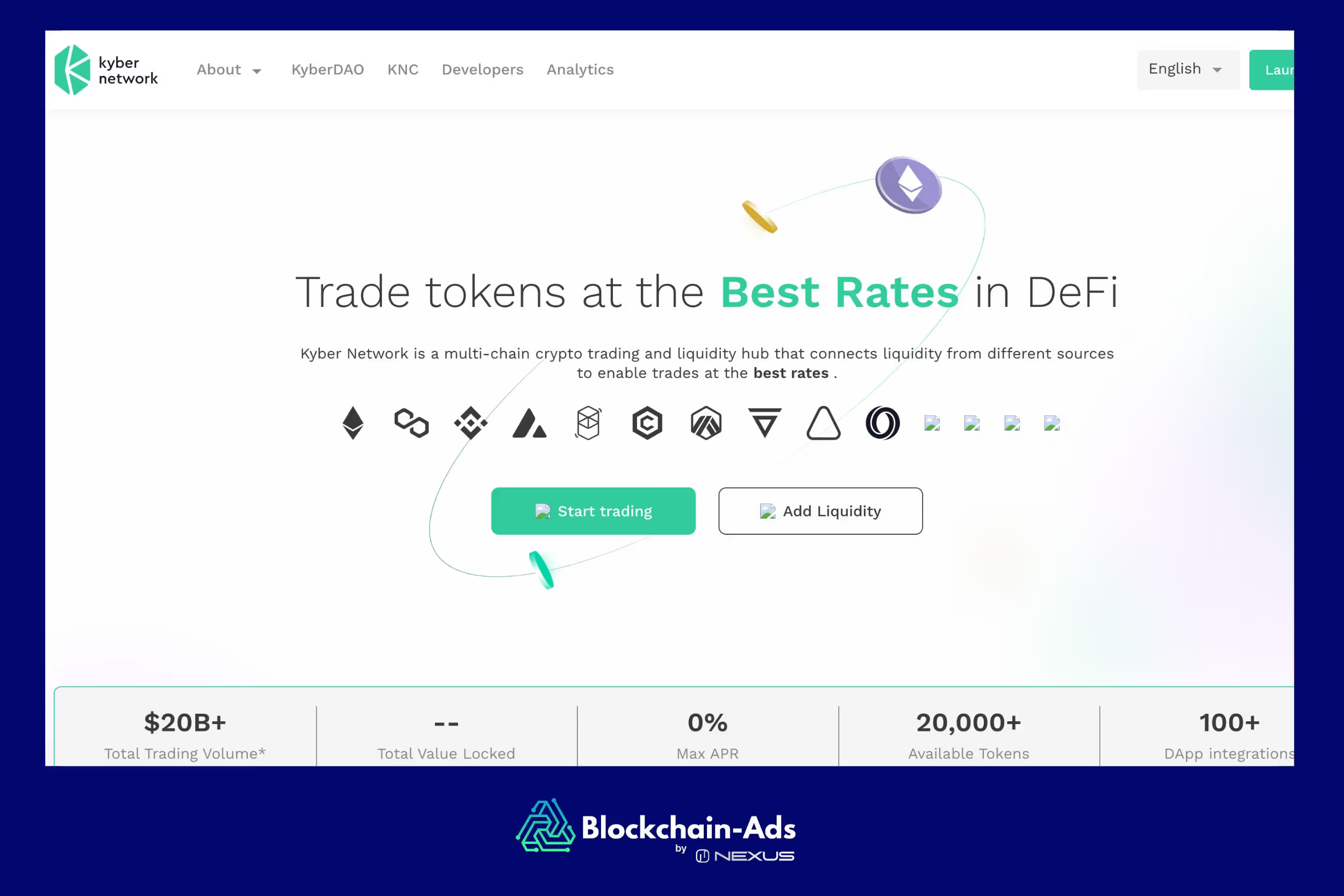
Kyber Network is a multi-chain liquidity aggregator which enables traders to find the best rates for crypto swaps across multiple decentralized exchanges. Currently, the protocol sources liquidity from 70 DEXs across 13 blockchains, giving users access to more than 2,000 tokens. It’s currently the largest and widely used DeFi platform on the Ethereum network. Listing your token on any Kyber Network-supported DEX gives you access to deep liquidity across these integrated platforms, as well as heightened visibility.
Understanding Decentralized Exchanges (DEXs)
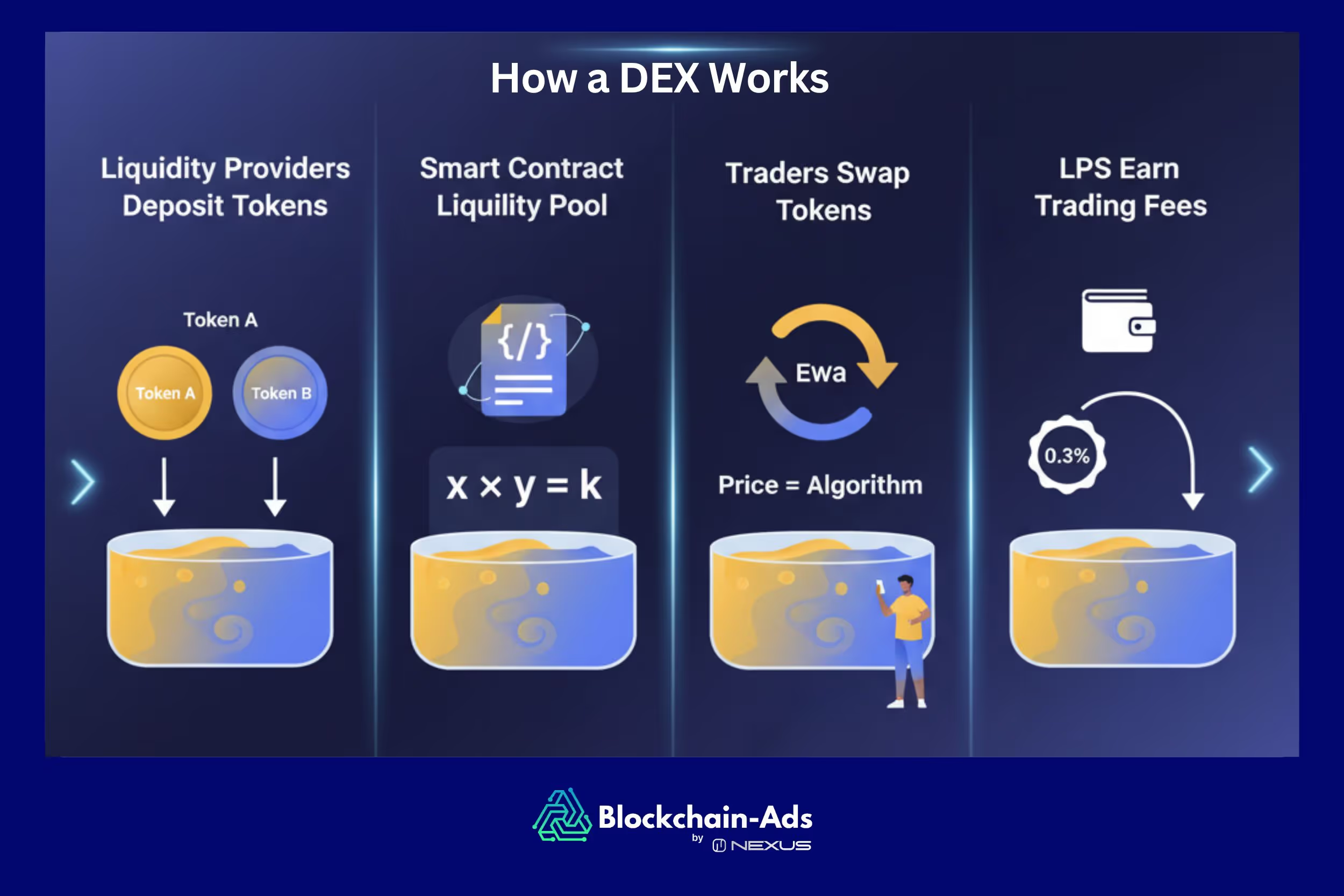
Decentralized exchanges are crypto trading platforms where users can trade digital tokens or assets between each other (peer-to-peer) without intermediaries.
In other words, there’s no central authority overseeing transactions, as is the case with centralized exchanges like Binance. As such, decentralized exchanges are permissionless, giving anyone access to the exchange without needing to undergo KYC procedures.
Transactions in a DEX are executed on the blockchain using smart contracts and an automated market maker (AMM) rather than the traditional order book model of CEXs.
How is a DEX different from a CEX?
Decentralized and centralized exchanges differ in several ways. The table below shows what separates one from the other:
Are DEXs Safe for Listing New Tokens?
Decentralized exchanges are permissionless, meaning anyone can access the platform to create and launch a token. This low barrier-to-entry is great for new projects, as it means there aren’t too many hurdles to overcome to get listed. However, it also means there are many scam tokens that defraud investors, making it tougher for credible assets to gain trust and legitimacy.
In addition, these exchanges run on smart contracts, which offer security benefits such as resistance to tampering. However, if the code possesses any flaws, it can be almost impossible to fix since they’re unalterable. Plus, these flaws can be exploited by malicious actors.
Advantages of DEX listing
Below are some advantages of listing your token on a decentralized exchange:
- Permissionless and easy to access, offering the fastest route into the crypto market.
- Transactions occur on a public blockchain, enhancing transparency.
- DEXs are resistant to government regulations and shutdowns.
- With no KYC requirements, token issuers can launch projects anonymously.
- Users retain control of their digital tokens and private keys, eliminating the risk of large-scale hacks common with CEXs.
Disadvantages of DEX listing
Here are some disadvantages of listing your token on a DEX:
- High number of scam projects, making it more difficult for legitimate tokens to gain trust and credibility.
- Lower liquidity compared to centralized exchanges.
- Token issuers must actively manage liquidity pools to achieve asset stability in a volatile market.
- Smart contracts are prone to coding vulnerabilities and bots.
Choosing the best Decentralized Crypto Exchange for Listing
There are numerous DEXs in existence, and you want to make the perfect choice for listing your new project. Here are some elements to consider before choosing a decentralized exchange to list your new token:
- Consider your target audience and the blockchain infrastructure your token will be built on.
- Opt for exchanges with deep liquidity and trading volume.
- Evaluate the associated fees, such as transaction costs, gas fees, trading fees, etc.
- Choose decentralized exchanges with credible reputations and zero security concerns.
- Consider DEXs that incentivize users to engage with new listings, as this can encourage liquidity providers to interact with your project.
How Can You Promote Your Token to Grow Liquidity?
Listing on a DEX is just the first step—promoting your token drives the liquidity and trading volume needed for stability. Unlike centralized exchanges that feature new listings, DEXs leave all marketing to token issuers, making paid advertising essential for attracting DeFi investors.
The best way to reach active liquidity providers is through Blockchain-Ads, because the platform can precisely target audiences specifically for crypto projects launching through IDOs. Unlike traditional ad networks that rely on demographics or keywords, Blockchain-Ads targets crypto users based on actual on-chain wallet activity and trading behaviors. That way, your campaigns only reach DEX traders and liquidity providers who are already participating in DeFi ecosystems—not passive browsers.
Start by launching multi-format campaigns on Blockchain-Ads, to get your token advertised across 10,000+ crypto websites and apps. You can choose:
- Display banners
- Native ads
- Video formats
- Mobile
- Push and Pop ads
- CTV
The platform's Nexus AI automatically analyzes performance across all formats and shifts budget toward placements driving actual liquidity provision rather than just clicks.
You can track the complete funnel using blockchain-verified attribution that combines pixel tracking with on-chain logs. Set up conversion tracking for whitelist registrations, liquidity pool deposits, and token purchases so you can see exactly which campaigns drive real economic activity.
Run campaigns for 30-90 days with a minimum $10,000 budget to give Nexus AI sufficient data to optimize toward high-value users. Projects like Carbon Browser acquired 15,000 token holders at $3 per acquisition, while Virtual Versions generated $40,000 in token purchases within minutes of launch using this targeted approach.
Some Successful IDO Campaigns on Blockchain-Ads
Several projects have successfully launched through IDOs, demonstrating the potential of this fundraising method:
- Carbon Browser: Acquired 15,000 new token holders with a $3 cost per acquisition, resulting in 5,460 new app downloads and 20,000 new community members.
- Virtual Versions: Gained over 3,000 potential investors through engaging animated ads and personalized messaging, achieving a 1.68% clickthrough rate and over $40,000 in token purchases within minutes of launch.
- SushiSwap: Rapidly gained traction as a Uniswap alternative, amassing over $1.14 billion in assets shortly after its launch through clever liquidity incentives.
Conclusion
Decentralized platforms, such as Uniswap and Balancer, are a great way for new tokens to enter the crypto market with minimal hurdles. However, listing is only half of launching a successful project. Token issuers also need liquidity for their assets, and this requires marketing the token to enhance exposure within the DeFi community.
One of the best ways to do this is through paid ads on networks like Blockchain-Ads. Blockchain-Ads uses AI-powered targeting to identify users based on interest, behavioral, attention, and on-chain intent signals, thereby putting your token in front of the right audience. By leveraging this type of ad platform, you can gain visibility and source the amount of liquidity needed to stabilize your asset.