Fintech Email Marketing Best Practices for 2026
Email is still one of the highest-ROI channels for fintech, but not every team knows how to use it effectively. The best fintech marketing teams use email to:
- Turn sign‑ups into verified, funded accounts with onboarding and KYC flows
- Nudge inactive users back to deposits, card usage, or investing
- Deliver education and market context that reduces anxiety around financial choices
- Tie every send to measurable outcomes like first deposit, trading volume, or subscription upgrades
At the foundation, what makes a fintech email marketing effective is how precisely it connects emails to user behavior and money decisions. Platforms like Blockchain-Ads help here by letting fintech brands target and reach users already comfortable with digital finance to add them in their email list.
In this article, you’ll see the key best practices that make fintech email marketing work in 2026, and how to effectively grow a list from scratch.
What is Fintech Email Marketing?
Fintech email marketing means using email to promote and support digital financial products and services to customers. It focuses on explaining complex money tools in simple language, building trust, and encouraging users to take action. These actions can include signing up, completing onboarding, funding an account, or using more features regularly.
For example, a neobank might send a welcome email series that explains how to set up direct deposits. An investing app could email weekly education tips about risk, diversification, and how to use specific in app tools. A payments startup might send usage summaries, payment alerts, and upgrade offers tailored to each customer’s activity.
Fintech Email Marketing Best Practices
According to Statista, the average office worker receives over 30 emails per day. This means your fintech message needs to stand out with relevance and timing. That’s where the following proven best practices make all the difference.
1. Create a targeted fintech email strategy.
You start with who you are talking to and what specific money action you want them to take.
Then you segment users by lifecycle and value so each group gets focused, relevant emails.
Step 1, Define the money action
Choose one clear action for each strategy. Examples of money actions include funding an account, making a first investment, or increasing monthly deposits. Each email or sequence should guide the user toward that one specific action.
Step 2, Segment by lifecycle
Break your audience into lifecycle stages, then match each stage to a money goal.
Example lifecycle segments and emails:
- New users, goal, complete onboarding and fund their account for the first time.
Example emails, welcome email, “finish setting up your account”, “how to make your first deposit”. - Active users, goal, increase product usage or balances.
Example emails, “three ways to grow your savings”, “try our budgeting feature based on your spending”. - Inactive or churn risk users, goal, bring them back into the app.
Example emails, “we noticed unused rewards in your account”, “see what changed since you last logged in”.
Step 3, Segment by value
Add a second layer by grouping users by value, like balance size or revenue potential.
Example value segments and emails:
- High balance or high value users, goal, protect and deepen the relationship.
Example emails, “early access to our premium card”, “personalized insights based on your portfolio size”. - Small balance or new earners, goal, build confidence with small, low risk money steps.
Example emails, “start investing from a small daily amount”, “simple guide to building your first emergency fund”.
2. Use email automation to simplify customer journeys.

Fintech users don’t all move through the same path. About 6 out of 10 people will download an app and start using it right away. The other 4 out of 10 either hesitate to link accounts, delay verification or abandon the process altogether. That’s where automation comes in. It allows you to deliver the right message at the right time without manually tracking every single customer.
An ignored sign-up can trigger a gentle reminder within 24 hours. A first deposit can prompt a thank-you note with tips on maximizing account benefits. And someone who has been inactive for 30 days might get a re-engagement offer automatically.
The impact of this is huge. Data shows that automated email drives 3.2x more revenue than standard ones. Besides, the open rate for automated email can be 70% higher than regular newsletter simply because the timing feels relevant.
3. Create and manage targeted fintech email campaigns.
According to McKisey, 71% of consumers expect companies to deliver personalized interactions. When that doesn’t happen, three-quarters of these consumers get frustrated. That's why fintech email campaigns should feel like a direct conversion with users. It should also be based on their behavior, preferences and goals.
For example, someone who just opened a digital savings account may value a simple ‘’welcome’’ series with tips to hit their first milestone. Meanwhile, an experienced investor might appreciate timely updates on market trends or new portfolio features.
Managing campaigns effectively also means pacing them well. A few emails may make users forget you. Too many of them will make them unsubscribe. The best thing is to experiment with frequency, content type and tone. Do it until you find what keeps engagement steady without overwhelming people.
4. Keep your fintech email lists clean and well-segmented.
Cleaning here means actively removing inactive users, duplicates and bounced emails. It may feel painful to cut numbers but the truth is that sending 50,000 engaged users will outperform sending to 100,000 where half are dead leads.
Segmentation takes this one step even further. Instead of treating every subscriber the same, you can group them into meaningful categories. Remember, a college student using a budgeting app doesn’t need the same content as a business owner exploring payment options.
This segmentation indeed has a real impact. According to a Mailchimp study, segmented campaigns drive 14.31% higher open rates and 100.95% more clicks compared to non-targeted options. For fintechs where trust and personalization are currency, that kind of lift can mean stronger customer retention and higher lifetime value.
5. Design mobile-friendly email templates that are HTML-optimized.
A mobile-friendly template, therefore, is both about shrinking content to fit a smaller screen and rethinking the design. The font should be large enough to read without zooming. Layout should also stack vertically so that users don’t have to pitch and scroll.
HTML optimization also matters. Why? Because broken links, missing images or slow-loading graphics can quickly erode user confidence. Fintech marketers also test dark mode compatibility, optimizing load speed and keeping email code clean. It helps avoid spam triggers. Even the smallest adjustment can pay off. Research shows that responsive email delivers a 15% higher click-through rate compared to non-responsive designs.
6. Provide valuable content and newsletters for fintech users.
For a fintech brand, value is everything. Research shows that 74% of people say they’re more likely to engage with a company that shares content that is useful and relevant. This makes newsletters one of the best tools for fintech marketers.
You may find that a user who signed up for your app to track expenses may not immediately upgrade to premium. However, if your weekly newsletter shares budgeting tips, market insights or even simple financial guides, that user will begin to associate your brand with guidance and not just transactions. Over time, this builds loyalty.
7. Track performance and improve your fintech emails regularly.
Measuring the performance of your email is important. In fact, campaigns that are consistently tested and optimized can see as much as 37% higher ROI compared to those that remain static. You need to know what resonates and what doesn’t.
But remember, tracking goes beyond just open rates. Metrics such as click-through rates (CTR), conversion rate and unsubscribe rate will reveal how effective your messaging is at guiding users through the customer journey.
Furthermore, A/B testing is another proven way to boost performance. Small tweaks like subject line wording, email send times or the placement of a CTA button can help. Most successful fintech marketers who use A/B testing are 70% more likely to report a positive ROI.
Growing a fintech email list from scratch
Building a fintech email list from zero is challenging, especially because it must contain relevant audiences but acquisition channels have evolved. Performance advertising is one of the fastest ways to seed high-intent subscribers, especially when you can target users by real financial behaviors.
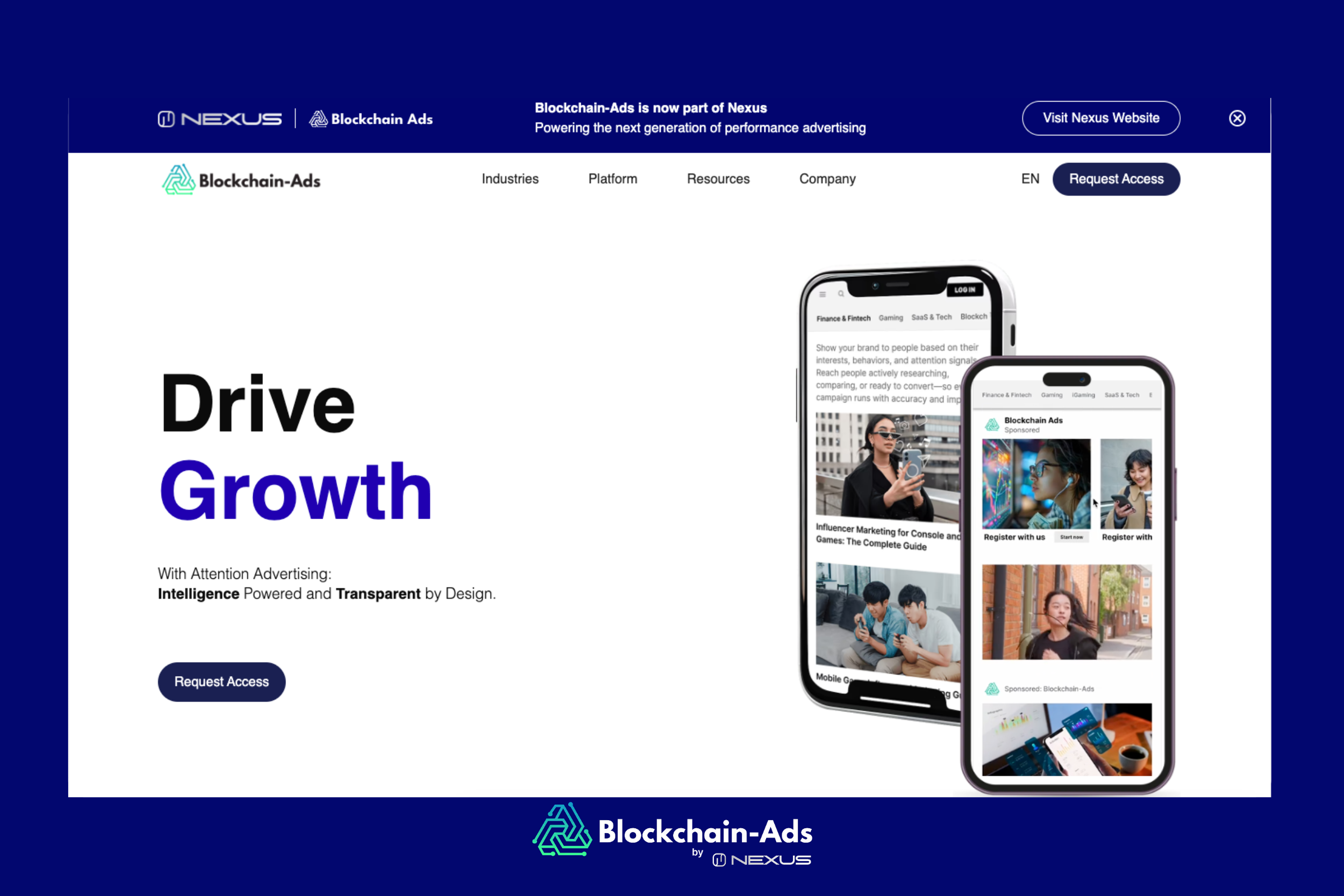
One of the most effective options here is a performance platform like Blockchain-Ads. With Blockchain-Ads, fintech brands can target users based on their financial behavior like wallet activity, and real transaction history. Fintech brands can reach these audiences across over 11 million wallets and hundreds of thousands of websites and apps.
This means your lead magnets and email sign-up flows are shown to people who already interact with digital finance, making your initial list far higher quality than generic traffic. It is also very effective for crypto email marketing.
However, paid media is not the only route. You can also grow your list organically through:
- SEO and content marketing to promote high-value resources such as investment guides, savings calculators, or compliance checklists with email capture gates
- Run social campaigns (Instagram, X, LinkedIn) that drive to exclusive newsletters, waitlists, or educational series for professionals and consumers
- Launch referral programs where existing users earn rewards for inviting friends to join and subscribe to updates
Wrapping Up
Integrating email marketing into your digital marketing can undeniably help transform how fintech companies connect with their audience. Besides, email is cost-effective, productive and awesome for targeted marketing. When done correctly, it becomes the backbone for customer engagement. It also drives higher retention, smoother onboarding and measurable ROI that few other channels can match.