Forex Trading Google Ads: Requirements, Setup Guide & Best Alternatives
Running forex trading campaigns on Google Ads is one of the most effective ways to reach traders who are actively searching for brokers, platforms, and strategies. However, it requires strict adherence to Google's policies, including specific licensing and certification, especially for complex financial products. Advertisers that meet all these requirements, can proceed to set up the Forex ad campaign by:
- Creating a Google Ads account
- Choosing a campaign goal
- Set the ad according to your target language and time zone, and define a bidding strategy
- Come up with a budget
- Create the ad content
- Submit for review
Google Ads are effective for targeting users actively searching for forex-related terms, but many advertisers face rejections due to policy violations or lack of proper certification. To avoid these constant rejection, many brokers, prop firms and trading platforms switch to programmatic platforms like Blockchain-Ads to acquire forex traders effectively.
Read on to learn how to successfully execute and manage your Forex trading Google Ads campaign while meeting all the requirements.
What Are Forex Trading Google Ads?
Forex trading Google Ads are search and display campaigns that promote licensed forex brokers, trading platforms, and related services under Google’s financial products and services policies. These campaigns target high-intent queries from users actively looking for forex information, platforms, or tools, but they are only allowed when you meet Google’s verification rules for restricted financial products, including rolling spot forex in eligible countries.
Before you think about keywords or creatives, you need two layers in place:
Compliance prerequisites:
- Hold the required forex or CFD license from a recognised financial regulator in every country you want to target.
- Complete Google’s advertiser verification and financial services / restricted financial products certification for those markets.
- Respect country-by-country eligibility rules (some markets allow complex speculative products, others restrict or ban them).
- Include clear, prominent risk disclaimers and avoid guaranteed-return or “get rich quick” style claims in both ads and landing pages.
Best-practice execution:
- Conduct keyword research that balances broad discovery terms with high-intent, compliant long-tail queries.
- Write ad copy that leads with regulation, trading conditions, and platform benefits without overpromising results.
- Build landing pages that are secure, fast, and fully aligned with your ad promises, including proper disclosures and product details.
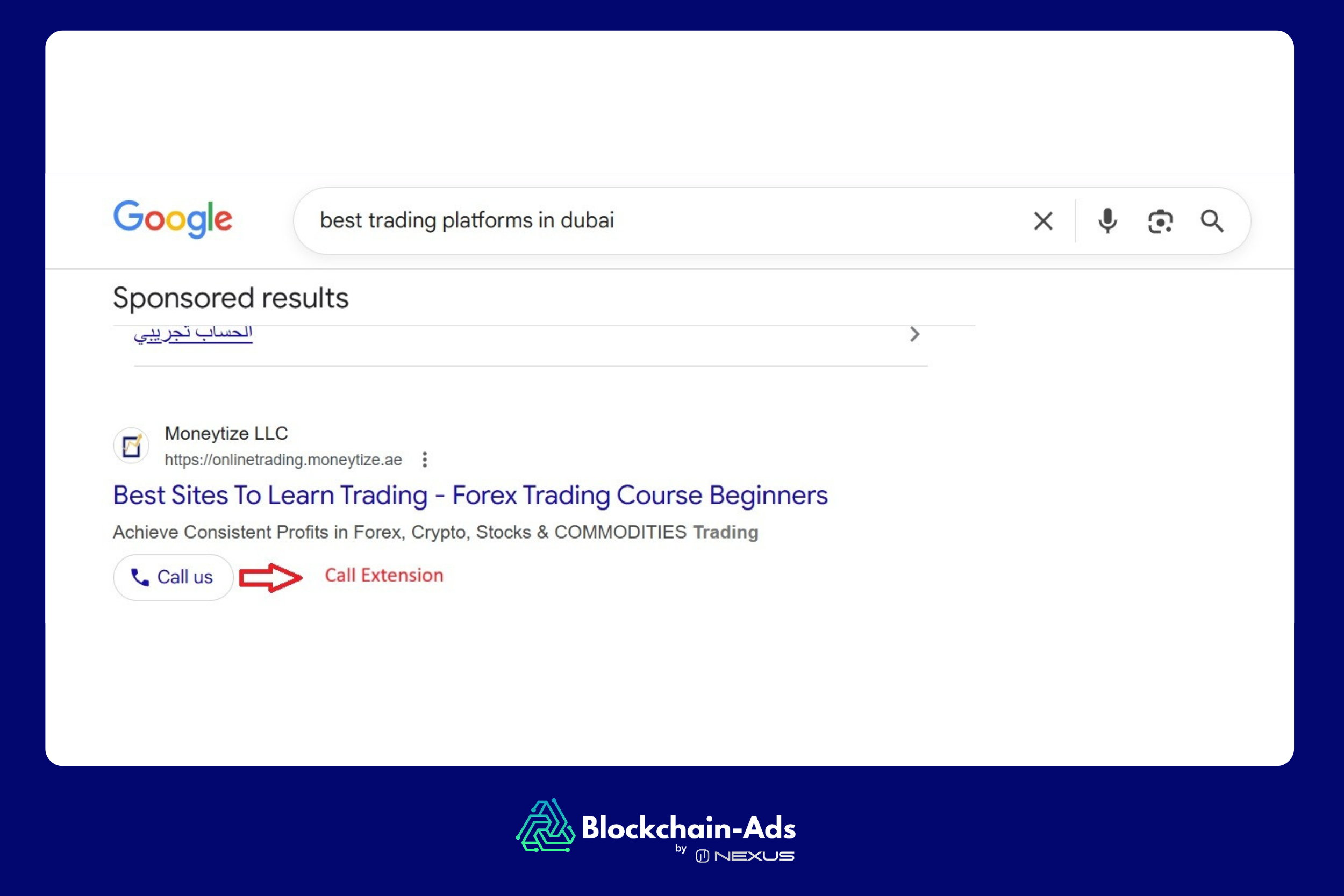
- Use extensions (sitelinks, call, location, price, etc.) to highlight key sections like account types, platforms, fees, and education.
- Configure targeting settings, locations, languages, devices, and schedules, so you only reach users in licensed, approved regions.
Google Ads Policies & Certification Requirements
Google's primary objective is to protect its users from the rampant online scams and misleading claims. This results in the platform imposing strict restrictions, particularly on most financial products and services.
Rolling spot forex is among the restricted financial products on Google, and you must be certified by Google to run its ads. To be eligible to run Forex Trading Ads on Google, you must follow these steps:
- Verify your regulatory licence with a recognised financial authority in your region of operation
- Apply for Google certification through the “Financial Products Certification” portal
- Provide all the required documents, including your company registration number, proof of licence, domain ownership, and a landing page review.
- Wait for Google to approve your certificate application
Country & Region Restrictions
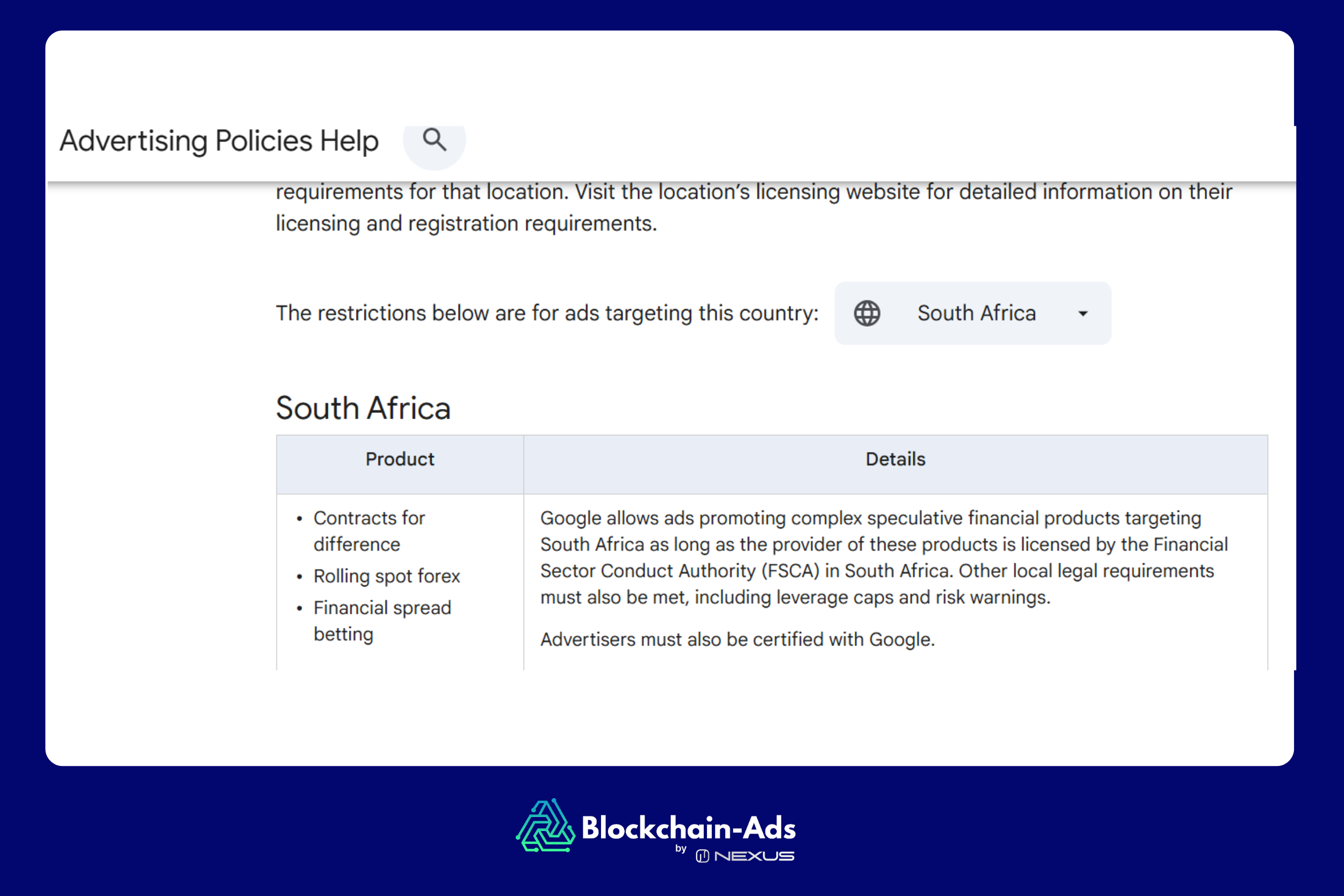
The certification and approval of your forex product or service are always tied to the specific laws and regulations in each country you target, not just Google’s own rules. For every eligible country, you must be licensed by the local economic or financial regulator (for example, ESMA‑regulated authorities in the EEA, ASIC in Australia, CMA in Kenya, or the Capital Markets Board in Türkiye) and then obtain a separate Google certification for complex speculative financial products like rolling spot forex.
Google only allows forex and CFD ads in a limited set of markets where clear regulatory frameworks exist, and it requires that your license explicitly covers the products you promote in that region. This means a licence in one jurisdiction does not automatically allow you to run ads globally; you must respect country‑by‑country eligibility, local leverage caps, risk‑warning formats, and any outright advertising bans.
On top of this, Google cannot serve ads in territories subject to OFAC sanctions (for example Iran, Cuba, North Korea, Crimea, and certain regions of Ukraine), even if you are licensed elsewhere and fully certified. If you run “All countries & territories” campaigns, you are still responsible for excluding embargoed or ineligible markets and ensuring your geo‑targeting only covers places where both your licence and Google’s policies allow forex advertising.
Ad Content & Landing Page Rules
You must use high-intent keywords and tightly themed ad groups to ensure they are perfectly aligned. The landing page should be highly relevant, provide valuable information, and make it easy for visitors to take action, such as signing up for a demo account or contacting the support team. When you do this and get a high-quality score, Google will reward you with a lower cost-per-click, making your campaigns more profitable.
How to Set Up a Forex Ads Campaign on Google
Now that you have met all the requirements, it is time to set up your Forex Ad Campaign. Here is a step-by-step process on how to go about it:
- Create a Google Ads account by signing in through your Google account.
- Select your campaign goal that perfectly aligns with the business objective. This can be to drive sales, promote leads or website traffic, ensure product and brand consideration, or local store visits and promotions.
- Set campaign settings. This is a crucial step, as it will determine the overall success of your campaign. Start by choosing your network, whether display or search; set the location and the time zone, select the language, and define your bidding strategy.
- Set your budget by following one of Google's recommendations. You can start small, say $10/day, and scale based on performance.
- Organise your ads by creating a theme or product group
- Write a compelling ad by including a keyword in the headline, highlighting the unique selling points, and including a clear call to action.
- Set up extensions by using at least three to make your ad more appealing and informative.
- Review every step of your ad, from settings to content, then submit it for review.
Remember that a Forex trading ad campaign must be compliant. There, ensure you use a clear headline, long-tail keywords, clear risk disclaimers and avoid any misleading claims.
Keyword & Targeting Strategy
Keyword targeting is the cornerstone of a successful campaign. By selecting the right keywords that align with the search queries, you can ensure that your ads reach those with a genuine interest in what you offer.
But how do you do this?
You strategically use the high- and low-intent keywords. An example is “forex trading”, which is a low-intent keyword, and “best copy trading platform for gold”, a high-intent one. While the former has a high search volume and attracts a wide range of users, the latter ensures a high conversion rate since it targets users looking for a specific solution.
So, while including low-intent keywords ensures a huge audience reach, you must add long-tail keywords to connect with a more qualified audience and reduce spending on irrelevant clicks.
Ad Copy & Extensions
Ad copy is the content of the campaign that aims to convert a potential lead into a customer. It should be able to capture your audience’s attention and communicate your business’s value, drive engagement, and convert prospects to buyers.
It is therefore essential that your ad copy is compelling, highlights the key benefits of your product or service and shows how it will solve the customer's problems. Some of the best ad copy techniques to implement are cost-saving, alternatives, free trials, discounts, or testimonials.
To enhance your ad copy, you must use the extensions. They give customers more information about your business and make it easier to engage with ads. When more extensions are used, advertisers typically see a 20% increase in click-through rate.
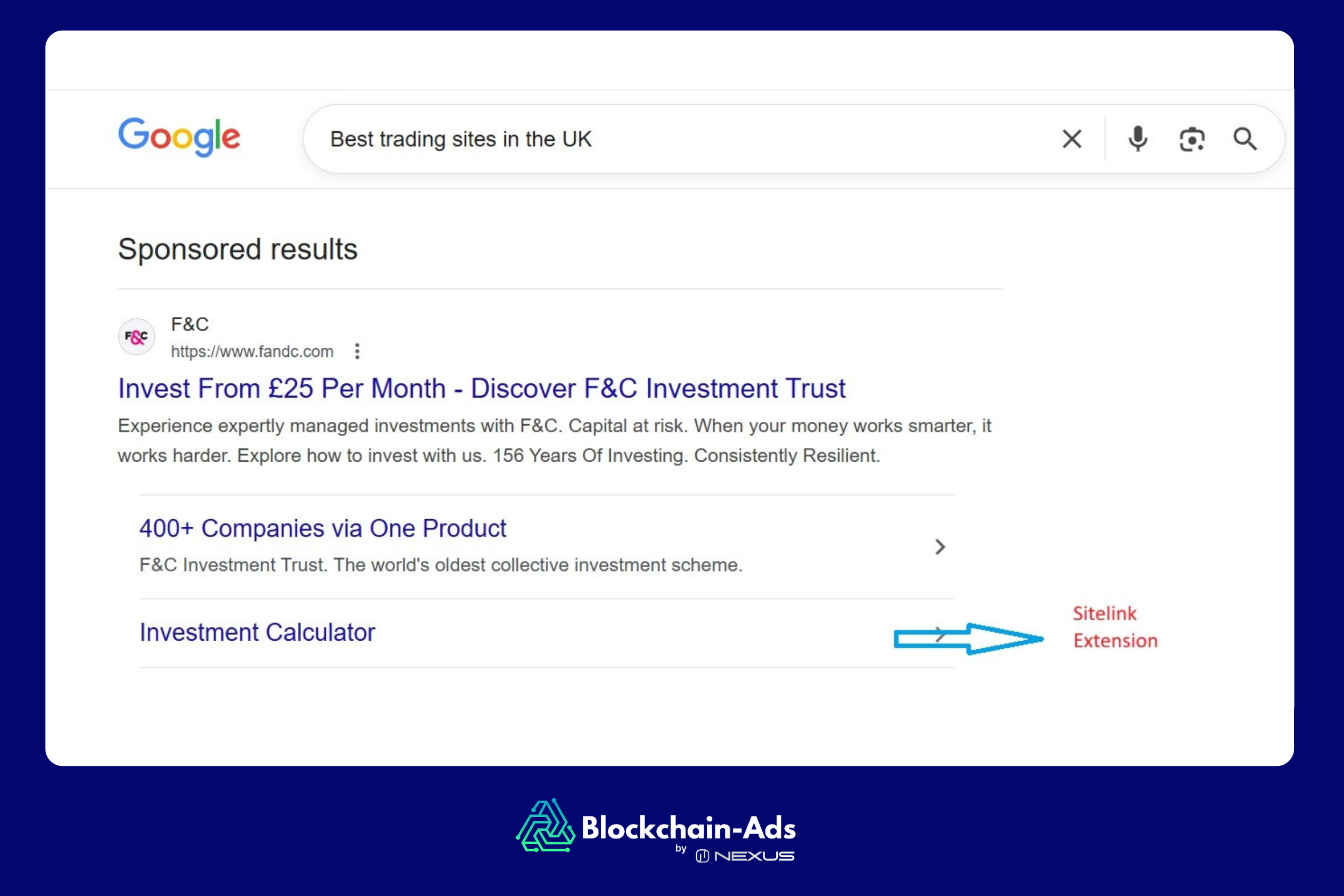
You can use the extensions to highlight important aspects of your business, choose relevant headers, test different structures, and ensure that information is accurate and current. Common extensions include location, call, sitelink, price, structured snippets, promotion, and app extensions.
Budgeting & Bidding (CPC vs. CPA focus)
Once you budget the total amount to spend on the ad, it's time to bid. The bidding strategy you go for should align with your campaign’s position in the marketing and business objectives. If you are looking to generate more traffic, create brand awareness, and run a high-volume campaign, then go for CPC. It measures how much you pay every time a user clicks on your ad. You can even set the maximum cost you are willing to pay per click.
On the other hand, for lead generation and targeted campaigns, opt for CPA. This bidding strategy tracks the amount you’re spending to drive specific conversions, such as purchase, form submission, or download. Unlike in CPC, where you will pay per click, CPA requires you only to pay when a user completes the desired action. You calculate the total cost per conversion as follows:
- CPA = Total Ad Spend ÷ Total Conversions.
Tracking & Optimization
Whether you are using CPA or CPC, tracking is the best way to optimise your content. In CPC campaigns, the conversion tracking will tell you which clicks are worth the pay, allowing you to concentrate your budget on what’s working and cut what’s not. Some of the special CPC metrics to help you in performance tracking include the click-through rate (CTR), cost per click, quality score, bounce rate, and time on site.
For CPA campaigns, you will look out for conversion rate, cost per acquisition, return on ad spend, customer lifetime value, and attribution window performance. It will show you if your ROI is worth it or not.
While tracking performance, it is also vital that you optimise the content. This will also depend on whether you used CPC or CPA. If you use CPC, optimization means analysing when your ads perform best, breaking down geographical performance, and fine-tuning the keyword bids to know the high-value traffic sources.
However, for CPA, you will need to double down on high-converting traffic sources, reduce spending on ads that don’t deliver, and adjust bids based on the conversion probability and customer lifetime value.
Common Challenges & Best Practices
Advertising a financial product like Forex in Google Ads is not a walk in the park. It requires strict attention to detail and a high level of knowledge of Google Ads marketing strategies and performance.
Below are some of the common challenges that you might experience while advertising Forex trading on Google Ads and the best Practices to solve them.
- Strict compliance requirements
Advertising on Google Ads requires that you meet strict compliance with the local laws and avoid using specific words. It also requires mandatory disclosures like risk warnings and disclaimers. While these requirements are essential, any misstep on your side can lead to a massive waste of your budget.
- High Competition and CPC
Advertising using Google Ads has seen a steady rise in CPC over recent years. In fact, Wordstream shows that in 2024, 86% of industries saw a higher CPC compared to 2023, with an average rise of about 10%.
This cost increase has been attributed to high competition in the online commerce space, where more and more brands are investing heavily in PPC. Google ad revenue surged as a result, increasing by 42% from 2020 to 2021 and 11% in 2023.
- Rampant fraud and invalid traffic
The nature of Forex trading, especially in the first-time deposit conversion, makes it a massive target for fraud. Additionally, your rivals may repetitively click on your ads or use a bot to generate fake traffic, leading to false outreach.
Best Practices
Top measures you can take to solve these challenges include:
- Master quality score by:
- Closely monitoring the economy and CPC trends to understand where the costs originate and act accordingly.
- Acknowledge the outside factors other than competition that might be leading to the increase in CPC and recognise what’s controllable and what isn’t.
- Track all the CPC metrics and make informed keyword targeting, bidding and budgeting decisions.
- Focus on high-intent keywords rather than the low-intent words. This will ensure reach to active customers seeking a solution, leading to a high conversion rate.
- Exclude Google search partners and competitors from finding your ad campaigns. You can do this by setting your ad only to reach your genuine users or targeted location.
Using Blockchain-Ads as an Alternative to Google Ads for Forex Brokers
Google Ads is essential for capturing high-intent search traffic from traders who are actively looking for brokers, platforms, or educational resources. However, it is limited when it comes to targeting high-intent traders, third-party inventory, and fraud-resistant attribution for first-time deposits and multi-step funnels. Blockchain-Ads fills these gaps.
Blockchain-Ads combine behavioral, interest-graph, and wallet-level data across hundreds of thousands of websites and apps and millions of trading wallets. This ensures your ads only reach users who are already demonstrating trading intent, not just searching for generic terms. Instead of relying on simple demographics or keywords, Blockchain-Ads offers pre-built audiences of over 420 million user profiles and millions of active wallets for forex, CFD, and multi-asset trading.
Advertisers can track every impression, click, and conversion with blockchain‑verified reporting that combines pixel and server events with on‑chain data. This creates an auditable trail that cuts down click fraud, fake traffic, and low‑quality signups, especially around first deposits, where forex brokers are most exposed.
Brands like FXTM, Alpari, and Invesco have used Blockchain-Ads to run successful campaigns and these case studies highlight the effectiveness:
- FXTM: They used behavioral and interest-based targeting on Blockchain-Ads to find active traders across English and Spanish markets. Over roughly three weeks on a mid–five-figure budget, the campaign generated about $120,000 in forex deposits and a 4.9x ROAS. This showed that behavior-led audiences can quickly drive high-value accounts when you already have a clear offer and compliant funnel.
- Alpari: This broker ran a 30-day Blockchain-Ads campaign with a $30,000 budget to acquire first-time depositors in English and Arabic markets. By combining forex interest targeting, geo and language funnels, retargeting, and creative testing, they focused on traders ready to fund accounts. The result was 1,282 conversions, $134,320 in deposit volume, and a 5.1x ROAS, proving the model can scale in multi-language finance.
- Invesco: Invesco used advanced behavioral and interest segmentation on Blockchain-Ads over 60 days to generate qualified investment leads. The campaign focused on financially engaged users instead of broad demographics, supported by ongoing creative optimization and retargeting. It delivered 2,100 qualified leads, $315,000 in value, and a 4.8x ROAS, showing how the same engine works beyond pure forex deposits.
Frequently Asked Questions
What Can Make Google Reject My Ads Even When I’m Certified?
Google can reject your ad even when you are licensed and verified, when the ad content is vague or misleading, the landing page is non-compliant, you fail to mention trading risks, or you have improper targeting where you market in banned regions.
How Much Should I Spend On An Ad Per Day?
Start with a small budget of $10 to $20 per day as you test the keywords' performance. You can then scale up once you have a positive ROAS.
What are the Biggest Mistakes that Forex Trading Marketers Make in Google Ads without noticing?
Some of the common mistakes are promising profits, over-hyping a product or service, and having a landing page that is a thin affiliate review.
Conclusion & Next Steps
Running Forex Trading Google Ads is not about finding loopholes but building a compliant, professional, and audience-first marketing strategy that will result in desired goals. You must create a high-value content ad and use high-intent keywords, ensuring that you are licensed and verified by Google. Remember that Google and Blockchain-Ads remain your powerful marketing tools. You can always use them to track your performance, analyse the audience, and experiment with ad copy, headlines, and landing pages to identify the most effective campaign strategy.