Taboola vs Blockchain-Ads: Which Advertising Platform Is Better?
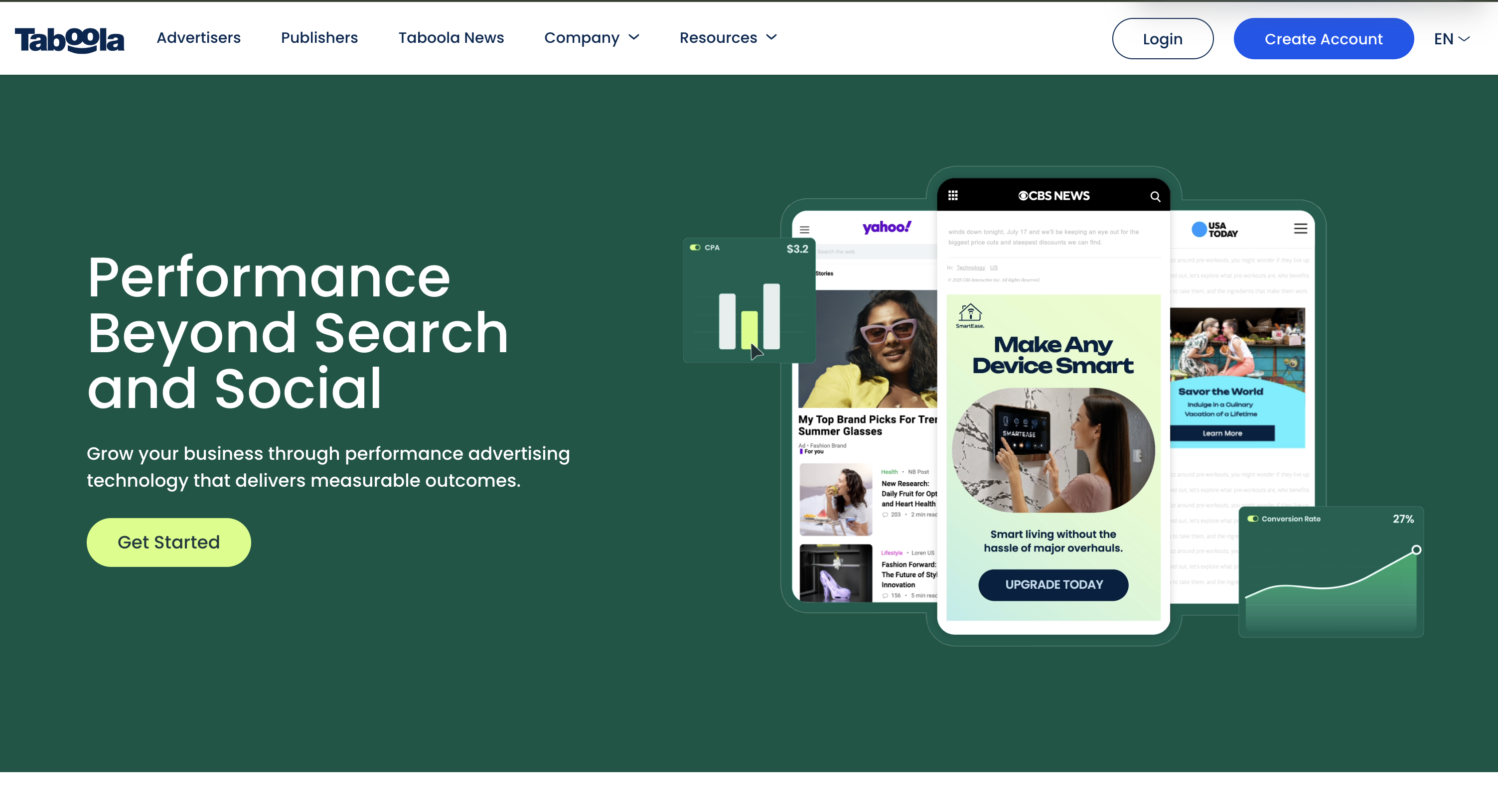
Taboola is a native advertising and content discovery platform that helps advertisers distribute content and performance ads across publisher websites.
Its advertiser product is now presented as Realize, an AI-driven performance platform that expands beyond traditional recommendation widgets into native, display, video, app promotion, audience targeting, and conversion optimization.
But the important question is not whether Taboola can generate traffic. It is whether that traffic comes from the right users and supports the business outcomes that matter.
In this comparison, we look at where Taboola is strong, where it has limitations, and how it compares with Blockchain-Ads.
The short version:
Choose Taboola when publisher reach, native advertising, and content discovery are the priority.
Choose Blockchain-Ads when you want to define the audience first, reach them across multiple channels, retarget them based on funnel activity, and optimize toward valuable acquisition events.
Request Access to Blockchain-Ads
What Is Taboola?
Taboola is an advertising platform that helps brands promote content, products, applications, and offers across publisher websites.
Its ads commonly appear in recommendation areas labeled:
- Recommended for you
- You may also like
- Sponsored content
- More from around the web
These placements usually include an image, headline, description, and link to a landing page or website.
Taboola has expanded beyond traditional content recommendation widgets. Through Realize, advertisers can access native, programmatic display, video, app promotion, contextual targeting, first-party audiences, and conversion optimization.
Where Taboola Is Strong
Taboola’s strongest use case is content-led advertising at scale.
It can be useful for advertisers that want to:
- Promote articles, guides, and reports
- Drive traffic to advertorial landing pages
- Generate leads
- Support affiliate campaigns
- Promote eCommerce products
- Build brand awareness
- Reach users across international publisher networks
- Retarget previous website visitors
Taboola’s native format is particularly effective when the landing page and creative are designed to continue the story started by the ad.
For example, an advertiser may promote an educational article, comparison page, product review, or finance guide rather than sending users directly to a hard-sell offer.
The platform also gives advertisers access to multiple formats, including native ads, native video, outstream video, display ads, carousel ads, vertical ads, and app promotion formats.
Another advantage is reach. Taboola distributes ads through a large network of publisher websites and positions Realize as a way to reach users beyond search and social platforms.
Its automated optimization tools can also help advertisers identify placements, audiences, and creatives that are more likely to generate conversions.
Where Taboola Lacks
Taboola’s limitations are mostly related to its model.
The platform has expanded considerably, but native publisher distribution remains its center of gravity. This makes it a strong option for content discovery, but not always the most direct fit for advertisers looking for narrow, high-value audience acquisition.
Traffic quality can also vary by:
- Publisher
- Placement
- Device
- GEO
- Operating system
- Creative
- Landing page
- Campaign objective
Advertisers need to optimize individual sources and placements rather than judging performance only by total clicks.
Taboola also operates primarily around CPC and CPM buying models. That means a low click cost does not necessarily result in a low customer acquisition cost. The campaign still needs to be measured against leads, purchases, deposits, registrations, revenue, or return on ad spend.
Finally, Taboola’s targeting is designed for broad digital advertising use cases. It supports first-party, contextual, predictive, and behavioral options, but it is not primarily built around transaction-level, wallet-based, or on-chain audience intelligence.
That distinction matters when the advertiser needs to reach users based on specific digital behaviors rather than general interests or page context.
Taboola Targeting and Retargeting
Taboola supports targeting by:
- Geography
- Device
- Operating system
- Browser
- Contextual topics
- Search keywords
- Demographics
- Interests
- Mail domains
- First-party audiences
- Website activity
- Lookalike audiences in selected markets
Advertisers can create first-party audiences using the Taboola Pixel, CRM data, or uploaded audience files. These audiences can be used for retargeting, sequential messaging, and lookalike campaigns.
Taboola also supports website retargeting based on actions such as visiting a page, viewing content, or completing a website event.
Blockchain-Ads supports these same core capabilities while adding more specialized audience layers:
- First-party audiences
- Behavioral targeting
- Intent targeting
- Technical targeting
- GEO targeting
- Wallet targeting
- On-chain audiences
- Retargeting based on funnel activity
With Blockchain-Ads, advertisers can retarget users who:
- Visited a landing page
- Signed up but did not complete onboarding
- Started a transaction and stopped halfway
- Clicked a previous ad
- Completed a specific website event
This allows advertisers to segment users based on where they dropped off in the acquisition funnel and show them a more relevant follow-up message.
Inventory and Reach
Taboola gives advertisers access to a broad publisher ecosystem with native, display, video, app, and programmatic inventory.
Its programmatic offering allows advertisers to extend native and social-style creatives into additional formats through publisher and exchange partners.
Blockchain-Ads also provides broad digital inventory through the NEXUS Ad Exchange.
This includes:
- Mobile
- In-app
- Display
- Video
- CTV
- Native placements
- Programmatic inventory
The difference is not simply inventory size or reach. Through NEXUS, Blockchain-Ads can provide comparable breadth while allowing advertisers to use more specialized audience signals across the campaign.
That means an advertiser can combine broad distribution with first-party, behavioral, technical, intent, wallet, and on-chain targeting.
Tracking and Optimization
Taboola supports conversion tracking through the Taboola Pixel, Google Tag Manager, server-to-server tracking, webhook integrations, and mobile measurement partners such as AppsFlyer and Adjust.
Advertisers can track events such as:
- Page visits
- Account creation
- Purchases
- Button clicks
- Time spent on site
- Other custom conversion events
Taboola also offers automated bidding strategies, including Maximize Conversions, which use conversion data to adjust campaign delivery.
Blockchain-Ads takes a similar measurement approach but places greater emphasis on the quality of the user acquired.
Campaigns can be optimized toward events such as:
- Account registrations
- Qualified leads
- First deposits
- Funded accounts
- Active traders
- High-value players
- Purchases
- Completed onboarding
Both platforms can track conversions. The key difference is that Blockchain-Ads is built around audience-led acquisition and downstream user value from the start.
Taboola Pricing
Taboola supports CPC and CPM pricing models. The actual cost depends on factors such as:
- Campaign objective
- GEO
- Device
- Ad format
- Competition
- Audience
- Bid strategy
- Publisher inventory
The practical takeaway is that Taboola can provide an accessible way to test native and publisher traffic, but advertisers should evaluate campaigns using business metrics rather than clicks alone.
A campaign with inexpensive traffic may still produce a high customer acquisition cost if users do not register, purchase, deposit, or complete the desired action.
Taboola for Crypto, iGaming, and Finance
Taboola can support regulated industries, but campaign availability depends on its policies, the target market, the advertiser, and the landing page.
Advertisers in crypto, finance, gambling, and betting may need to meet additional requirements related to:
- Licensing
- Jurisdiction
- Age restrictions
- Financial claims
- Responsible gambling
- Creative content
- Landing-page disclosures
This can make campaign planning more involved for advertisers operating in regulated categories.
Blockchain-Ads is designed specifically for performance campaigns in areas such as crypto, iGaming, fintech, and financial services. Its access model is more selective, with advertisers screened before campaigns can run.
This specialization is useful for brands that need both broad programmatic reach and audience targeting built around high-intent digital users.
Is Taboola Legit?
Yes. Taboola is an established advertising platform with a large publisher network, advertiser dashboard, conversion tracking, automated bidding, and campaign reporting.
The more important question is whether its model fits the campaign.
Taboola is a credible option for:
- Native content promotion
- Broad publisher reach
- Brand awareness
- Lead generation
- Affiliate traffic
- Retargeting
- App promotion
It may be less suitable when the main objective is to identify a narrowly defined audience and optimize toward actions such as deposits, funded accounts, or active trading.
Final Verdict
Taboola is a strong advertising platform for brands that want native content distribution, publisher reach, broad awareness, and scalable traffic.
Its biggest advantage is distribution. Realize gives advertisers access to native, display, video, app, contextual, first-party, and programmatic advertising options.
Its limitation is that publisher traffic and click volume do not automatically translate into high-value customers. Performance depends heavily on the quality of the creative, landing page, publisher source, audience, and conversion tracking.
Blockchain-Ads solves a more audience-led acquisition problem.
Through the NEXUS Ad Exchange, it offers broad reach across mobile, in-app, display, video, and CTV while supporting first-party, behavioral, intent, technical, GEO, wallet, on-chain, and retargeting audiences.
Choose Taboola when content discovery and publisher distribution are the main priorities.
Choose Blockchain-Ads when audience quality, funnel-based retargeting, and measurable customer acquisition matter more.
Request Access to Blockchain-Ads