Online Gambling Affiliate Marketing for Beginners (2026 Revised)

Heading
- Cointelegraph Formula offers various ad formats to 8 million monthly readers across 190+ countries, leveraging its trusted name in crypto.
Should you get into gambling affiliate marketing? It's one of the most common questions in affiliate forums, and the honest answer is: yes. Here’s why.
The gambling vertical offers some of the highest commissions in affiliate marketing, with programs paying 25-50% revenue share or $50-$200+ per new depositing player.
But it's also competitive, heavily regulated, and requires a strategic approach that many beginners underestimate.
That’s why we’re written this guide to break down exactly what works in gambling affiliate marketing today, what doesn't, and whether this vertical is right for your situation.
You'll learn how the business model works, which commission structures are the best, how to choose profitable geos and offers, and the traffic sources that actually convert.
By the end, you'll have a clear 30-day action plan to launch your first campaign.
What Is Gambling Affiliate Marketing and How Does It Work?
Gambling affiliate marketing is a performance-based business model where you earn commissions by referring players to online casinos, sportsbooks, poker rooms, and other gambling platforms.
When someone clicks your unique tracking link, signs up, and starts playing, you get paid based on their activity.
The ecosystem involves three parties:
- Operators
- Affiliates
- Players
Operators are the gambling sites themselves, including casinos like Stake and BetMGM, sportsbooks like DraftKings and Bet365, and poker rooms like PokerStars. They create the products and pay affiliates to bring them players.
Affiliates are the marketers who promote these operators through websites, paid ads, social media, email lists, or other channels.
Players are the end users who sign up through affiliate links, deposit money, and gamble on the platform.
Tracking works through cookies and unique referral IDs. When a player clicks your link, a cookie is placed in their browser (typically lasting 30-90 days), and their account is permanently tagged to your affiliate ID.
Every deposit they make and every bet they place is tracked, and your commissions are calculated based on the agreed payment model.
Why Choose the Gambling Vertical for Affiliate Marketing?

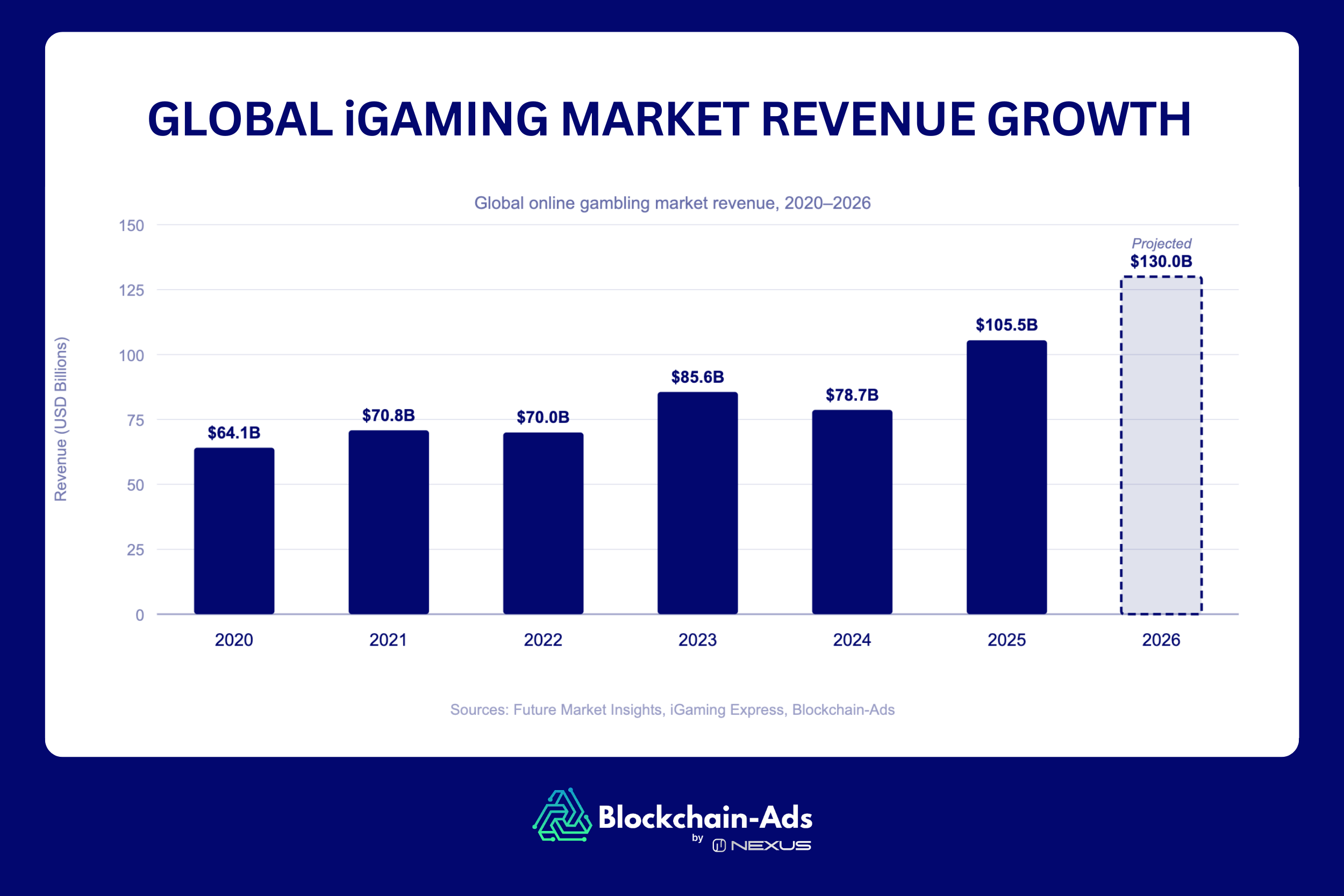
The gambling industry pays affiliates significantly more than most other verticals, and there are concrete reasons for this. The global online gambling market is projected to reach $127.3 billion by 2027, with a compound annual growth rate of around 11%.
More importantly for affiliates, gambling players have exceptionally high lifetime value. A single player might deposit hundreds or thousands of dollars over months or years of activity.
Commission rates in gambling also dwarf other industries. Let’s put it into perspective
- e-commerce affiliates typically earn 3-10% per sale
- SaaS programs might offer 20-30% for the first year
Whereas, gambling programs routinely pay 25-50% of net revenue for the lifetime of the player. Some programs go as high as 60% for top-performing affiliates.
CPA payouts range from $50 for casual markets to $200+ for high-value regions like the UK and Australia.
The recurring revenue model is what makes gambling particularly attractive for building long-term income. Unlike one-time product sales, a player you refer today might generate commissions for years.
This compounding effect means that affiliates who stick with it and build quality traffic can create substantial passive income streams over time.
How Do Gambling Affiliates Get Paid?
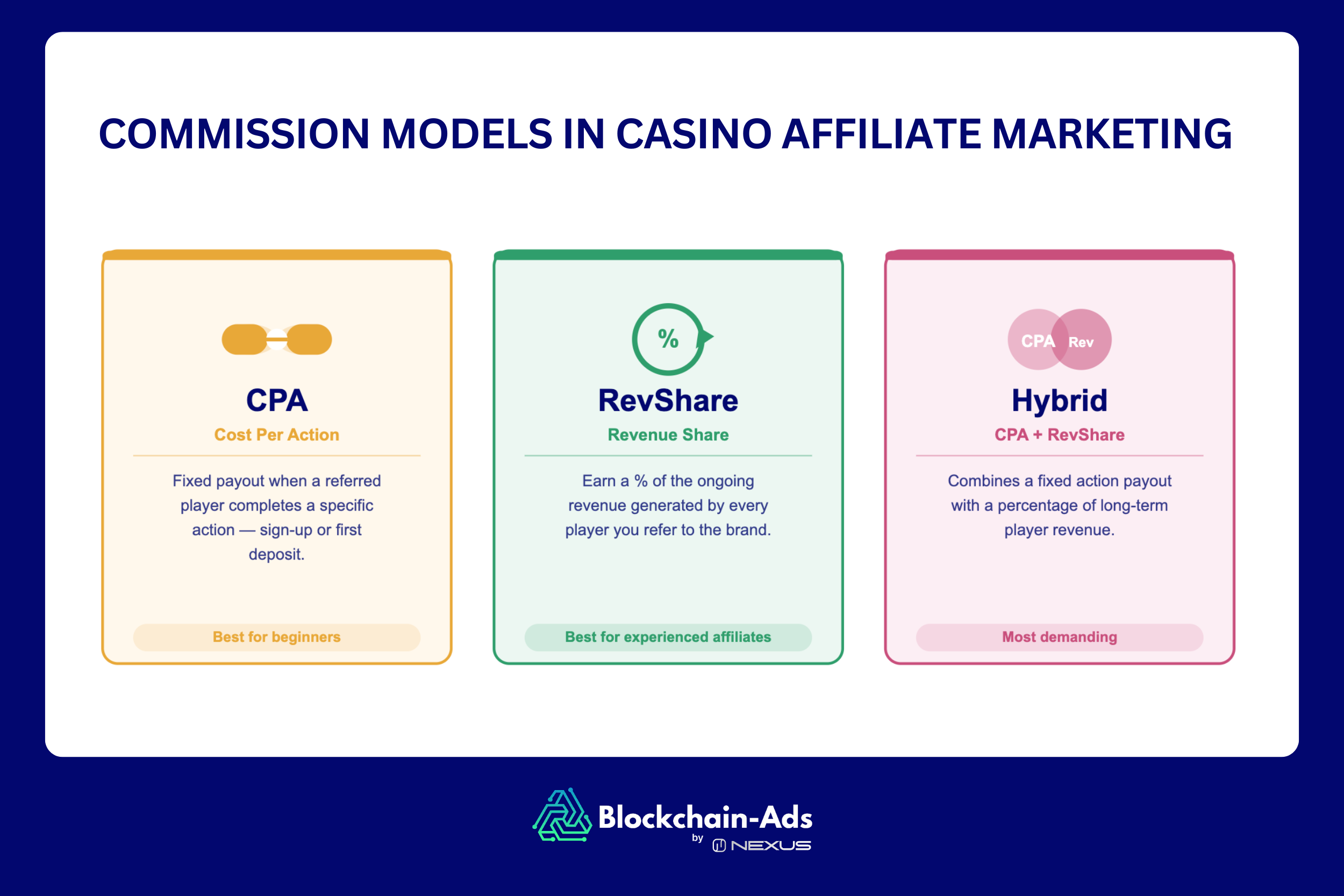
There are three main payment models in gambling affiliate marketing:
- Revshare
- CPA
- Hybrid commission
Each with distinct advantages and drawbacks. Understanding each commission structure is crucial because the model you choose significantly impacts your earnings potential and risk profile.

What Is RevShare (Revenue Share)?
Revenue share means you receive a percentage of the net revenue generated by players you refer. Net revenue is calculated as total bets minus player winnings, minus bonuses and operational costs.
Typical RevShare rates range from 25% to 50%, with some programs offering tiered structures that increase as you drive more volume.
The primary advantage of RevShare is long-term passive income. A player you refer in January might still be generating commissions for you in December and beyond.
For quality traffic that produces loyal, active players, RevShare almost always outperforms CPA over time.
The risk lies in negative carryover policies. If your referred players have a winning month (they beat the house), some programs carry that negative balance forward, meaning you earn nothing until the operator recoups their losses.
This can be devastating if you refer a player who hits a jackpot. Always check the negative carryover policy before joining a RevShare program.
What Is CPA (Cost Per Acquisition)?
iGaming affiliate CPA pays a fixed amount for each player who completes a qualifying action, typically making a first deposit above a minimum threshold.
Payouts range from $50 in Tier 3 markets to $150-$200+ in premium regions.
Some programs also offer CPL (cost per lead) for registrations without deposits, though these pay significantly less.
CPA provides predictable, immediate income with no ongoing risk. You know exactly what you'll earn per conversion, making it easier to calculate ROI on paid traffic campaigns. There's no concern about negative carryover or players going on winning streaks.
The downside is that you leave money on the table with high-value players. A whale who deposits $10,000 over their lifetime generates the same CPA payout as someone who deposits $50 once and never returns.
For affiliates with quality traffic sources, CPA often undervalues the true worth of their referrals.
What Is a Hybrid Commission Model?
Hybrid models combine CPA and RevShare, giving you an upfront payment plus ongoing revenue share. A typical structure might be $50 CPA plus 20% lifetime RevShare, or $100 CPA plus 10% RevShare. This balances immediate returns with long-term upside.
Hybrid deals are often negotiable once you've proven your traffic quality. Operators are willing to offer better terms to affiliates who consistently deliver valuable players.
Starting with standard terms and negotiating hybrid arrangements as you scale is a common progression for successful affiliates.
Which Commission Model Should Beginners Choose?
CPA is the recommended starting point if you haven’t promoted iGaming offers before. The predictable payouts make it easier to test traffic sources and calculate whether your campaigns are profitable.
You can quickly determine if your cost per click multiplied by your conversion rate yields positive ROI without waiting months to see how player lifetime value develops.
Once you've proven your traffic quality and understand which sources produce engaged players, transitioning to RevShare or hybrid models typically increases earnings.
The key is having enough data to confidently predict that your players will remain active over time.
What Types of Gambling Affiliate Programs Exist?
The gambling vertical current has four major subcategories:
- Casino affiliate programs
- Betting affiliate programs
- Poker affiliate programs
- Crypto casino affiliate programs
Each gambling offer comes with different audience profiles, competition levels, and earning potential.
Understanding these differences helps you focus on opportunities that match your strengths and resources.

Casino Affiliate Programs
Online casino programs cover slots, table games like blackjack and roulette, and live dealer experiences. This is the largest segment of online gambling, generating the highest traffic volumes and offering the most affiliate opportunities. Commission rates typically range from 25-45% RevShare or $75-$150 CPA.
The casino space is also the most competitive. Major operators have established affiliate programs with thousands of partners, and ranking for competitive keywords requires significant investment in content or paid traffic. However, the sheer size of the market means there are always opportunities in underserved niches and emerging geos.
Sports Betting Affiliate Programs
Sports betting affiliates promote sportsbooks that cover football, basketball, tennis, esports, and more. This segment is growing faster than casino in many markets, particularly in the United States following the legalization wave.
Seasonal opportunities around major events like the Super Bowl, World Cup, March Madness, and Euro championships create predictable traffic spikes.
Sports betting players tend to be more engaged with content about odds, statistics, and betting strategies. This creates opportunities for affiliates who can produce knowledgeable sports analysis alongside promotional content.
Commission structures mirror casino programs, with RevShare typically 20-40% and CPA ranging from $50-$175.
Poker Affiliate Programs
Poker operates differently from casino and sports betting because players compete against each other rather than the house. The operator earns through rake, a percentage taken from each pot, and affiliates receive a share of the rake generated by their referred players.
While poker has a smaller audience than casino or sports betting, players tend to be highly loyal and active over long periods.
Tournament promotion creates additional opportunities, particularly around major series like the WSOP. The skill-based nature of poker also means that educational content about strategy performs exceptionally well for building an audience.
Crypto Casino Affiliate Programs
Crypto casinos accept Bitcoin and other cryptocurrencies for deposits and withdrawals, often operating with lighter regulatory requirements than traditional online casinos. Programs in this space frequently offer higher commission rates, with RevShare reaching 40-60% at some operators.
The crypto gambling audience skews younger and more tech-savvy, with many players valuing the privacy and speed of cryptocurrency transactions. This creates synergies for affiliates who already have audiences in the crypto space.
However, the less regulated nature of some crypto casinos means due diligence on operator reputation is particularly important.
Other Programs: Bingo, Lottery, and Sweepstakes
Bingo, lottery, and sweepstakes casinos represent smaller but less competitive segments of the gambling vertical. Sweepstakes casinos are particularly interesting because they operate in a legal grey area that allows them to accept players from regions where traditional online gambling is restricted, including many U.S. states.
These programs typically offer lower payouts than casino or sports betting, but the reduced competition can make them attractive for beginners looking to gain experience without battling established affiliates for every conversion.
Who Is the Target Audience for Gambling Offers?
The core gambling demographic is predominantly male, aged 21-45, with moderate to high disposable income and urban residence.
However, the female gambling segment is growing significantly, particularly in casino slots and bingo. Mobile usage dominates, with over 60% of gambling traffic coming from smartphones and tablets.
Generational patterns have shifted since COVID accelerated online gambling adoption. Older demographics who previously preferred land-based casinos have increasingly moved online, expanding the potential audience beyond traditional assumptions. Your creative strategy should reflect the specific segment you're targeting rather than defaulting to stereotypical gambling imagery.
Understanding player psychology and demographics directly impacts your ability to create effective campaigns. Different player types respond to different messaging, and matching your approach to your target audience dramatically improves conversion rates.
What Types of Gamblers Should You Target?
There are two types of gamblers you should know based on their risk tolerance:
- Risk-averse players
- Risk-seeking players
Risk-averse players prefer conservative betting, longer sessions, and lower individual stakes. They respond to messaging about entertainment value, safe gambling practices, and modest bonus offers. These players may not deposit as much initially, but they tend to remain active longer, making them valuable for RevShare programs.
Risk-seeking players are attracted to high-stakes action, aggressive promotions, and the possibility of big wins. They respond to messaging about jackpots, VIP programs, and exclusive high-roller bonuses. These players deposit more but also churn faster, making them better suited for CPA campaigns where you capture the upfront value.
Targeting by Player Experience Level
Novice gamblers are generally easier to convert because they haven't developed brand loyalty or sophisticated expectations. They respond well to welcome bonuses, beginner guides, and messaging that reduces perceived complexity. Educational content that introduces them to different game types can build trust before pushing for conversions.
Experienced players require more sophisticated targeting. They're already familiar with standard bonus structures and can spot generic promotional content. Converting them typically requires differentiated offers, such as better odds, exclusive games, faster withdrawals, or VIP treatment they can't get elsewhere.
Targeting by Playing Frequency
You can also classify the gambling audience based on two playing frequency levels:
- Casual
- Hardcore
Casual players gamble occasionally, often around specific events or during leisure time. They're most active on weekends and evenings, and campaigns tied to major sporting events or holiday promotions perform well with this segment. CPA deals work well here since casual players may not generate substantial long-term value.
Hardcore players gamble regularly, often daily, and represent the highest lifetime value segment. These players justify the effort of RevShare programs because their ongoing activity generates consistent commissions over extended periods.
Targeting this segment requires identifying where serious gamblers spend their time online, which often differs from casual player hangouts.
How to Choose the Right Geo for Gambling Offers?
The market where you focus determines which operators you can promote, what traffic costs, and how much each conversion is worth. iGaming markets are divided into three distinct segments:
- Tier 1
- Tier 2
- Tier 3

Tier 1 Market
Tier 1 markets include the United States, United Kingdom, Australia, and Canada. These offer the highest payouts per player, with CPA rates often exceeding $150 and RevShare generating substantial long-term income.
However, competition is intense, regulations are strict, and traffic costs are high. Breaking into Tier 1 markets profitably typically requires significant capital and experience.
Tier 2 Market
Tier 2 markets like Germany, Spain, Italy, the Nordics, and New Zealand offer a balance between payouts and competition.
Regulations exist but are less burdensome than Tier 1, traffic costs are moderate, and there's room for new affiliates to establish themselves. CPA rates typically range from $75-$125.
Tier 3 Market
Tier 3 markets including Latin America, Southeast Asia, Africa, and India have lower payouts ($30-$75 CPA typical) but significantly less competition and cheaper traffic.
These emerging markets are where many successful affiliates cut their teeth before expanding to higher-value regions. The growth rates in these markets also mean that players acquired today may become increasingly valuable as the markets mature.
Top Geos for Gambling Affiliates in 2026
Brazil stands out as a prime opportunity following regulatory developments. The massive Portuguese-speaking population, football-obsessed culture, and growing middle class create strong demand for both casino and sports betting. Several major operators have launched localized platforms, providing affiliates with quality programs to promote.
The Philippines and Indonesia also represent significant Southeast Asian opportunities despite complex regulatory environments. Large populations with increasing smartphone penetration and cultural affinity for gambling drive demand. India similarly offers scale with a billion-plus population and growing acceptance of online betting, particularly around cricket.
Mexico and Nigeria round out the emerging market opportunities, each with large populations, developing digital payment infrastructure, and genuine enthusiasm for gambling entertainment. For affiliates willing to learn local market dynamics, these geographies offer paths to profitability without battling established competitors.
Which Geos Should Beginners Avoid?
Avoid heavily regulated markets like France, Belgium, and parts of the United States because they impose complex compliance requirements that make entry difficult for inexperienced affiliates. The legal burden often outweighs the potential returns unless you have specific expertise in these jurisdictions.
Markets where gambling is outright banned, including most of the Middle East and some Asian countries, should obviously be avoided.
Additionally, some geos have payment processing issues that make it difficult for players to deposit or for affiliates to receive payments. Research the practical realities of your target market before committing resources.
How to Choose the Best Gambling Affiliate Program?
Not all affiliate programs are created equal, and choosing poorly can waste months of effort or even damage your reputation. Before committing to any program, evaluate these key factors:
- Commission structure: Look beyond headline rates. A 50% RevShare with aggressive negative carryover might pay less than 35% with no carryover. Check payment frequency, minimum thresholds, and available methods including crypto options.
- Brand reputation: Promoting shady operators damages your credibility and kills conversions. Verify licensing (MGA, UKGC, Gibraltar are reputable; Curacao offers less protection). Check player forums for payment complaints.
- Marketing resources: Quality programs provide banners, landing pages, email templates, and data feeds. A responsive affiliate manager adds significant value when scaling campaigns.
- Tracking and reporting: Real-time dashboards with segmentation by campaign, creative, and traffic source help you optimize. Some programs offer API access for advanced operations.
- Geographic restrictions: Every program has geo limitations based on licensing. Confirm your target countries are accepted before investing in traffic, or you'll earn nothing regardless of clicks.
Be skeptical of rates that seem too good to be true. To make it easier for you, check out our ranking of the top 10 high-paying gambling affiliate programs.
Programs advertising 70%+ RevShare often have hidden deductions or reliability issues. Established programs with competitive but realistic rates typically outperform flashy newcomers over time.
For Blockchain-Ads’ curated list of verified programs with transparent terms, see our guide to the top gambling affiliate programs.
What Traffic Sources Work Best for Gambling Offers?
Traffic acquisition is where gambling affiliate marketing gets tactical. The platforms that dominate digital advertising, such as Google and Meta, heavily restrict gambling promotion, forcing affiliates to explore alternative channels. Each traffic source has distinct characteristics that affect both cost and conversion rates.
Push Notification Ads for Gambling
Push notifications deliver messages directly to users' devices, appearing similar to app notifications. They work well for gambling because the format captures attention in the moment, aligning with the impulse-driven nature of gambling behavior. Click-through rates for gambling push campaigns typically exceed display advertising significantly.
Creative best practices for push include using emoji strategically, creating urgency without deception, and testing multiple icon images. Headlines that reference bonuses, limited-time offers, or recent wins tend to outperform generic casino branding. The personal, direct nature of push notifications requires respecting user experience to avoid fatigue.
Pop and Popunder Ads for Gambling
Popunder ads open in a new browser tab behind the active window, revealing themselves when the user closes their current tab. This format guarantees visibility since users must acknowledge the ad to dismiss it. For gambling offers with strong landing pages, popunders can be cost-effective for generating initial exposure.
The key to popunder success is landing page quality. You have seconds to capture interest before the user closes the tab. Interactive elements like spin-to-win wheels or instant bonus previews outperform static pages. Match your landing page to your target audience, whether that means localized language, culturally relevant imagery, or specific game types featured.
Native Advertising for Gambling
Native ads blend with surrounding content on publisher sites, appearing as recommended articles or sponsored content rather than obvious advertisements. This format bypasses banner blindness that makes display ads ineffective for many users. Native networks that accept gambling include Taboola, Outbrain (with restrictions), and specialized gambling ad platforms.
Success with native advertising requires content-style pre-landers rather than direct casino landing pages. The user experience flows from intriguing headline to engaging article to promotional offer, maintaining the content consumption mindset throughout. This indirect approach requires more creative investment but often achieves lower cost-per-acquisition than direct promotional tactics.
Telegram Channels and Mini Apps
Telegram has emerged as a major channel for gambling promotion due to its permissive content policies and large user base in key markets. Building a Telegram channel around betting tips, casino bonuses, or gambling news creates a direct line to an engaged audience. Many successful gambling affiliates now treat Telegram as a primary traffic source.
Telegram Mini Apps represent an emerging opportunity. These in-app experiences can incorporate gambling-related games, referral systems, and promotional content. The tap-to-earn gaming trend has created large, engaged audiences within Telegram, and advertising within these mini apps reaches users already comfortable with the platform. This intersection of gaming and gambling creates natural conversion opportunities.
What Other Ways Can You Promote Gambling Affiliate Offers?
Beyond mainstream traffic sources, successful gambling affiliates often leverage alternative channels that match their skills and resources. These approaches frequently require more creativity but can yield results with lower competition.
SEO and Content Marketing for Gambling Affiliates
Organic search traffic requires patience but delivers high-quality visitors with genuine intent. The timeline for meaningful SEO results in gambling is typically 6-12 months due to competition levels. Focus on long-tail keywords and geo-specific terms where you can realistically compete rather than targeting generic terms dominated by authority sites.
Content types that perform include detailed casino and sportsbook reviews, game strategy guides, bonus comparisons, and news coverage of industry developments. Building topical authority requires consistent publishing over time. Link building is particularly challenging in gambling because many sites won't link to gambling content, requiring creative outreach and potentially controversial tactics.
Social Media and Community Marketing for Gambling
Most social platforms restrict gambling promotion in their advertising policies and terms of service. Direct promotion typically results in account suspension. However, building communities around gambling content, such as Discord servers for sports bettors or Telegram channels for casino enthusiasts, creates engaged audiences you can monetize indirectly.
The strategy focuses on providing genuine value like analysis, tips, and discussion rather than constant promotional content. Once you've built trust with a community, members will actively seek your recommendations. This organic approach takes longer than paid advertising but creates sustainable, loyal audiences that continue generating value over time.
YouTube and Video Content
YouTube restricts gambling advertising but allows educational and entertainment content about gambling. Strategy videos, game tutorials, slot reviews, and sports betting analysis can build substantial audiences without violating platform policies. Monetization comes through affiliate links in descriptions and driving traffic to your own properties.
Live streaming gambling content on platforms like Twitch or Kick represents another video approach, though it comes with significant risk. Streamers who gamble must navigate platform policies, often need to disclose sponsored relationships, and face audience backlash if perceived as promoting gambling irresponsibly. The approach can be lucrative but requires careful execution.
Influencer and Streamer Partnerships
Partnering with influencers who have gambling-friendly audiences can accelerate growth significantly. Payment structures include flat fees for sponsored content, performance-based deals tied to conversions, or hybrid arrangements. Micro-influencers with 10,000-50,000 engaged followers often deliver better ROI than major influencers with larger but less targeted audiences.
Compliance requires proper disclosure of sponsored relationships. FTC guidelines in the US and similar regulations elsewhere mandate clear indication when content is paid promotion. Reputable influencers understand these requirements, and working with those who ignore disclosure rules creates legal risk for both parties.
How to Create Winning Gambling Creatives?
Creative quality often determines whether campaigns profit or lose money. The same offer with the same targeting can yield dramatically different results based solely on the ad copy and landing page experience. Investing time in creative development and testing pays dividends across all traffic sources.
Ad Copy That Converts for Gambling
Effective gambling ad copy taps into psychological triggers that drive player behavior. Bonus offers create immediate value perception, with specific numbers outperforming vague promises.
Urgency through limited-time offers motivates action without deceptive countdown timers. Social proof indicating that others are winning or playing builds trust and FOMO simultaneously.
Headlines that work often follow patterns like
- "Get $X Bonus + Y Free Spins Today"
- "Player Just Won $X on [Game Name]"
- "Exclusive: Z% Deposit Match for New Players."
Avoid claims that guarantee wins or misrepresent odds, which violate regulations and erode trust. Test multiple angles and let data determine winners rather than assuming you know what will resonate.
Landing Page Best Practices for Gambling
Interactive landing pages consistently outperform static designs in gambling. Spin-to-win wheels, scratch cards, and bonus preview games engage visitors and create commitment before the conversion ask. These elements tap into the same psychology that makes gambling appealing, priming visitors for the casino experience.
Mobile optimization is non-negotiable since the majority of gambling traffic comes from smartphones. Pages must load quickly on cellular connections, buttons must be thumb-friendly, and forms must minimize typing. Trust signals including licensing badges, payment method logos, and security indicators address common objections. Clear, prominent call-to-action buttons in contrasting colors guide the conversion path.
Creative Mistakes That Kill Conversions
Overpromising leads to compliance issues and disappointed users who never deposit. Claims about guaranteed wins, unrealistic return rates, or misleading bonus terms might generate clicks but destroy conversion rates and invite regulatory scrutiny. The short-term gain isn't worth the long-term cost.
Generic stock imagery fails to differentiate your offer from countless competitors using the same assets. Investing in custom creatives, even simple variations, improves performance and allows meaningful testing. Similarly, ignoring mobile users by designing desktop-first experiences abandons the majority of your potential audience. Test on actual devices, not just browser simulators.
When Is the Best Time to Run Gambling Offers?
Timing affects gambling campaign performance significantly. Player behavior varies by season, day of week, and time of day. Aligning your campaigns with when players are most receptive improves efficiency and results.
Seasonal Opportunities and Major Events
Sports betting experiences predictable spikes around major events. The Super Bowl, FIFA World Cup, March Madness, major boxing matches, and league playoffs create heightened interest and conversion opportunity. Plan campaigns in advance for these periods since competition for traffic intensifies and costs rise as events approach.
Casino traffic patterns differ, with increased activity during winter months when people spend more time indoors, holiday periods when bonus spending money is available, and tax refund season in the spring. Understanding your target market's behavioral patterns helps allocate budget to periods with the best return potential.
Best Time of Day and Week for Gambling Ads
Casual players are most active during evening hours after work (roughly 7-11pm local time) and on weekends. Campaigns targeting this segment should weight budget toward these periods rather than spreading spend evenly. Dayparting features in most ad platforms allow automated bid adjustments based on time.
Serious sports bettors often place wagers closer to event start times, making real-time targeting around live events valuable. For international campaigns, consider timezone differences in your target geos and ensure your dayparting strategy reflects when your specific audience is active, not just when you are.
Capitalizing on Gambling Trends in 2026
Mobile gambling continues dominating, with over 65% of industry traffic now from smartphones. Any strategy that doesn't prioritize mobile experience is leaving money on the table. Live betting during sports events has grown substantially, creating opportunities for real-time promotional tactics that traditional affiliate approaches miss.
Crypto casinos represent a major growth segment, particularly among younger demographics and privacy-conscious players. Esports betting continues expanding as competitive gaming attracts mainstream attention. Affiliates who identify and move on emerging trends early capture market share before competition intensifies. Stay connected to industry news and be willing to test new angles before they become crowded.
How Much Do Gambling Affiliates Actually Earn?
Realistic expectations help you persist through the learning curve without getting discouraged by slow early results or falling for unrealistic income claims. Gambling affiliate marketing can be highly lucrative, but it requires investment and patience to reach meaningful income levels.
First 90 Days: Realistic Expectations
Month one is primarily about setup, learning, and initial testing. Most beginners earn nothing in their first month while getting approved by programs, setting up tracking, creating campaigns, and making initial mistakes. This is normal and expected. Budget for learning costs and don't judge the business model based on month one results.
Month two often sees first conversions as campaigns start generating data and you begin optimizing. Earnings of $0-$500 are typical for affiliates running paid traffic with modest budgets. Organic traffic strategies usually haven't matured enough to produce results yet. Focus on learning what's working rather than chasing revenue.
Month three is the optimization phase where profitable patterns emerge. Affiliates executing well might see $100-$1,000 in earnings while those still finding their footing may continue at lower levels. The variance is high and depends heavily on budget, traffic source, offer selection, and effort invested. Six months is a more realistic timeframe for evaluating whether gambling affiliate marketing works for you.
What Separates $500/Month from $5,000/Month Affiliates?
The difference rarely comes from secret knowledge or special access. Higher earners consistently execute fundamentals better. They prioritize traffic quality over quantity, carefully selecting sources and targeting parameters that produce valuable players rather than maximizing clicks. They test methodically, documenting results and making data-driven decisions rather than following gut feelings.
Successful affiliates build relationships with affiliate managers who provide better offers and early access to promotions. They treat affiliate marketing as a business, tracking expenses, calculating true ROI, and reinvesting profits into growth. Perhaps most importantly, they persist through inevitable setbacks rather than abandoning ship when a campaign fails.
Long-Term Income Potential
The compounding nature of RevShare creates substantial long-term potential. Players referred in year one continue generating commissions in year two and beyond.
Affiliates who consistently add quality traffic see their monthly revenue grow even if they maintain the same acquisition pace. This compounding effect is why experienced gambling affiliates often earn more from their back catalog than from new acquisitions.
Scaling from $5,000 to $20,000+ monthly typically involves expanding to multiple traffic sources, entering new geos, and building direct relationships with operators for premium terms. Some affiliates eventually go full-time, while others maintain gambling affiliate income alongside other ventures. The ceiling is high for those willing to invest the time and capital to reach it.
What Mistakes Kill Beginner Gambling Affiliate Campaigns?
Learning from others' failures accelerates your path to profitability. Certain mistakes consistently derail new gambling affiliates, and avoiding them saves time, money, and frustration.
Promoting Unlicensed or Shady Operators
The allure of high commission rates from questionable operators traps many beginners. These programs offer impressive numbers because they struggle to attract affiliates through legitimate channels. When operators delay player payments, change terms retroactively, or disappear entirely, affiliates lose accumulated commissions and damage their own reputation.
Due diligence before promoting any operator protects your interests. Verify licensing, search for player complaints, check affiliate forums for payment reports, and start with established brands even if rates are lower. Building a track record with reliable operators creates the foundation for negotiating better terms later.
Chasing High Commissions Over Quality
A 50% RevShare on an operator with poor player retention might pay less than 30% RevShare on a quality casino where players stay active for years. Commission rate is only one factor in lifetime earnings. Conversion rates, player value, and program reliability all matter as much or more.
Evaluate offers holistically rather than sorting by commission rate alone. Ask affiliate managers about average player value and retention metrics. Test multiple programs and let actual performance data guide your allocation rather than theoretical maximum payouts.
Ignoring Compliance and Disclosure
Regulatory requirements for gambling promotion vary by jurisdiction but generally include disclosure of affiliate relationships, age-gating content, avoiding misleading claims, and respecting geographic restrictions. Violations can result in account termination, legal liability, and damage to operator relationships.
Build compliance into your operations from the start rather than trying to retrofit later. Include appropriate disclosures on promotional content, implement age verification where required, and ensure all claims can be substantiated. Clean practices protect you legally and build trust with both operators and audiences.
Spreading Too Thin Too Fast
Beginners often try to do everything simultaneously: multiple geos, multiple traffic sources, multiple offer types. This dilutes focus and makes it impossible to learn what's actually working. Each variable adds complexity that slows optimization and obscures insights.
The disciplined approach is mastering one element at a time. Choose one geo, one traffic source, and one offer type. Learn that combination thoroughly until it's profitable, then expand. This focused progression builds competence systematically and creates reliable baseline knowledge before introducing new variables.
How to Start Gambling Affiliate Marketing: 30-Day Action Plan
Theory matters less than execution. This week-by-week action plan provides a concrete roadmap for launching your first gambling affiliate campaign and beginning the learning process.
Week 1: Setting Your Foundation
Choose your target geo based on the tier analysis earlier in this guide. For most beginners, a Tier 2 or Tier 3 market offers the best balance of opportunity and accessibility. Research the legal status of online gambling in your chosen region and identify which operators accept players there.
Apply to 2-3 affiliate networks that serve your target geo. Expect some applications to be rejected initially, which is normal. While waiting for approvals, set up tracking. Free options like Bemob or Binom Lite work for starting out. Create accounts on your chosen traffic sources and familiarize yourself with their interfaces and targeting options.
Week 2: Preparing Your Traffic Source
With approvals in hand, select 3-5 offers to test. Choose CPA offers for predictable economics while learning. Create your promotional assets: 3-5 ad creatives with different angles, and at least one landing page. Use the creative principles discussed earlier, emphasizing mobile optimization and clear calls to action.
Set up your campaigns in the traffic source platform but don't launch yet. Configure targeting for your chosen geo, set appropriate budgets (plan $500-$1,000 for initial testing), and ensure tracking is connected properly. Run test clicks through your funnel to verify everything works before spending real money.
Week 3: Launch and Learn
Launch your campaigns and resist the urge to make constant changes. Early data is noisy, and over-optimizing before you have statistical significance leads to chasing randomness. Monitor daily to ensure nothing is broken, but give campaigns at least 100 clicks per variant before drawing conclusions.
Document everything: what you spend, where clicks come from, which creatives generate engagement, what converts. This data becomes invaluable for optimization. Join affiliate communities on Discord or Telegram where you can ask questions and learn from others' experiences. Don't expect profitability in week three.
Week 4: Optimize and Plan Ahead
Analyze your first three weeks of data honestly. Identify what's showing promise and what's clearly not working. Pause losing campaigns and reallocate budget toward winners. If nothing is working, diagnose whether the issue is traffic quality, creative performance, offer selection, or something else.
Plan your month two strategy based on what you've learned. Set realistic 90-day goals that account for the learning curve. Most importantly, commit to continuing even if early results are discouraging. The affiliates who succeed are those who persist through the difficult early period while others give up.
Frequently Asked Questions About Gambling Affiliate Marketing
What is gambling affiliate marketing?
Gambling affiliate marketing is a performance-based business model where you earn commissions by promoting online casinos, sportsbooks, poker rooms, and other gambling platforms. You receive a unique tracking link, and when players sign up and gamble through that link, you earn either a percentage of revenue they generate or a fixed payment per conversion.
How much can gambling affiliates realistically earn?
Earnings vary widely based on traffic quality, volume, and experience. Beginners typically earn $0-$1,000 in their first 90 days while learning. Established affiliates commonly earn $5,000-$20,000 monthly. Top performers with significant traffic and direct operator relationships can exceed $50,000 monthly. The RevShare model creates compounding potential as player portfolios grow.
Is gambling affiliate marketing legal?
Legality depends on your jurisdiction and target markets. Promoting licensed, regulated operators is legal in most countries. However, you must comply with local advertising regulations, age restrictions, and geographic limitations. Some regions prohibit gambling promotion entirely. Research requirements for your location and target markets before starting.
What's the best traffic source for gambling beginners?
Push notification ads and popunder traffic offer the lowest barrier to entry for paid traffic, with gambling-friendly policies and relatively affordable testing costs. If you prefer organic approaches and have content skills, SEO can work but requires 6-12 months of patience. Avoid Google and Meta ads initially since their gambling restrictions make compliant promotion difficult.
RevShare or CPA: which is better for beginners?
CPA is recommended for beginners because it provides predictable, immediate payments that make ROI calculation straightforward. You can quickly determine if your campaigns are profitable without waiting months to assess player lifetime value. Once you've proven your traffic quality and understand conversion patterns, transitioning to RevShare or hybrid models typically increases long-term earnings.
How do I find the best gambling affiliate programs?
Start with established affiliate networks that aggregate multiple operators. Evaluate programs based on commission structures, operator reputation, marketing support, payment reliability, and geographic coverage. Prioritize licensed operators with positive affiliate reviews over unknown brands offering unusually high rates. Build relationships with affiliate managers who can guide you toward suitable offers.
Can I promote gambling offers on social media?
Most major platforms including Facebook, Instagram, and TikTok restrict gambling advertising in their policies. Direct promotion typically results in account suspension. However, building communities on platforms like Telegram or Discord, creating content on YouTube, or using Reddit strategically can drive traffic without violating platform rules. Always check current policies before investing effort in any social platform.
How long does it take to make money with gambling affiliate marketing?
With paid traffic and sufficient budget, first conversions can come within weeks. Profitability typically takes 2-3 months of testing and optimization. Organic strategies like SEO require 6-12 months before generating meaningful traffic. Most beginners underestimate the timeline. Plan for at least six months of learning and investment before evaluating whether this business model works for you.
Start Earning with Gambling Affiliate Marketing
Gambling affiliate marketing offers genuine opportunity for those willing to invest the time to learn and the capital to test. The commission structures are among the highest in affiliate marketing, the market continues growing, and multiple paths to success exist depending on your skills and resources.
The key is starting with realistic expectations, focusing on fundamentals rather than shortcuts, and persisting through the inevitable learning curve. Apply the framework in this guide, track your results meticulously, and iterate based on data rather than assumptions.
Qualify and get acess to Blockchain-Ads
Lorem ipsum dolor sit amet, consectetur
Bettors deposit $95B+ yearly—how much are you capturing?
The iGaming market grows 11% every year. Your competitors are already scaling. You should too
Talk with some of our current partners
View all success stories
Reach 12M+
Engaged Web3 users across 10,000+ websites and 37 blockchains.


.avif)
.png)