Google Ads Alternatives: Top Ad Platforms for Diversified Growth
Google Ads dominates much of the digital ad space, but it’s far from the only Ad platform in town. Rising costs, growing competition, and stricter content policies have forced many brands to rethink their strategy. Others face outright bans or simply need platforms with better performance in niche markets.
That’s why smart advertisers are turning to high-performing alternative platforms such as:
- Microsoft Ads
- Blockchain-Ads
- Outbrain
- Taboola
- MGID
- Revcontent
- Mondiad
- The Trade Desk
- StackAdapt
- AdRoll
- Meta Ads
- PropellerAds
Whether you're seeking untapped audiences, lower CPAs, or more flexible formats, the right platform can expand your reach beyond the Google ecosystem. This guide walks you through top-tier options worth considering.
Top Google Ads Alternatives Compared
As ad restrictions tighten and CPMs rise on the Google Ads platform, many marketers now explore diverse alternatives. These platforms offer distinct strengths, from Web3-native targeting to powerful retargeting and native content placements.
Below is a breakdown of 11 top alternatives to Google Ads, including programmatic giants, native ad leaders, and blockchain-friendly platforms.
Blockchain-Ads
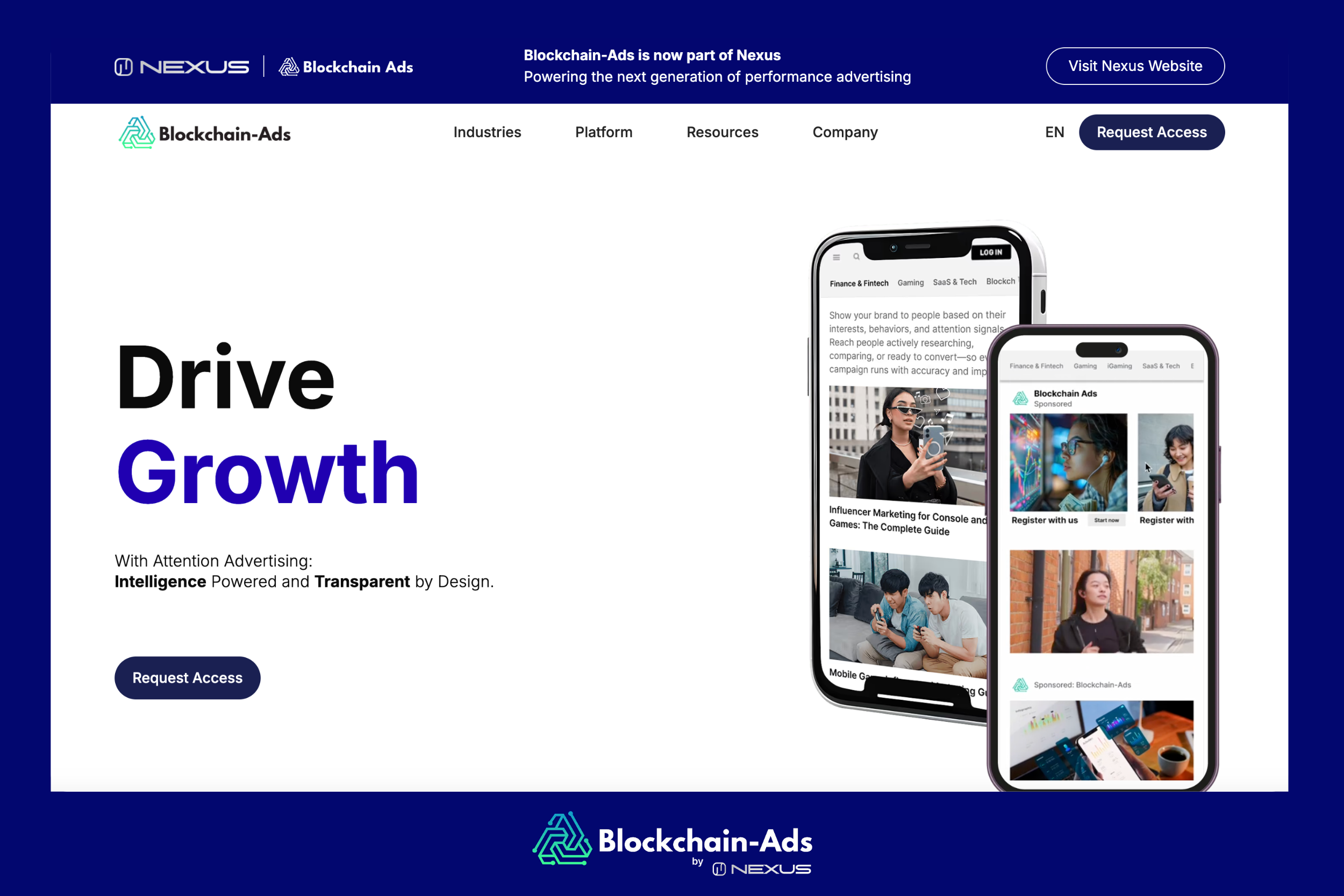
Most mainstream ad networks, including Google Ads, apply strict or ambiguous policies to campaigns linked to crypto, iGaming, adult, CBD, and other sensitive industries, which often results in disapprovals, throttling, or narrow inventory access. Blockchain-Ads fills that gap as a full-stack, performance-focused DSP built specifically:
- Finance and fintech
- iGaming and gambling
- Gaming and esports
- SaaS and B2B tech
- AI and DePIN companies
- Blockchain, crypto, and Web3 projects
- Regulated or sensitive markets like CBD, adult, alcohol, tobacco, and some political campaigns
Blockchain-Ads is a third-generation programmatic advertising platform that unifies media buying, audience targeting, premium publisher supply, and data management in one system. It connects advertisers to more than 78 supply partners and apps and over 11 million wallet holders, using around 1,000 pre-built audience segments mapped to more than 420 million profiles and on-chain intent signals.
Why Blockchain-Ads is the best alternative to Google Ads
- Behavior-first targeting: Target users by interests, behavior, attention, and wallet activity, such as traders, bettors, NFT collectors, DeFi users, or high-value subscribers, instead of blunt demographic or keyword filters.
- On-chain analytics and auditable attribution: Tracking combines pixel and server-side events with blockchain-backed logs, so every impression, click, and conversion is independently verifiable and resistant to fraud, which is critical for finance and iGaming campaigns.
- Regulated-industry ready instead of “compliance free”: Rather than bypassing oversight, Blockchain-Ads operates with verification, budget thresholds, and vertical-specific checks to support crypto, iGaming, CBD, and political campaigns in a way that aligns with compliance expectations.
- Cookieless, decentralized identity layer: Wallet-level and on-chain signals function as a privacy-resilient alternative to third-party cookies, enabling retargeting and lookalikes without depending solely on Big Tech IDs or browser-based tracking.
- Multi-format, multi-channel performance: The platform supports display, native, video, in-app, mobile ads, and CTV/OTT so brands can run full-funnel campaigns and let Nexus AI shift spend toward the best-performing combinations instead of just click-heavy placements.
Blockchain-Ads is not just a workaround for ad bans; it acts as a central growth engine for performance-focused and regulated brands that want blockchain-verified attribution.
Microsoft Ads
Microsoft Ads, also called Bing Ads is the closest like-for-like alternative to Google Ads for search engine marketers. It supports keyword-driven campaigns across Bing, Yahoo, and AOL search properties, allowing advertisers to target users with high purchase intent, often at a lower cost-per-click.
As a platform, Microsoft Advertising enables advertisers to reach over 1 billion monthly users, with unique access to professionals and desktop users, segments that are underrepresented on Google.
What makes Microsoft Ads a viable Google Ads alternative is its:
- Campaign compatibility: You can import your Google Ads campaigns directly into Microsoft Ads, streamlining setup.
- Lower CPCs: With less competition in auctions, advertisers often enjoy reduced bid prices.
- Advanced targeting: Microsoft’s integration with LinkedIn allows you target niche audiences. So if your business objectives are to reach people by job function, industry, and company targeting, this is where to do it, and it’s also something Google doesn’t offer.
- Cross-platform reach: Ads run on multiple platforms across Bing, MSN, Outlook, and Xbox properties, extending visibility beyond just search.
Microsoft Ads is best suited for B2B, professional services, and advertisers looking for intent-rich traffic without the high CPMs of Google.
Outbrain
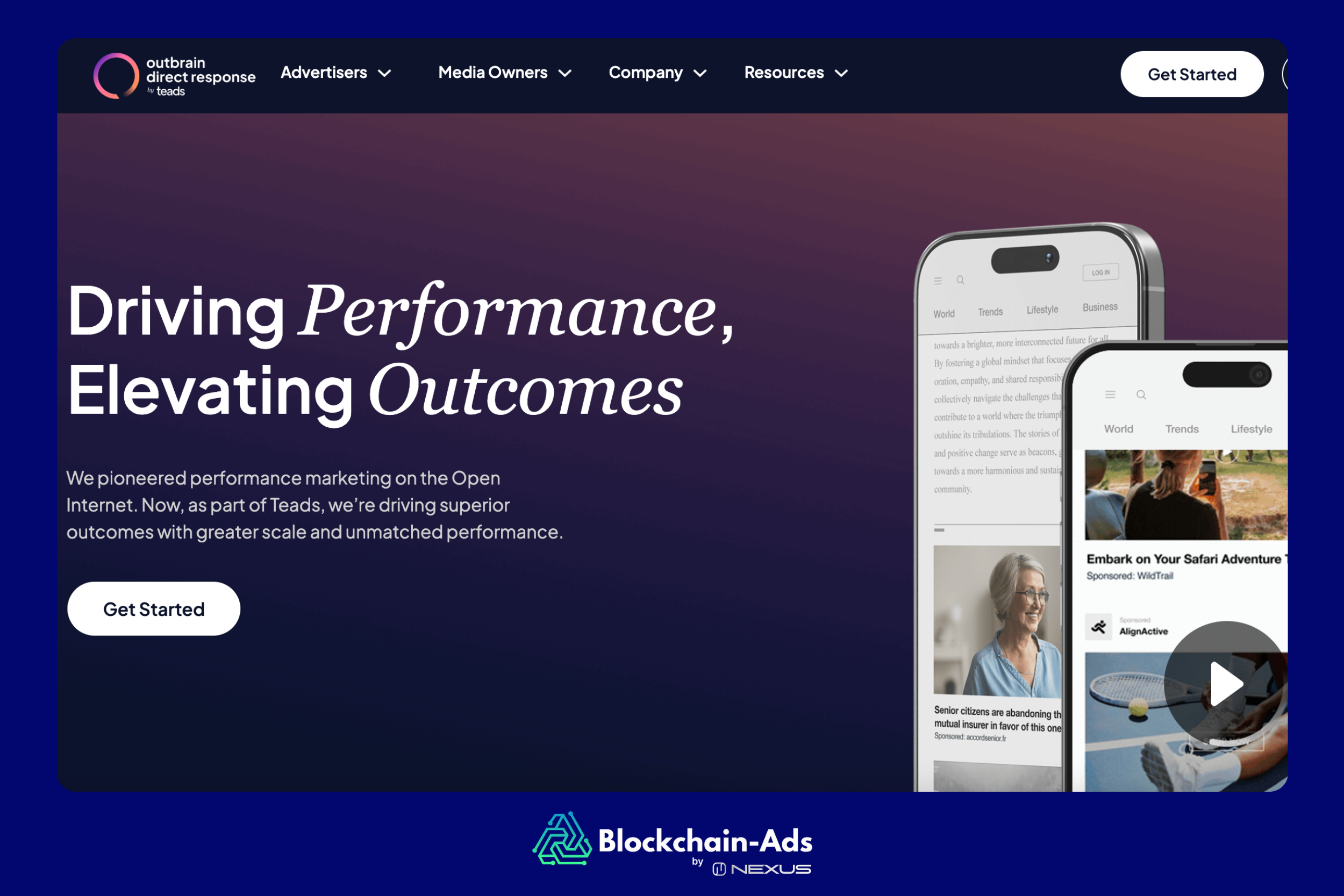
Outbrain is a powerful alternative to Google Ads for marketers focused on native advertising and content amplification. While Google dominates search and display, Outbrain thrives by placing branded content in premium editorial environments, helping advertisers reach users while they're actively consuming articles on trusted media sites.
Founded in 2006, Outbrain is a native ad network that distributes sponsored content across a network of high-authority publishers like CNN, BBC, and The Guardian. Unlike display or search ads, its placements mimic editorial recommendations, making the ads feel more organic and contextually relevant.
What makes Outbrain a viable Google Ads alternative is its unique focus on:
- Premium inventory across news and content sites
- Contextual and interest-based targeting using behavioral signals
- Performance-based bidding models (CPC and conversion-optimized)
- Advanced creatives, including carousels and video formats
- High engagement rates due to native placement
Outbrain is ideal for advertisers looking to drive traffic, increase content visibility, and scale brand storytelling outside of the traditional search/display ecosystem.
Taboola
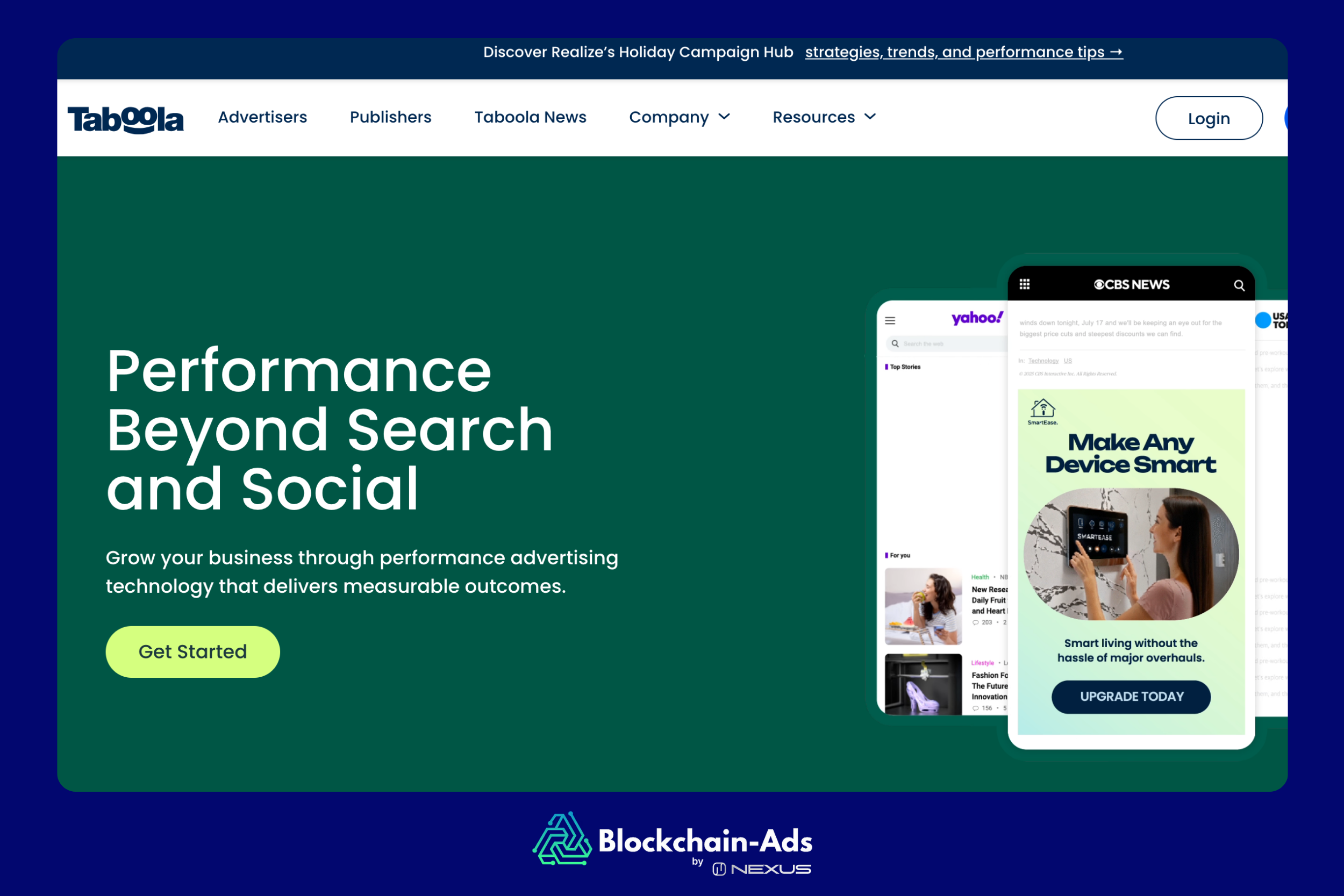
Taboola is one of the leading native advertising platforms and a strong alternative to Google Ads, especially for content-driven campaigns. Unlike search-based ads, Taboola places sponsored content across top publisher sites like NBC News, Business Insider, and The Weather Channel, surfacing your ads as “recommended articles” where users are already reading.
This makes it a smart pick for advertisers seeking more organic placements and higher engagement. Google Ads often shows banners or search results that users skip due to ad fatigue, but Taboola blends promotions into editorial content. That delivers better CTRs and long-scroll visibility.
What sets Taboola apart:
- Diverse native formats, including Clip Ads, carousels, and motion ads.
- AI-powered contextual and behavioral targeting for more relevant ad delivery.
- Massive publisher network across premium sites worldwide.
- Predictive audience models that recommend high-engagement placements.
If you want your ads to appear as part of what potential customers are reading, not apart from it, Taboola offers a more seamless, content-first advertising experience.
For brands frustrated with Google Ads' rising costs and creative limitations, MGID offers a flexible native advertising alternative. It blends content with editorial feeds, helping marketers drive discovery through non-intrusive formats.
MGID
MGID is a native advertising platform that places branded content within news, blog, and media publisher sites. Its ad units mimic the look and feel of surrounding content, which helps improve engagement and reduce ad fatigue.
What sets MGID apart as a strong alternative to Google Ads:
- Native-first ad formats: MGID specializes in content-style placements like recommendation widgets, in-article ads, and sponsored content. These are less intrusive than typical display banners.
- Behavioral and contextual targeting: Its targeting engine segments users by interests, site behavior, geography, and device type to serve hyper-relevant ads.
- AI-powered content personalization: The platform uses machine learning to optimize ad headlines, images, and CTA combinations for better click-through rates.
- Publisher network diversity: MGID has a wide global reach with exclusive publisher partnerships across news, lifestyle, tech, and finance verticals.
MGID is particularly useful for content-driven campaigns, app installs, or brand awareness campaigns that benefit from soft-sell placements across high-traffic sites.
Revcontent

Revcontent stands out as a compelling Google Ads alternative, especially for advertisers seeking high-engagement placements beyond search or display networks. Unlike Google Ads, which often emphasizes intent-based targeting through search queries, Revcontent delivers brand visibility through native placements that appear within editorial content on premium publisher sites.
At its core, Revcontent is a native advertising platform that uses content recommendation widgets to serve ads that blend seamlessly with a site’s articles or news feed. This format drives higher click-through rates and engagement by matching the visual style and tone of the publisher’s content.
What makes Revcontent a viable alternative to Google Ads lies in its focus on audience engagement and contextual delivery:
- Native formats only – ensures non-disruptive ads that blend with editorial layouts.
- High-quality publisher network – partners with vetted sites for better traffic quality.
- Content-based targeting – delivers ads based on content categories and user behavior.
- Self-serve platform – lets advertisers control bidding, targeting, and creatives.
- Low CPC potential – often cheaper than Google Ads with higher engagement per click.
Revcontent works best for campaigns aiming to increase content discovery, reduce banner blindness, and reach readers in a more organic way, making it ideal for long-form content, landing pages, or affiliate funnels that need high-quality traffic.
Mondiad
Mondiad is a self-serve, multi-format ad network built on 10+ years of infrastructure experience from the team behind PopCash. It serves mainstream and adult traffic worldwide across verticals that mainstream platforms routinely reject, including iGaming, finance and crypto, nutra, sweepstakes, dating and adult.
The platform runs on CPM, CPC and TargetCPA bidding, with campaigns manually reviewed and approved in under an hour during working hours. Advertisers get 10B+ daily impressions and 50M+ daily clicks across classic push, in-page push, popunder, native and banner formats, with video pre-roll currently in beta.
What makes Mondiad a practical Google Ads alternative:
- Low entry cost: a $50 minimum deposit, against the $100–$500 most competitors require
- Granular targeting: GEO, device type, OS and OS version, mobile carrier, IP range, browser, language, subscription age and traffic type (mainstream vs adult)
- Automated optimization: TargetCPA smart bidding, custom bidding by ZoneID/SubID/GEO, smart optimization rules and whitelist/blacklist audiences
- Built-in tracking: free pixel tracker, event tracker tied back to the exact ZoneID/SubID, GTM support and postback integrations with BeMob, RedTrack, Binom, Voluum, Keitaro and more
- MCP connector: advertisers can link their Mondiad account to AI tools like ChatGPT or Claude and manage campaigns directly from a chat window, a feature no other network on this list currently offers
- Flexible funding: PayPal, Paxum, Capitalist, Payoneer, credit card, crypto and wire transfer
Every plan includes a personal account manager, with campaign optimization, creative production and full account management unlocked at higher deposit tiers.
For advertisers running restricted offers who want volume without fighting constant disapprovals, Mondiad delivers scale, speed and a low barrier to testing. You can explore the platform, create an advertiser account or read their affiliate marketing guides.
The Trade Desk
For advertisers seeking more control and transparency than what Google Ads offers, The Trade Desk stands out as a powerful programmatic alternative. It breaks away from the walled garden model by offering open access to premium ad inventory across the wider internet.
The Trade Desk is a demand-side platform (DSP) built for large-scale digital advertising. It enables marketers to plan, buy, and optimize campaigns across connected TV, audio, native, video, and display, on desktop and mobile, through a single interface.
What makes it a compelling alternative to Google Ads is its reach and precision. TTD connects advertisers to over 150 major publishers and streaming services, giving access to high-impact placements not available in Google’s network. It also supports:
- Cross-device targeting for unified reach
- Contextual and behavioral data, including offline actions and retail signals
- First- and third-party audience integrations
- Advanced reporting and real-time bidding optimization
Unlike Google Ads, The Trade Desk doesn’t rely on search or YouTube inventory. Instead, it thrives in omnichannel campaigns, especially for connected TV and retail media, where it leads in data onboarding and brand safety.
That strategic flexibility, combined with transparency and scale, positions TTD as a top-tier Google Ads alternative for sophisticated advertisers.
StackAdapt
StackAdapt is a self-serve demand-side platform (DSP) that serves as a viable Google Ads alternative, especially for brands looking to run full-funnel campaigns across video, native, connected TV, and display.
Unlike Google Ads, which prioritizes its own inventory, StackAdapt allows advertisers to access inventory across thousands of publishers. It also emphasizes contextual targeting and pre-bid brand safety tools, making it ideal for industries that require tighter control over placement and messaging.
What makes StackAdapt a strong alternative to Google Ads:
- Advanced targeting options: Behavioral, contextual, device, geo, and lookalike models help refine audience reach beyond Google’s walled garden.
- Cross-channel execution: Run campaigns across native, display, video, and connected TV from one interface.
- AI-powered optimization: The platform uses machine learning to improve bidding strategies and ad placements in real time.
- High brand safety controls: Built-in fraud detection and brand suitability filters reduce ad waste.
- In-depth reporting: Visual analytics dashboards allow for granular performance tracking at every funnel stage.
StackAdapt is well-suited for agencies, growth marketers, and performance-driven teams who want transparency, reach, and intelligent automation beyond Google’s closed system.
AdRoll
Google Ads excels at intent-based targeting, but it lacks broad remarketing flexibility across web and social. That’s where AdRoll steps in, especially for brands aiming to recapture lost traffic across multiple touchpoints.
AdRoll is a unified marketing platform built around retargeting and full-funnel advertising. It helps businesses reconnect with visitors via web, email, and social platforms, all from a single dashboard. What makes AdRoll a powerful alternative to Google Ads:
- Cross-channel reach: Serve ads across the web, Instagram, Facebook, TikTok, and email.
- AI-powered retargeting: Dynamically segments audiences based on behavior and buying intent.
- Creative personalization: Optimizes each ad version in real time.
- Smart bidding tools: Adjusts budget distribution for maximum ROI.
- Shopify and eCommerce integration: Built to serve DTC brands with automated campaign flows.
- Brand safety controls: Includes fraud prevention and publisher-level transparency.
For marketers seeking control beyond Google’s walled garden, AdRoll offers a flexible, insight-driven toolkit ideal for scaling remarketing campaigns with precision.
Meta Ads
.png)
For brands seeking an ad platform with rich user data and advanced visual placements, Meta Ads stands out as a strong Google Ads alternative. While Google focuses on search and web intent, Meta Ads dominates online advertising in the social space, enabling precision targeting through behavioral and interest signals.
Formerly Facebook Ads, Meta Ads now spans Facebook, Instagram, Messenger, and the Meta Audience Network. Its core strength lies in matching engaging creatives with detailed audience segments based on actions, preferences, and platform activity.
What makes Meta Ads a powerful alternative:
- Robust targeting: Tap into first-party data for lookalike, behavioral, and custom audiences.
- Creative flexibility: Deploy carousels, stories, reels, collections, and image/video ads.
- Cross-platform exposure: Reach users across Meta’s full social ecosystem.
- Performance tools: Use Meta Pixel and Events Manager for conversion tracking and campaign optimization.
- Budget control: Set daily or lifetime caps with auto-bidding strategies to hit performance goals.
Meta Ads excels when brand storytelling and visual impact matter more than search intent. Its social-first model offers reach and personalization that complements or replaces Google Ads in full-funnel strategies.
Understanding Google Ads
Google Ads is Google’s advertising platform that lets brands show paid content across its digital ecosystem, including Search, YouTube, Google Maps, and the Display Network. At its core, it runs on a real-time auction model where advertisers bid for ad placements based on relevance, bid value, and user intent.
This system is primarily used for pay-per-click (PPC) and cost-per-impression (CPM) campaigns. You only pay when users engage, typically when they click or view your ad.
Marketers can run five main campaign types:
- Search Ads: Text-based ads that appear atop Google search results.
- Display Ads: Banner-style creatives shown on Google’s partner sites.
- YouTube Ads: Video ads that run before, during, or after YouTube content.
- Shopping Ads: Product-based ads that show image, price, and merchant info.
- App Campaigns: Designed to promote app installs across Google services.
What sets Google Ads apart is its robust optimization tools:
- Granular targeting: Set by keyword, location, language, device, schedule, and audience signals.
- Ad Rank algorithm: Uses quality score + bid + ad relevance to determine placement.
- Smart Bidding: Automated strategies like Target CPA, ROAS, or Maximize Conversions.
- Integrated analytics: Connects with Google Analytics and Tag Manager for cross-platform tracking.
Its strength lies in reach, precision, and machine learning, but costs can spike in saturated industries. Mastering campaign structure and bidding strategy is key to ROI.
PropellerAds
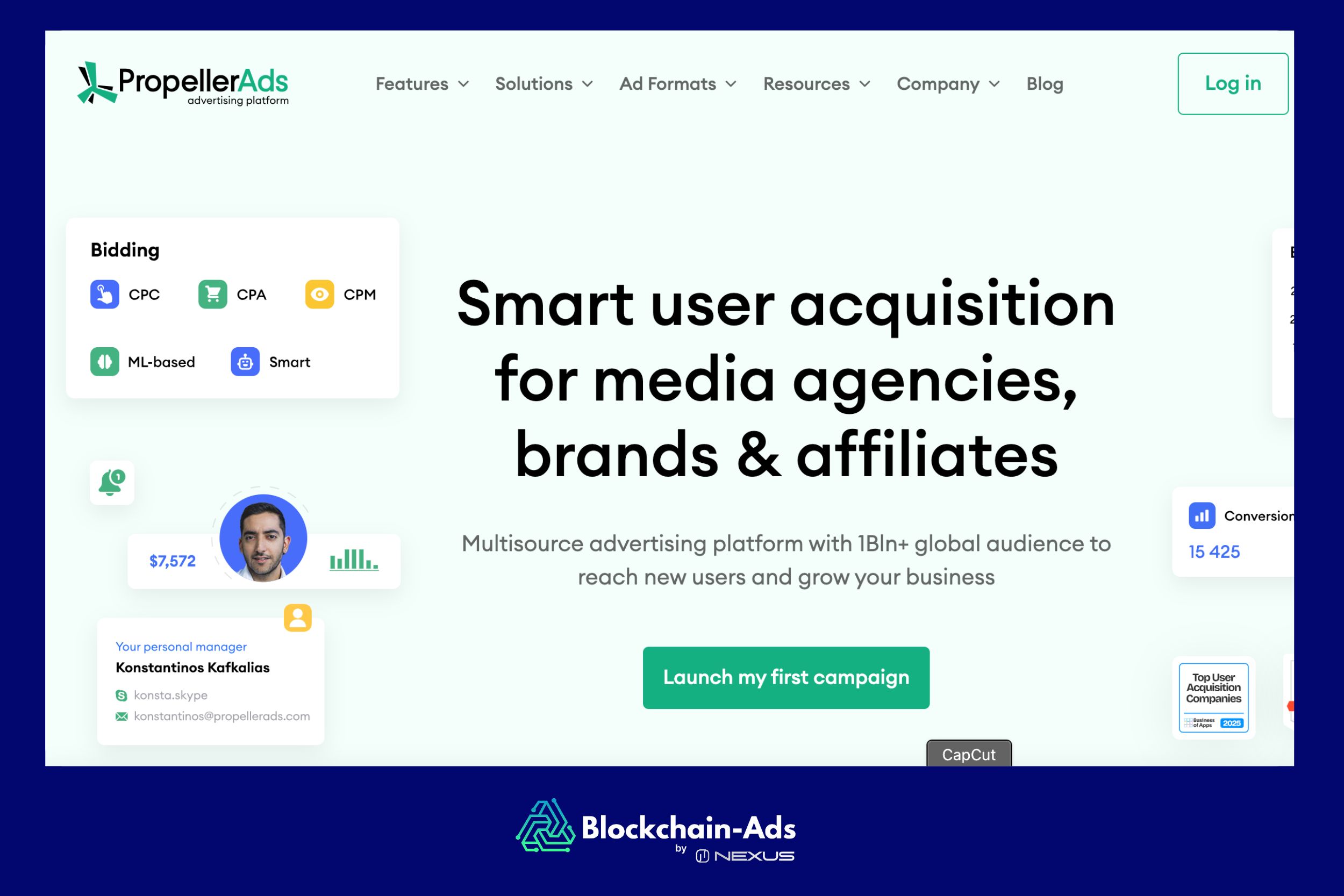
PropellerAds stands out as a go-to alternative for advertisers blocked or limited on Google Ads. It’s a self-serve ad platform built for aggressive scaling, offering more freedom in creative types and verticals like gaming, crypto, and adult content.
Unlike Google’s tightly controlled ecosystem, PropellerAds provides near-instant approvals, no traffic thresholds, and allows more flexible campaigns, even for smaller or niche sites. This makes it especially useful for affiliates and performance marketers seeking less restrictive platforms.
The platform supports a range of high-impact formats, including:
- Push notifications
- Interstitials
- In-page push
- Popunders
PropellerAds also features:
- SmartCPA automation and conversion optimization tools
- Broad global traffic, especially from Tier 2 and Tier 3 regions
- Retargeting options and zone-based targeting
- Fast payment cycles (as low as $5 weekly via multiple channels)
For advertisers targeting underserved markets or running restricted offers, PropellerAds delivers volume, flexibility, and speed, areas where Google Ads often falls short.
Why Look for Google Ads Alternatives?
While Google Ad helps you run great ad campaigns, you might find the need to find alternative platforms for various reasons. This section has more details:
Rising Ad Costs and Auction Saturation
The cost of Google Ads is increasing almost every year, and the search ad cost per lead increased by 5% from 2024 to 2025. This is due to the high demand of the limited space, especially in competitive industries. As such, you might find running campaigns on the platform quite expensive and find cheap alternatives with a high ROI.
Strict Advertising Policies and Account Bans
Google Ads implements strict advertising policies that can expose you to sudden account bans. For instance, there are search engine marketing restrictions when running ad campaigns related to finance, crypto, adult content, and gambling. These regulations can flag your ads without a warning and leave you unable to reach your audience. This will, therefore, force you to find a more flexible advertising platform.
Platform Diversification and Ad Fatigue
Running ad campaigns solely on Google Ads can create a platform dependency and pose many risks. However, choosing multiple ad networks can reduce such risks and prevent ad fatigue. In fact, it will enable more creative testing and remarketing opportunities. You will also reach new audiences, adapt to changing user behaviors, and maintain a consistent performance.
What Are the Best Google Ads Alternatives by Objective?
Each ad platform excels in different areas. Choosing the right one depends on your campaign’s core goal, whether that’s search visibility, social engagement, native reach, or targeting hard-to-advertise industries. We will explore the best alternatives to Google for
- Search intent ads
- Native reach
- Social reach
- Programmatic display
- Restricted industries
Let’s have a closer look of various Google Ad alternatives by objective:
What Are the Best Google Ads Alternatives for Search Intent Ads?
Search intent refers to the goal behind a user’s query. Effective platforms align with that intent, whether the user is seeking information, comparing solutions, or ready to buy.
Here’s how the top alternatives to Google Ads perform across four core search intent categories:
1. Informational Intent
Users are researching, reading, or learning about a topic.
- Blockchain-Ads: Uses interest, behavior, and attention signals to reach people actively researching, comparing, or exploring a category, not just anyone who happens to click. It runs native and displays campaigns that build awareness in front of high-fit users.
- Outbrain: Places native content on news and educational publishers. Ideal for long-form guides, comparisons, and thought leadership.
- Taboola: Similar to Outbrain, but with stronger mobile placements and broader network across blogs and news platforms.
These platforms attract early-stage audiences and help seed brand awareness through trusted editorial placements.
2. Navigational Intent
Users are trying to find a specific brand, product, or site.
- Microsoft Ads: Captures branded or product-specific searches on Bing and Yahoo. Best for defending brand terms or redirecting competitor traffic.
- Meta Ads: Effective for retargeting users who showed interest in your site or brand through past engagement.
- AdRoll: Ideal for bringing users back with brand recall ads based on previous site visits.
Navigational intent ads thrive on precise targeting and audience re-engagement.
3. Commercial Intent
Users compare options and evaluate products before purchase.
- Blockchain-Ads: Targets users who are already trading, depositing, subscribing, or spending in similar products by combining behavioral, contextual, and wallet data.
- The Trade Desk: Reaches users across devices with data-driven placements, ideal for competitive brand positioning.
- StackAdapt: Strong contextual and lookalike targeting. Good for surfacing review content or product comparisons.
Commercial intent alternatives should place your offer beside trusted sources and competitor content.
4. Transactional Intent
Users are ready to take action, buy, sign up, or convert.
- Blockchain-Ads: Optimizes for hard conversions such as first deposits, trades, KYC completions, subscriptions, and in‑app purchases using Nexus AI and on-chain plus pixel data.
- Meta Ads: Great for retargeting and bottom-funnel campaigns with product-focused creatives and CTAs.
- PropellerAds: Best used for time-sensitive promotions via push or interstitial formats that prompt action.
Transactional platforms excel when paired with aggressive offers, urgency cues, and retargeting loops.
What Are the Best Alternatives to Google Ads for Native Reach?
Native advertising are those non intrusive ads that help brands deliver content that blends into the editorial flow of a site. The goal is to increase engagement while avoiding ad fatigue. If your campaign intent is to drive brand discovery, improve click-throughs, or scale awareness across high-traffic media outlets, these are the best alternatives:
Intent: Brand Awareness at Scale
For brands looking to do lead generation or reach millions through editorial-style placements.
- Taboola
Delivers ads across a network of 78 supply partners including MSN, Bloomberg, and NBC. Ideal for top-funnel campaigns with broad reach and behavioral targeting. - Outbrain
Works with top-tier publishers like CNN and BBC. Offers high content alignment and predictive analytics to drive discovery for editorial-style campaigns. - MGID
Known for affordability and geo-targeted native placements across emerging markets. Suitable for global reach and localized content testing.
Intent: Performance-Driven Native Ads
Best for campaigns focused on conversions, ROAS, or direct response.
- Revcontent
Built for performance marketers. Offers fast-loading widgets, deep audience segmentation, and flexible bidding models for CPA or CPC campaigns. - StackAdapt
Combines native ad formats with advanced programmatic tools like intent-based targeting and dynamic retargeting, ideal for lead gen. - AdRoll
Offers native display across its retargeting network. Great for DTC brands looking to re-engage past site visitors with on-brand messaging.
Intent: Niche or Regulated Industry Native Reach
For specialized or regulated verticals that struggle on mainstream networks:
- Blockchain-Ads
Enables native-style placements within Web3-friendly platforms. Targets wallets, token holders, and DeFi users, ideal for NFT or blockchain project discovery. - PropellerAds
Offers native and push formats that mimic editorial placements. Best for crypto casinos, VPN tools, and other high-risk verticals. - Revcontent
(Again) Allows greater flexibility for niches often rejected on traditional native platforms. Particularly effective in gray-area verticals like crypto and supplements.
What Are the Best Google Ads Alternative Ad Networks for Social Reach?
Social reach refers to expanding your brand’s presence across social media platforms by placing ads where users spend the most time: feeds, stories, reels, and in-app placements. The goal here is visibility, engagement, and direct interaction with targeted audiences.
The best Google Ads alternatives for social media advertising to drive website traffic or just reach more people include:
- Meta Ads
Meta lets you run campaigns on Facebook, Instagram, and Messenger with advanced audience tools and granular placements. It's ideal for brand-led visuals and performance-based campaigns. - TikTok Ads
TikTok’s algorithm delivers unmatched organic reach, especially for short-form videos. Their ad engine supports creative-first formats; so brands can create ads to tell the best stories. It's great for native video ads with viral potential. - LinkedIn Ads
As a popular social media platform that's great for B2B social reach, LinkedIn supports precise job title targeting and native formats that feel organic in-feed. Perfect for professional services and niche verticals.
What Are the Best Google Ads Alternatives for Programmatic Display?
Programmatic display is the automated buying and selling of digital ad inventory in real-time. Unlike traditional media buys, programmatic tools use AI and bidding algorithms to place ads across thousands of sites, tailored to specific behaviors, geographies, or devices. It’s the go-to solution for marketers scaling reach with precision.
The strongest Google Ads alternatives for programmatic display include:
- Blockchain-Ads
A third-generation DSP built for finance, iGaming, crypto, CBD, adult, gaming, and other performance or regulated verticals. It supports display, native, video, mobile, and CTV/OTT across hundreds of thousands of sites and apps, with wallet-based, behavioral, and contextual targeting plus pixel, server-side, and on-chain attribution for verifiable conversions. - The Trade Desk
The gold standard for enterprise programmatic. It offers access to a massive cross-channel inventory, real-time bidding, and robust integrations with premium data providers. Brands rely on it for high-performance omnichannel campaigns with deep audience insights. - StackAdapt
Known for its intuitive UI and strong native + CTV ad support. StackAdapt uses predictive AI to optimize display placements based on engagement signals. It's ideal for agencies managing mid-to-large budgets with a focus on storytelling.
These platforms go beyond what Google Display Network offers, delivering greater control, more specialized targeting layers, and access to premium ad formats.
What Are the Best Google Ads Alternatives for Restricted Industries?
Restricted industries, like crypto, gambling, adult content, and certain financial services, often face bans, delays, or limited placements on Google Ads. Brands in these sectors need platforms with flexible compliance policies, pre-approved publisher lists, and traffic sources that align with their industry rules.
Top-performing Google Ads alternatives for restricted campaigns include:
- Blockchain-Ads
Designed for crypto, iGaming, DeFi, and other high-risk sectors. It supports wallet-based targeting, smart contract segmentation, and industry-agnostic compliance features. With 1.2B ads served a day across publishers, it’s ideal for Web3 user acquisition. - PropellerAds
Accepts adult, gambling, and sweepstakes content. Offers push, popunder, and interstitial formats with automated campaign approval. It's best for brands seeking aggressive global reach across Tier 2 and Tier 3 markets. - RichAds (better alternative to Revcontent in this context)
Specializes in native and push traffic for grey-area verticals. They offer manual ad review, click-level optimization, and smart bid algorithms tailored for challenging niches.
These platforms allow marketers in regulated sectors to run full-funnel campaigns without fighting constant disapprovals, ensuring both scale and compliance.
How to Choose the Right Google Ads Alternative
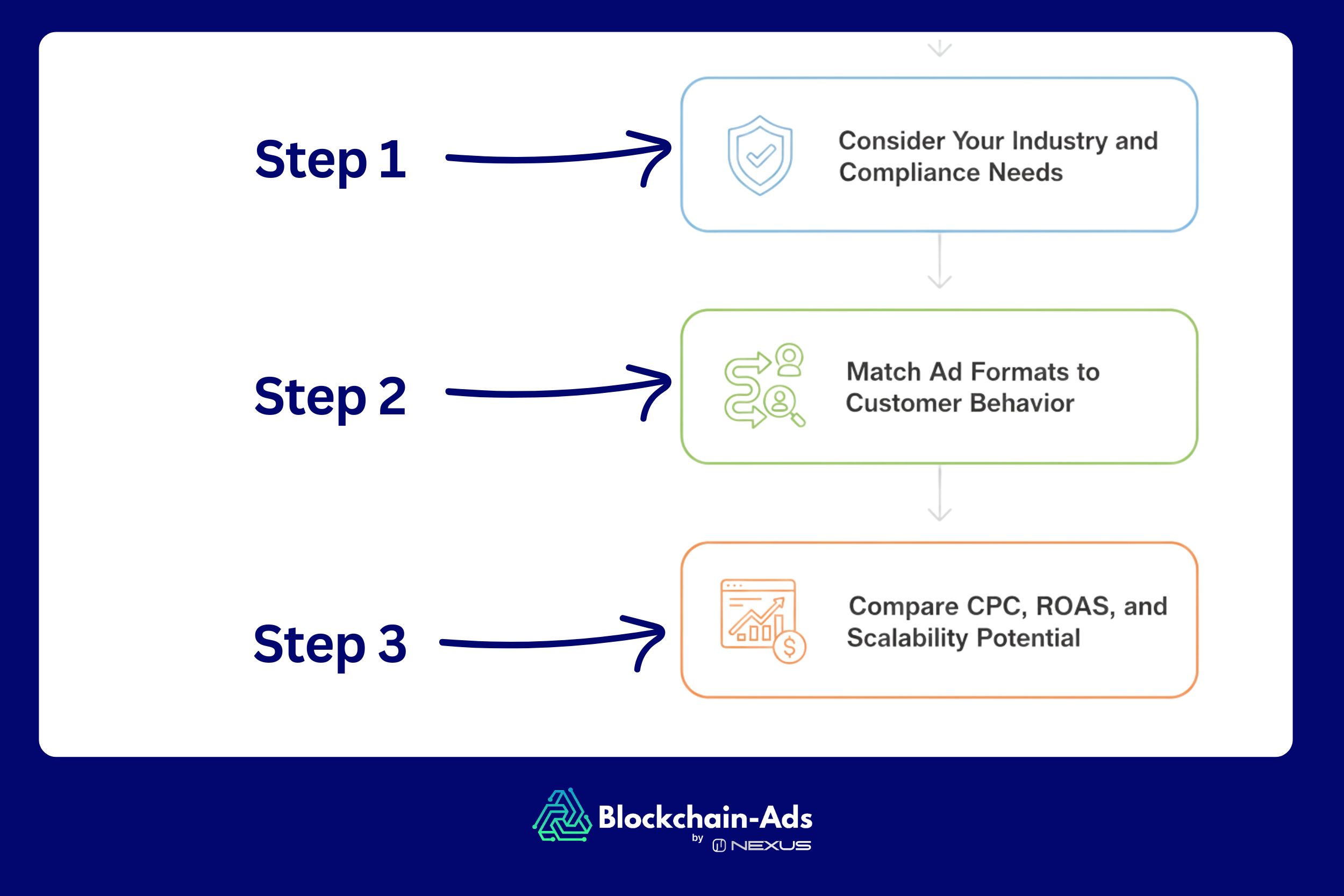
The best platform for your brand depends on more than budget or features. You need one that aligns with your goals, audience, and the realities of your industry. Use these core filters to guide your decision:
- Your industry and compliance requirements
- Ad formats that reflect how your audience behaves
- Realistic CPC, ROAS, and scalability benchmarks
Each of these plays a role in how successful your campaigns will be. Let’s break them down:
Consider Your Industry and Compliance Needs
If you work in regulated sectors like iGaming, crypto, CBD, or adult content, your ad platform must support flexible compliance. Google Ads often rejects campaigns in these categories, either through blanket restrictions or opaque review policies.
Instead, look for platforms that openly support high-risk industries and provide tools to meet regulatory demands. For example, Blockchain-Ads offers built-in compliance features across display, native, and in-app ads. It supports crypto wallets, DeFi apps, and adult verticals with custom audience targeting and fraud-prevention tech.
Tip: Always check whether the platform has experience in your vertical. Ask for case studies or partner examples. Choosing the wrong network can delay approvals or limit your campaign’s reach entirely.
Match Ad Formats to Customer Behavior
Start by mapping ad formats to how your audience interacts with content. This ensures your creatives show up in the right format, at the right time, and on the right platform.
- Native ads work best for users in discovery mode, browsing articles, scrolling feeds, or consuming editorial content. Platforms like Outbrain and Revcontent place branded messages within relevant environments, boosting engagement by up to 25% compared to standard display banners.
- Display ads are ideal for high-visibility campaigns targeting users passively browsing. StackAdapt and The Trade Desk use real-time data to position rich media banners across devices, capturing attention during idle moments.
- Video formats match users in lean-back or entertainment mode. When placed in-stream or as interstitials on platforms like YouTube, TikTok, or programmatic CTV, video ads see higher recall and completion rates, especially for emotionally driven messaging.
Choosing the right format means understanding not just where your audience is, but how they engage in each setting. Match behavior with intent, then layer your creative and platform choices accordingly.
Compare CPC, ROAS, and Scalability Potential
When evaluating Google Ads alternatives, focus on how each platform balances cost-per-click (CPC), return on ad spend (ROAS), and campaign scalability.
CPC: Platforms like Microsoft Ads consistently offer lower CPCs, typically 30–70% cheaper than Google Ads, due to less auction pressure and untapped inventory. This makes it a strong entry point for budget-conscious advertisers.
ROAS: ROAS varies by vertical and targeting depth. For example, The Trade Desk often drives higher ROAS for omnichannel brands thanks to advanced bidding strategies and access to premium supply sources. Blockchain-Ads reports up to 3× ROAS within 60 days for crypto and iGaming campaigns.
Scalability: Scalability hinges on inventory access and audience tools. Meta Ads excels with billions of daily impressions and first-party data. StackAdapt and The Trade Desk offer enterprise-grade scalability through API integrations, multi-format support, and global inventory pools.
Is Moving Beyond Google Ads Worth It?
Yes, relying solely on Google Ads limits your control, narrows your audience pool, and exposes you to platform restrictions. Many advertisers now adopt multi-platform strategies to avoid rising CPCs, account suspensions, and policy barriers, especially in industries like crypto, iGaming, and finance.
Platforms like The Trade Desk, Meta Ads, and Blockchain-Ads offer broader targeting, deeper first-party data, and access to premium native and in-app placements, often at lower CPMs. Brands running blended campaigns across channels report improved ROAS and better brand safety outcomes.