Complete Guide to Paid Social Advertising in 2026
Paid social advertising is still one of the fastest ways to put your offer in front of the exact people you want to reach. The reason many brands struggle is simple, they treat it as “post and boost” instead of a structured performance channel, then wonder why costs go up while results stay flat. This guide shows how to structure paid social in 2026 and when to add programmatic platforms like Blockchain‑Ads for more control and growth.
To make paid social work in 2026, you need to:
- Assign each platform a clear role in your funnel
- Match creative to feed behavior: short, vertical, native, and immediately clear
- Tie every campaign to a single outcome, like signups, deposits, or subscriptions
In practice, that often means using Facebook and Instagram to retarget visitors and nurture warm audiences, while TikTok focuses on attention and creative testing. LinkedIn is best reserved for B2B campaigns where a single qualified lead can justify higher costs.
As performance matures, many brands add programmatic platforms like Blockchain‑Ads to push beyond social, gain more precise reach, and unlock attribution that native social tools cannot provide.
What Is Paid Social Advertising?
Paid social advertising is when you pay social platforms to show targeted ads to chosen audiences. It relies on each platform’s data, formats, and algorithms to reach people more efficiently than organic posts alone. Done well, it becomes a predictable growth channel that drives awareness, leads, and sales at sustainable acquisition costs.
Paid social sits between brand and performance marketing. It can create demand with content people enjoy while still driving measurable actions. Your job in 2026 is to treat it like a performance channel, not a boost button.
How to Create a Paid Social Advertising Plan
Before picking platforms or creatives, you need a simple, sharp strategy. That means defining your outcomes, understanding who you are targeting, and mapping a realistic funnel.
Set Clear Paid Social Objectives
Think of your strategy like a planned trip, not a random drive. You need a starting point, a destination, and a timeline. Your paid social objectives are the route that connects them.
Common objectives include:
- Purchases or subscriptions
- Leads, demo requests, or consultations
- App installs or in‑app actions
- Brand awareness or video engagement
Every campaign should push toward one main outcome. Avoid mixing goals, such as trying to chase both cheap clicks and high‑value sales in the same campaign.
Understand and Segment Your Audience
A clear audience strategy keeps you from targeting “everyone” and reaching no one. Start by defining your ideal customer profile, including who they are, what they want, and what blocks them from taking action. Then map their journey from unaware to loyal.
Segment audiences into:
- Cold audiences: people who fit your profile but have not engaged with you
- Warm audiences: visitors, video viewers, social engagers, or email subscribers
- Hot audiences: cart abandoners, trial users, pricing page visitors, or repeat buyers
Use these segments to design both creative and offers that match intent.
Map a Simple Paid Social Funnel
A clean funnel makes it easier to assign each platform and campaign a specific job. Think in three stages instead of complex models.
- Top of funnel: educate, entertain, and build awareness with broad or lookalike audiences
- Middle of funnel: nurture interest and answer objections with deeper content and social proof
- Bottom of funnel: push high‑intent users toward signups, purchases, or deposits with strong offers
You can then decide which platforms own which stages.
Know Your Platform Options
To make an effective plan, you should know the social media platforms where you cantunyour ads. the most popular options include:
Facebook (Meta)
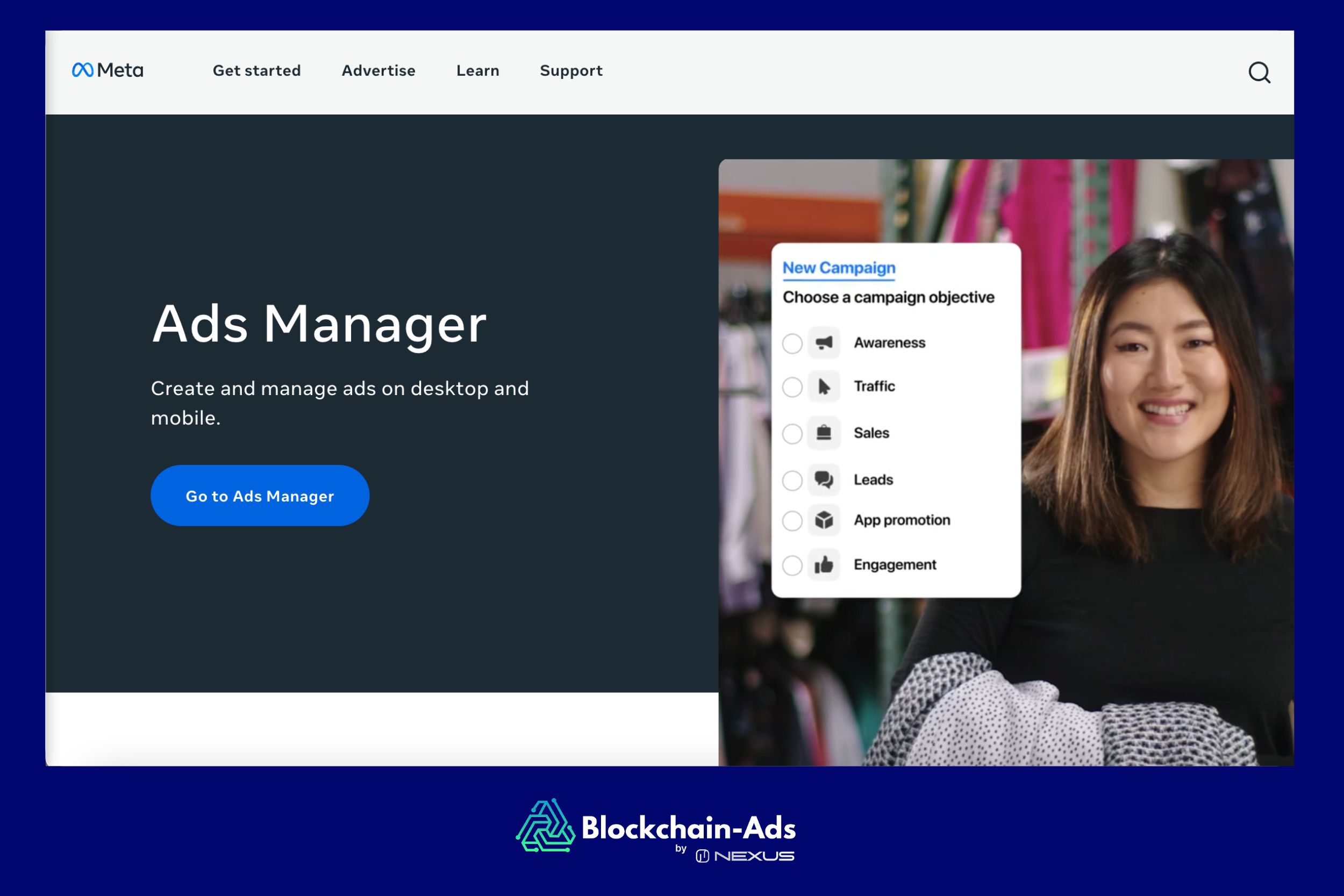
Facebook remains one of the most powerful ad platforms because of its targeting depth and scale. Advertisers bid to reach specific groups, and winning bids win impressions in a lottery‑style auction. You can target by location, interests, demographics, and behavior, even down to small, specific segments.
Facebook’s behavioral targeting allows you to keep speaking to people who already engage with your brand. This is ideal for building leads, retargeting visitors, and increasing brand awareness over time. You also get detailed reporting so you can test different ad types, placements, and schedules.
Why this works well:
- In‑app forms keep users on Facebook while they submit details, which reduces friction
- Clear calls to action, such as “Download the checklist”, help users understand the next step
- You can run lead magnets, guides, and templates directly inside Facebook, then nurture by email
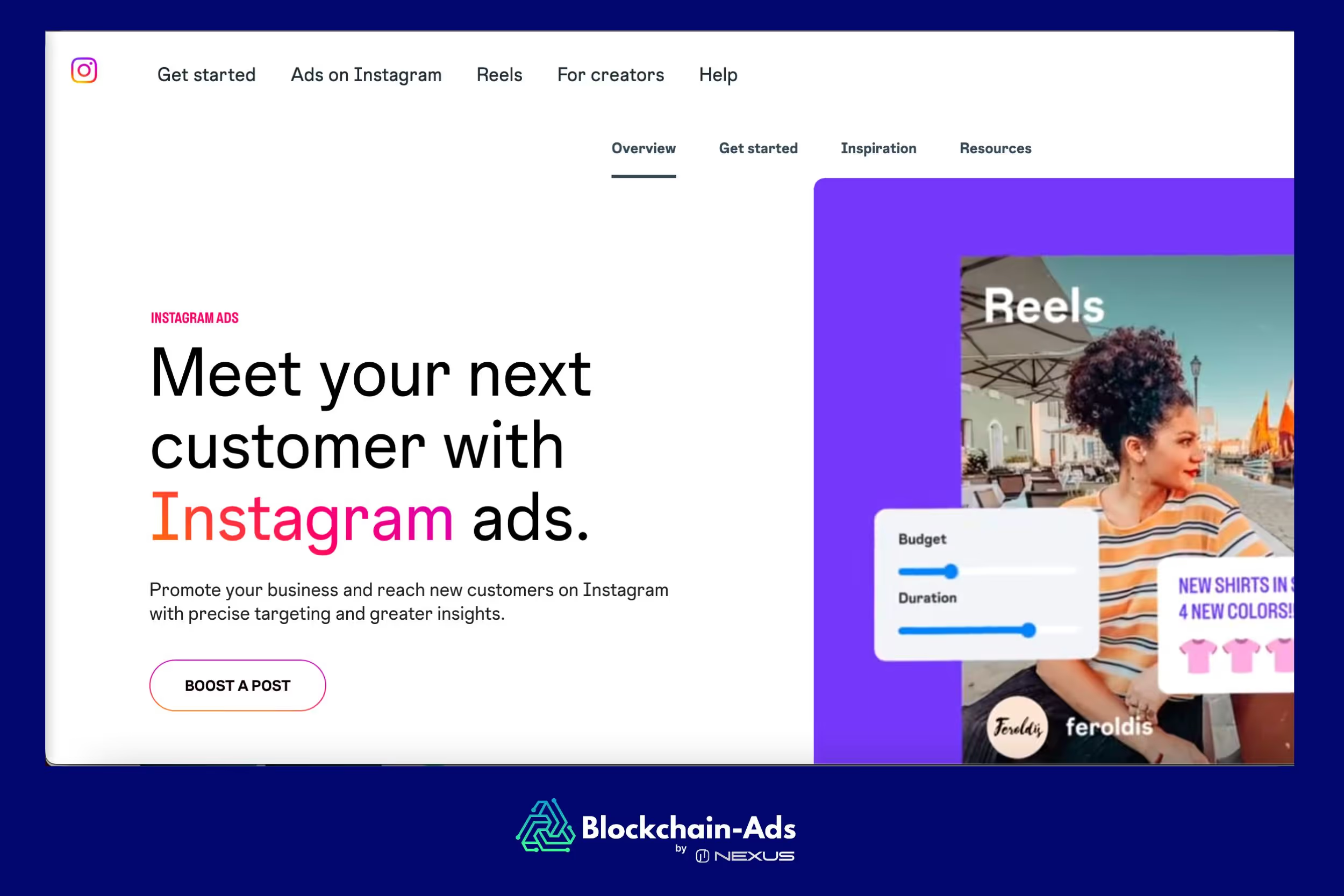
Instagram has become a discovery engine for new products and brands. A high percentage of users say they discover new products on the platform, and its total ad reach continues to grow. With over a billion reachable accounts, it is a natural home for visually driven campaigns.
You need a business profile to run ads effectively. This also allows you to set up a store directly inside the app, which is perfect if you do not have a full ecommerce site yet. Because Meta owns Instagram, your ads are managed through the same system and can run across both platforms.
Why Instagram stands out:
- Visually appealing layouts and neutral design let product visuals really pop
- Simple calls to action like “Swipe up” or “Shop now” keep the journey straightforward
- You can start with small budgets and scale as you see results, much like topping up a gas tank
TikTok
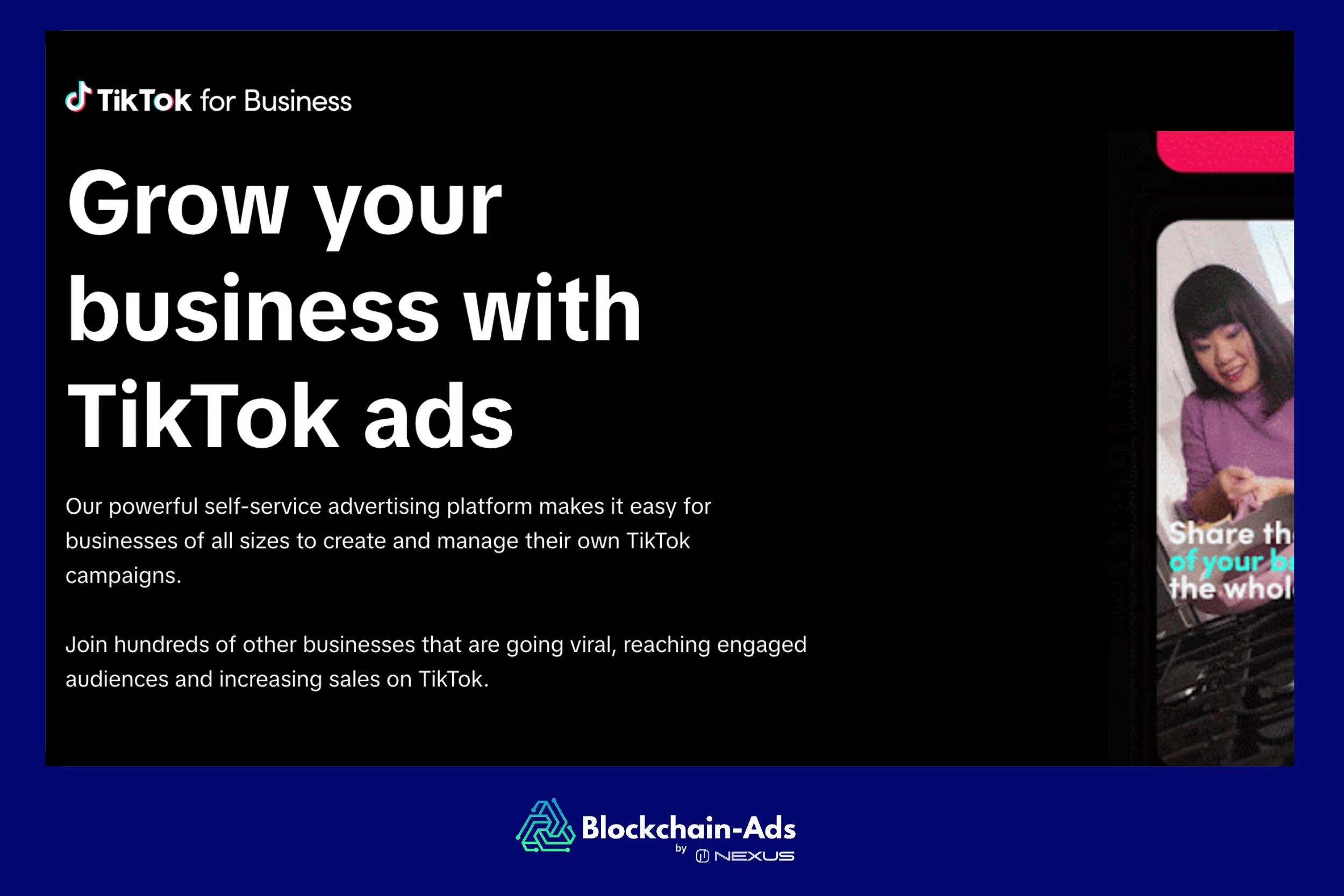
TikTok ads blend into the content people already enjoy, which helps ads feel native instead of disruptive. They appear as regular short videos, which makes users more likely to watch and interact. This subtle, content‑first approach is ideal for narrative, show‑and‑tell, and product storytelling.
TikTok offers a huge, global audience and strong targeting tools. You can reach people based on interests, behaviors, and interactions while letting the algorithm handle much of the heavy lifting. Brands that lean into trends, music, and challenges often see stronger results.
Why TikTok is powerful:
- Relatable, entertaining content feels less like advertising and more like community participation
- Brands can join trends and challenges to ride organic behavior instead of forcing messages
- Strong algorithms deliver content to users whose interests and behaviors match your offer
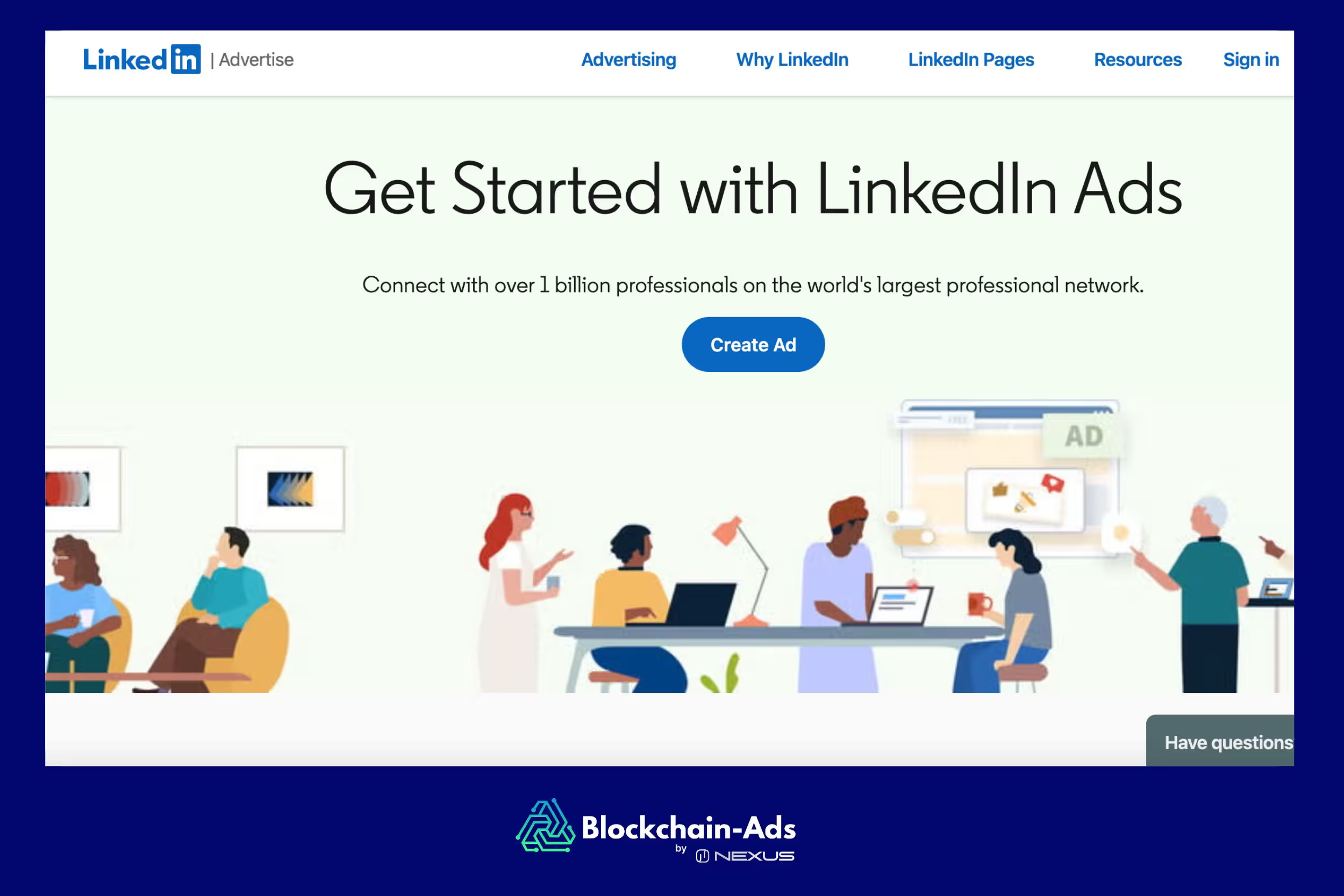
LinkedIn is where professionals go to build careers, find opportunities, and stay informed. This makes it a natural fit for B2B marketers who need to reach decision‑makers, buyers, and influencers. With hundreds of millions of professionals and many in decision roles, its audience quality is high.
You can target by job title, function, seniority, company size, industry, and more. This precision often leads to higher costs per click, but a single qualified lead can justify the expense. LinkedIn also offers in‑app lead forms so users can sign up for events or content without leaving the platform.
Why LinkedIn works for B2B:
- In‑app forms keep people on LinkedIn and reduce friction for signups
- Promoted posts can use strong questions or prompts to drive meaningful comments and discussion
- You can test sponsored content, message ads, and other formats to see what resonates with your niche
How to Run Paid Social Advertising
Once your platforms and roles are clear, you need practical strategies for goals, budgets, and targeting. This section makes the leap from context to execution.
Define Your Paid Social Objective
Your objective guides targeting, creative, bidding, and optimization. It is the first choice you make inside any ad manager. Think carefully before selecting it, because the algorithm will optimize toward that outcome.
Good practice:
- For new brands, start with conversion goals tied to leads, trials, or purchases when tracking is ready
- Use video view or engagement campaigns to build warm pools only if you have a follow‑up plan
- Avoid chasing cheap clicks without a clear funnel and conversion plan
Set a Realistic Social Media Advertising Budget
Paid social media is often cheaper than traditional mass media but still requires discipline. Costs depend on audience competitiveness, seasonality, campaign length, and creative quality. The key is to start at a level where you can get enough data, then scale what works.
Guidelines:
- Start with an amount that can generate several conversions per week at your expected CPA
- Track cost per acquisition or cost per lead, not only impressions or clicks
- Increase budgets gradually when you see stable, profitable performance
Choosing the Best Social Platforms
A simple way to think about platform roles:
In practice, many brands:
- Use TikTok and Reels to test hooks and angles cheaply
- Use Facebook and Instagram to retarget visitors and grow warm audiences
- Use LinkedIn to reach decision‑makers when a single lead can justify higher costs
As you grow, you can add programmatic platforms like Blockchain‑Ads to reach beyond walled gardens.
Target the Right Audiences
Each platform allows you to target by demographics, interests, behaviors, and custom signals. Instead of building overly narrow segments, combine a few strong signals and let algorithms find similar people.
Effective audience types:
- Lookalikes or similar audiences based on purchasers or high‑value users
- Interest clusters that reflect real behaviors, not random hobbies
- Remarketing audiences based on site visits, content views, and cart activity
Start narrower, then broaden as you see consistent metrics.
Create High-Impact Ad Creative
Your ad creative is what stops the scroll, so keep it simple, clear, and focused on one main idea. Lead with a strong hook that speaks directly to the problem your audience cares about or the outcome they want. Make sure the visual, headline, and body copy all reinforce the same core message instead of competing with each other.
Use formats that feel native to each platform. Short vertical videos work best for TikTok and Reels, while clean product images, carousels, or short videos perform well on Facebook and Instagram. On LinkedIn, lean into professional, value-led creative that highlights insights, case studies, or offers relevant to decision-makers. Always end with a direct, specific call to action so people know exactly what to do next.
Launch and Test Your Campaigns
Once tracking and creative are ready, start with a simple campaign structure so performance is easy to read. Use one primary objective per campaign and separate your audiences into logical groups, such as cold prospects, lookalikes, and remarketing. This makes it easier to see which parts of your funnel are working and which need attention.
Optimize and Scale Your Ads
Optimization means using your data to improve creative, targeting, and budgets over time. Focus on a few core metrics such as click-through rate, cost per click, and cost per acquisition or lead. If people are not clicking, test new hooks, formats, or offers; if they click but do not convert, review your audience, landing page, and funnel.
Use these signals to choose your next move. Pause clear underperformers, keep and iterate on winning ads, and refresh creatives regularly to avoid fatigue. When performance is consistent and profitable, scale slowly by raising budgets in small steps or widening audiences, instead of making sudden, large increases.
Alternatives and Complements to Paid Social
Managing multiple campaigns across several platforms becomes messy quickly. Different reporting dashboards, attribution models, and tracking gaps can hide real performance. This is where external tracking or a more advanced ad stack brings value.
If you run serious budgets across Meta, TikTok, LinkedIn, and beyond, it helps to centralize:
- Spend and performance data
- Audiences and segments
- Cross‑channel attribution and reporting
Paid social is powerful, but it should not exist alone. Some brands also need channels that offer more control, reach, or intent.
Programmatic Advertising with Blockchain‑Ads
Programmatic platforms use technology, algorithms, and data to buy and sell digital ad space in real time. Blockchain‑Ads is the best programmatic platform built for performance‑focused industries, and regulated or high‑stakes industries. It connects advertisers with verified audiences across thousands of sites and apps and millions of crypto and web users.
On Blockchain‑Ads, media buying, audience targeting, AI optimization, and data management live in one place. You can run full‑funnel campaigns that drive awareness, deposits, purchases, or other high‑value actions. Tracking combines pixel and server‑side events with blockchain‑backed logs for fraud‑resistant, end‑to‑end attribution.
You can reach people based on interests, behaviors, attention, and intent with formats like:
- Display banners and native ads
- Video and in‑app placements
- Connected TV and OTT inventory
This makes Blockchain‑Ads a strong next step once native social platforms start limiting reach, compliance, or transparency.
Paid Search Advertising
Paid search serves ads when people actively look for information, products, or solutions. Your ads appear on search engines when users type relevant queries, which brings high‑intent traffic. This is perfect for capturing demand created by social campaigns.
Benefits of paid search:
- Ads show at the exact moment of need or research
- You can match keywords and ad copy directly to user intent
- It is easier to link campaigns to clear conversions and revenues
Paid social can spark interest and awareness, while paid search closes the loop for users who later search your brand or category.
Key Trends Shaping Paid Social in 2026
Context matters before tactics, because today’s trends shape what actually works in feeds. These are the shifts that should guide your strategy, creative, and platform choices.
Video Is the Default Content Type
Video is now the most popular ad format across most social platforms. Short‑form video, fueled by Instagram Reels, TikTok, and YouTube Shorts, dominates attention and engagement. According to Meta, around 60% of total time spent on Instagram and Facebook goes to video.
Attention is shorter because the content supply is endless. Short videos help brands communicate quickly while still telling a story. The goal is to be clear and engaging in seconds, not minutes.
Practical tips for social video:
- Create for vertical viewing
- Keep it brief and focused on one idea
- Use audio but always add captions
- Write a simple, compelling on‑screen hook and caption
- Design within a “safe area” so UI elements do not cover key visuals or text
Social Media as a Search Engine
People now use social platforms to search for information, products, and recommendations. TikTok, Instagram, and Facebook are increasingly where users ask “what should I buy” and “how do I do this”. TikTok even integrates Google search results and offers improved in‑app search tools.
This shift means social is no longer just about connection and entertainment. It is where people actively research, compare, and decide what to try next. Brands must optimize content and ads for discovery, not only for interruption.
TikTok’s Rapid Growth and Influence
TikTok has become a powerhouse in social advertising. It combines a massive, diverse user base with short, creative videos that capture attention fast. Most users spend close to an hour per day on the platform, often more than on YouTube or Facebook, which creates deep engagement.
The algorithm rewards authentic, engaging content rather than polished, traditional ads. This makes it easier for smaller brands to compete when they understand the culture and format. Ads that feel like genuine TikToks usually perform better than stiff, “ad‑looking” creatives.
AI in Ad Production and Optimization
Artificial Intelligence now sits inside both strategy and execution. Marketers use AI tools to generate ideas, draft copy, create images or video scripts, and repurpose content faster. AI also supports better targeting, personalization, and budgeting by analyzing performance data at scale.
Many teams report higher efficiency, easier idea generation, and faster content production when using AI tools well. However, the brands that win still apply clear human judgment, strong offers, and a deep understanding of their customers. AI accelerates good strategy, it does not replace it.
Bringing It All Together
Many people still assume serious advertising is only for large brands with huge budgets. In reality, social platforms have made paid media accessible to small businesses and solo founders. What separates winners from losers is not budget size, but how disciplined they are.
To succeed with paid social in 2026:
- Treat it as a structured performance channel, not a random boosting tool
- Assign clear roles to each platform in your funnel
- Build creative that fits how people actually use each feed
- Track outcomes that matter to your business, not just vanity metrics
- Add complementary channels like programmatic and paid search when you are ready to scale
When you plan, create, and target your ads intentionally, it becomes much easier to prove ROI to stakeholders. Over time, your paid social engine can evolve from an experiment into a reliable, controllable growth channel.